Interviews
Axel Leuenberger
Vanguart. From Movement to Brand: How to Build "Haute Horlogerie" from Scratch
Introduction
Vanguart is among the youngest names in contemporary independent watchmaking, yet its story began earlier than one might assume. The company was founded in 2017, but for the following years its creators stayed out of the spotlight, focused on engineering work and refining a vision of their own. The public debut came only in September 2021, with the launch of the Black Hole.
From the outset, though, this was no venture of first-time enthusiasts. Behind Vanguart stand four co-founders whose competencies complement one another. Axel Leuenberger and Jérémy Freléchox are responsible for the technical side and the construction of the movements. Thierry Fischer brought the experience of an industrial designer and shapes the brand’s design language, while Mehmet Korutürk drives its business and commercial strategy. It is precisely this combination of engineering, design, and business expertise that became the foundation of Vanguart.
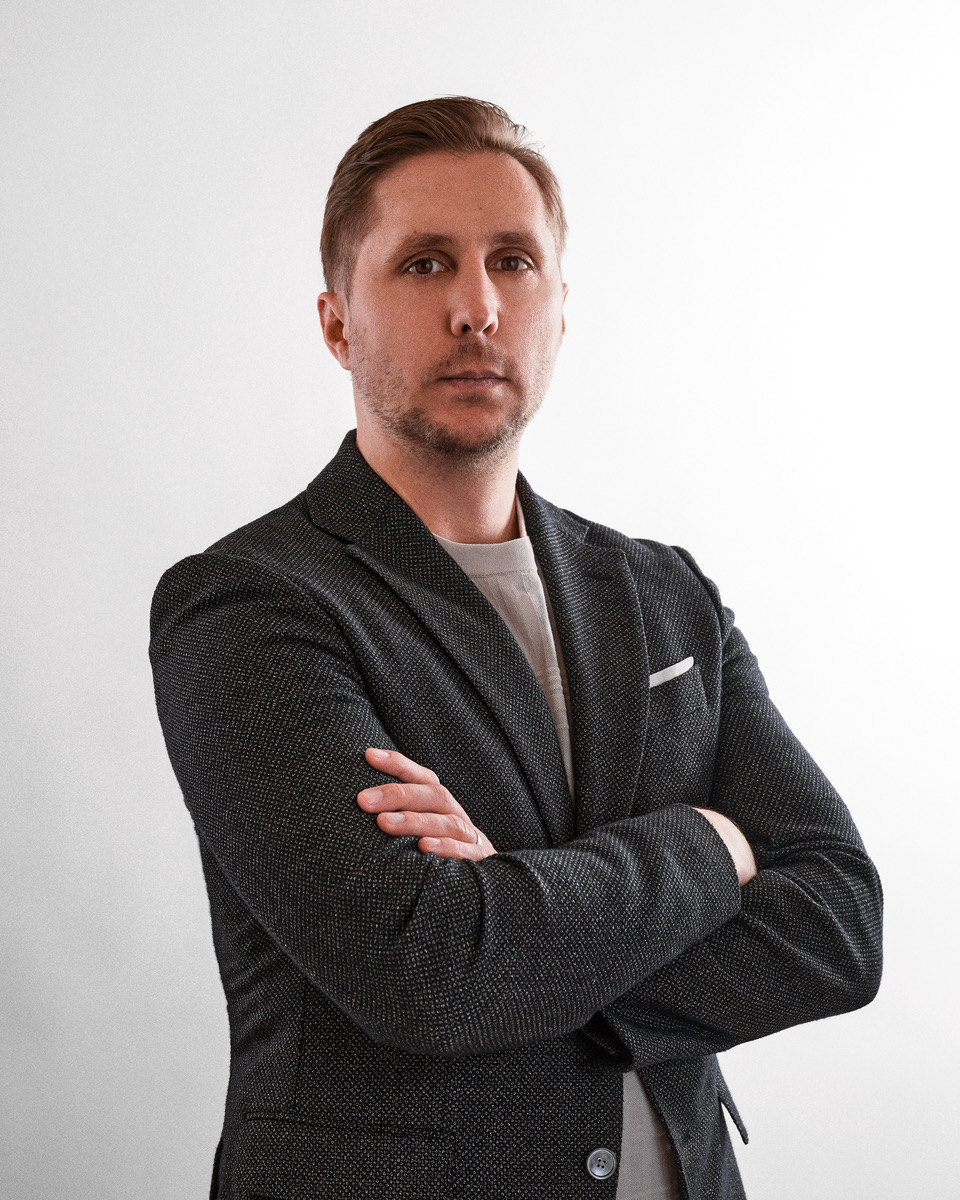
Axel Leuenberger, with whom I am speaking, is a movement constructor, co-founder, and CEO of the brand. Before deciding to build a company of his own, he gained his experience at Audemars Piguet Renaud & Papi, one of the most respected engineering ateliers in modern watchmaking history. It was there that many groundbreaking complications were created for the largest luxury brands, and a background at Renaud & Papi remains to this day one of the most valued professional résumés in the industry.
Although Vanguart has only a few years of market presence behind it, from the beginning it has committed to its own construction solutions, an unconventional movement architecture, and a fresh approach to ergonomics and to the way the wearer interacts with the watch. The Black Hole and the Orb quickly drew the attention of collectors and the trade press, showing that even a young brand can offer its own recognizable technical and aesthetic language.
At the same time, Vanguart does not limit itself to developing its own collection. The company also takes part in engineering projects carried out for other brands, which means that Axel Leuenberger’s experience reaches far beyond the perspective of a maker of his own watches. I am speaking with a man who at once designs movements, co-creates a brand, and runs a company operating in one of the most demanding segments of contemporary Swiss watchmaking.
Photos courtesy of Vanguart
WoW:
Most great haute horlogerie brands build their value on decades, and often centuries, of history. Vanguart started with a blank sheet of paper.
What was the greater challenge: creating an exceptional movement, or convincing collectors to trust a completely new name on the dial of a watch costing several hundred thousand Swiss francs?
Axel Leuenberger:
Creating a movement is inherently complex, but it is also our core expertise, so in many ways it was our comfort zone. What was completely new for us was everything around it: building a company, developing a brand, learning how to communicate our vision and bring it to market. Starting from a blank sheet of paper naturally raised doubts among collectors. I completely understand that. Over the past decade, there have been a number of young brands that overpromised or failed to deliver, so asking someone to place that level of trust—and investment—in a new name is a significant challenge.
⸻
WoW:
When working for established brands, one can focus entirely on creating the best possible technical solution. Building your own brand means simultaneously thinking about costs, production, sales, and customers.
Have these business constraints proved more challenging than the construction of the movement itself?
Axel Leuenberger:
Even established brands have to deal with production constraints and cost targets. The difference is that, when working for them, you often have to extract from the brand what it actually wants, because the vision is not always clearly defined. Building Vanguart has been more challenging overall because we had to develop entirely new skills beyond movement construction. At the same time, we wanted to apply our own entrepreneurial philosophy across every aspect of the company, rather than simply reproducing the structure of a conventional watch brand.
⸻
WoW:
Independent watchmaking is moving in many different directions today. MB&F created its own mechanical universe, Greubel Forsey continues to push the limits of finishing and complications, while Richard Mille redefined modern sports luxury.
How would you define Vanguart’s place within this landscape?
Axel Leuenberger:
The three brands you mention have all paved the way for today’s independent watchmaking, and they have inspired every member of our team. At Vanguart, our focus is on creating a different kind of interaction between the wearer and the watch—both through the way it is manipulated and through its ergonomics. We are also exploring forms and architectures that have rarely, if ever, been expressed in watchmaking in the way we envision them. All of this is built around reliable mechanisms that are beautifully hand-finished to the highest standards.
⸻
WoW:
Many independent creators begin by designing an extraordinary watch and only later try to build a company around it.
In the case of Vanguart, did the mechanical vision come first, or was the brand itself part of the project from the very beginning?
Axel Leuenberger:
The driving force from the very beginning was our shared desire to create our own path, so it was always about building a brand, not simply designing a watch. We are several founders, united by the same philosophy of what makes a truly beautiful timepiece. The business aspect is always present in our thinking, but we work hard to protect our creative time from unnecessary distractions. Only once an idea has matured do we filter it through economic realities and decide where it belongs within our development timeline.
⸻
WoW:
Vanguart develops its own brand while also contributing engineering expertise to projects beyond its own collection.
Does this stem primarily from a passion for solving technical challenges regardless of whose name appears on the dial, or from the economic realities of building a young brand in the ultra-luxury segment?
Axel Leuenberger:
We do this primarily out of passion and friendship. Today, research, development and design are fundamental parts of watchmaking, and many brands rely on external engineering partners. We are fortunate to have an exceptionally talented team, and we enjoy sharing that expertise with a few friends in the industry. For our designers and engineers, it is also an opportunity to explore ideas that would not necessarily fit within Vanguart’s DNA or long-term vision. That creative freedom is an enriching part of the journey.
⸻
WoW:
The watch industry has often announced breakthrough complications, complete with names, calibre numbers, and technical specifications, long before a fully functional mechanism actually existed. I have personally researched one such case in considerable detail while investigating the Mémoire 1 project.
As a constructor, how do you view the distance between what is announced to the public and what genuinely works on the workbench? Where is the line between an ambitious technical vision and a solution that has a realistic chance of becoming a reliable product?
Axel Leuenberger:
Since around 2010, I have witnessed a major shift in the industry. Back then, many exceptional watches spent most of their lives in safes, so brands could accept mechanisms that were not particularly robust because they were rarely worn. Today, collectors actually wear these extraordinary watches, and reliability has become absolutely central. At Vanguart, we always start by ensuring that our solutions are reliable and durable. The challenge is that true research and development requires taking risks and exploring areas that are not yet fully mastered. At this stage, we are not in a position to invest in fundamental research on new materials or similar fields. Instead, our innovation comes from the ingenuity of our movement architecture, using proven technologies and well-understood components in entirely new ways.
⸻
WoW:
Historically, Swiss watchmaking was built as an ecosystem of highly specialised suppliers and workshops. Today, however, the term “in-house” has become almost synonymous with prestige.
Do you think the modern market overestimates the importance of complete vertical integration?
Axel Leuenberger:
It really depends on your business model, your quality standards and your approach to risk management. We do a great deal in-house, though not everything. The common denominator is that the processes we have integrated internally are those that require a level of expertise and quality that very few can consistently deliver. At the beginning of Vanguart, we tried relying more on external suppliers, but their priorities, management or production capabilities can change over time. We therefore integrated key know-how ourselves to guarantee the quality we expected. Once we had fully mastered these processes, we were able to work with suppliers again, auditing them and aligning them with our standards. We absolutely need specialised suppliers, but for me it is important that we know how to do every critical operation ourselves, even if we choose not to perform it internally every day.
⸻
WoW:
Constructions such as Black Hole and Orb are far removed from the architecture of a traditional watch movement.
How do you design such complex mechanisms while taking responsibility for their reliability and serviceability 30 or 50 years into the future?
Axel Leuenberger:
Coming from the Audemars Piguet Renaud & Papi school, one of the most valuable lessons Giulio Papi taught us was that every mechanism must be manufacturable, finishable, assembleable and repairable. We apply exactly the same philosophy at Vanguart. We avoid exotic materials and rely on machining technologies that are widely available and well proven. We engineer our movements with robust tolerances, anticipating production variations using the same industrial principles applied at a much smaller scale. I also like to think that our movements are self-explanatory. Whenever a particularly unique assembly step exists, we sometimes engrave instructions directly onto the movement itself. After all, there may not be an assembly manual left a hundred years from now.
⸻
WoW:
Looking back from the first sketches of Vanguart to where the brand stands today, what was the biggest mistake or incorrect assumption that you and your team had to correct along the way?
Axel Leuenberger:
Without question, our biggest misconception was underestimating the contrast between the extraordinary mechanical complexity of the Black Hole and the visual minimalism of its dial. We invested an immense amount of work into the movement, but much of that effort was not immediately perceived at first glance. On later iterations, we devoted much more attention to the dial and the overall visual impact, and we have clearly seen how that has strengthened collectors’ interest and appreciation.
⸻
WoW:
If someone were writing the history of Vanguart thirty years from now, what would you hope the defining sentence about the brand would be?
Axel Leuenberger:
I would love for people to say: “They mastered time—and beyond.” More than anything, I hope Vanguart will have grown into a company that has been able to express its creativity through far more than watches alone.
After the Conversation
My conversation with Axel Leuenberger illustrates just how much independent watchmaking has evolved. Not so long ago, a brand’s reputation was built primarily on spectacular complications and technical audacity. Today, creating an extraordinary movement is no longer enough. One must also build a company, earn the trust of collectors, ensure consistent production quality, and take responsibility for every watch that leaves the workshop.
What surprised me most, however, was not what Axel Leuenberger talked about, but what he consistently chose not to talk about. His answers contain almost none of the words that dominate the communication of so many modern brands: “passion,” “vision,” “revolution,” or “breakthrough.” Instead, he repeatedly returns to reliability, manufacturing quality, production tolerances, and responsibility for the finished product. It is the language of an engineer rather than a marketer.
Axel refers explicitly to his years at Audemars Piguet Renaud & Papi only once, recalling Giulio Papi’s principle that every movement must be manufacturable, finishable, assembleable, and repairable. In my view, that single sentence explains the mindset reflected throughout the rest of the interview. Perhaps the greatest legacy of the Renaud & Papi school is not merely the extraordinary complications it produced, but the conviction that a truly great movement must remain an example of responsible engineering throughout its entire lifetime.
Equally revealing was Axel’s answer about the biggest mistake made while building Vanguart. He did not point to technical failures or poor business decisions. Instead, he admitted that, with the Black Hole, the team underestimated the contrast between the extraordinary complexity of the movement and the visual minimalism of its dial. As a result, much of the engineering effort remained invisible at first glance. It is a reminder that, even in the highest levels of watchmaking, technical excellence alone is not enough. It must also be communicated.
Perhaps that is why Vanguart does not feel like a company trying to prove its uniqueness at every opportunity. Instead, it comes across as a team determined to build solid foundations before pursuing ever more ambitious ideas. In an industry where innovation is discussed far more often than responsibility for its consequences, that is an approach worth noticing.