Interviews
Luca Soprana
The invisible architect of haute horlogerie
Introduction
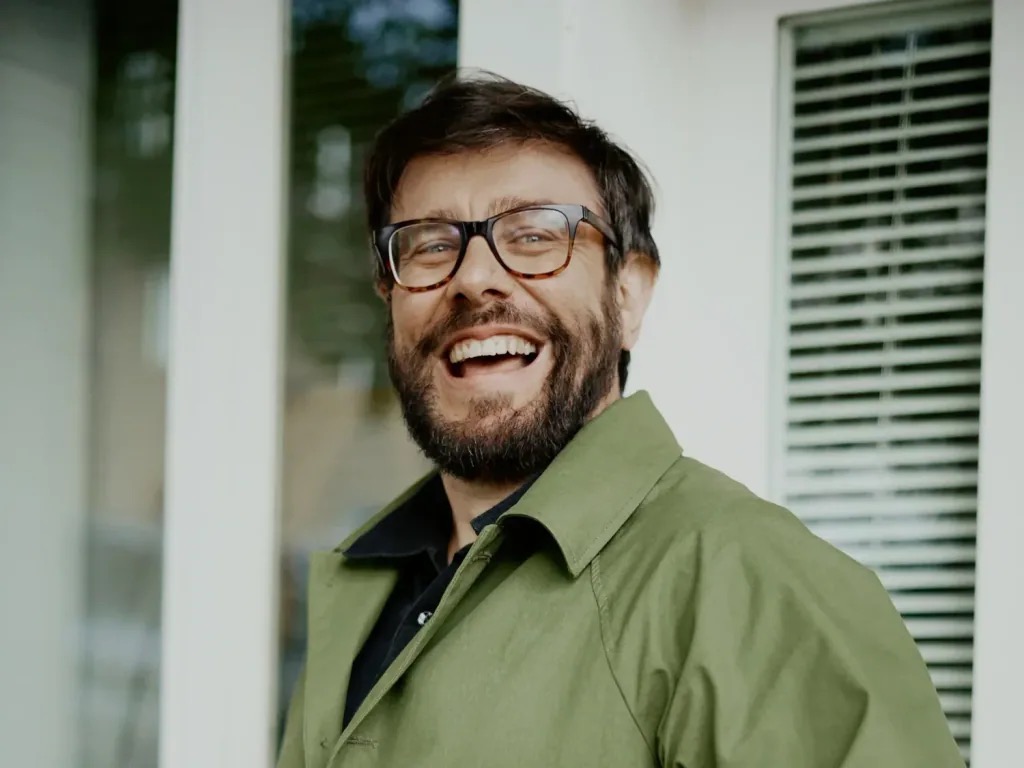
Luca Soprana is one of the most interesting movement constructors in contemporary haute horlogerie. Although his name remains relatively unknown outside the narrow world of advanced watchmaking, over the last two decades he has co-created movements and projects for brands and creators belonging to the very top tier of the industry.
Born in Valdagno, Italy, he comes from a family connected with watchmaking for several generations. He initially studied economics and business in Bologna, but eventually moved to Switzerland to begin his education at WOSTEP in Neuchâtel, where he quickly became the first Italian instructor in the history of the institution.
In the following years he worked for companies and creators such as Vulcain, Vianney Halter and BNB Concept, one of the most experimental complication specialists of the early 21st century. In 2008 he founded his own company, Ateliers 7h38, whose name came from the exact time of birth of his first child. Today operating as Atelier SMA, the company specialises in the design and construction of complicated movements for other brands.
It was there that technical solutions were developed for projects such as the Jacob & Co. Astronomia Tourbillon, Hermès Arceau L’Heure de la Lune and the Derek Pratt Remontoir d’Égalité. At the same time, the atelier is also involved in manufacturing its own components, restoring historical movements and producing small series of watches under Soprana’s own name.
The conversation with Soprana turned out to be particularly interesting because he views contemporary watchmaking primarily from the perspective of a constructor. He is far more interested in the logic of a movement, architecture and the flow of energy than in the marketing narrative surrounding a luxury product.
The Architect Behind the Brand
WoW:
For many years you have worked as a movement constructor for different brands and independent watchmakers whose names ultimately appear on the dial. In such a model, do you see yourself primarily as the author of the mechanism, or rather as an architect working behind someone else’s brand narrative?
Luca Soprana:
More like an architect. For many years I was creating things for others, adapting my vision to different clients, identities and philosophies of brands.
A movement is not just a technical assembly. It has logic, rhythm and personality. So I often felt like an architect working inside another person’s house, trying to bring coherence and mechanical meaning while respecting the client’s vision.
Authorship and Ownership
WoW:
Do you sometimes look at a finished watch and feel that you are seeing your “child” — even though it carries someone else’s name?
Luca Soprana:
Honestly, I never really felt like they were children. I think many people use this expression because they do not have children (LOL)… me I have already 3!
For me, the pleasure was always more in the challenge itself — solving problems, finding coherent solutions, making something mechanically alive. The satisfaction was intellectual more than emotional possession or being part of myself.
And in high watchmaking, authorship is always complex anyway. A watch is rarely the work of only one person.
I also prefer much the fact of “thinking” than owning.
Innovation or Marketing?
WoW:
From the perspective of a movement engineer, how much of today’s “innovation” is genuine technical progress — and how much is marketing?
Luca Soprana:
Innovation in watchmaking is often based on historical ideas to my point of view. Truly radical innovation is rare. Most of the time it is more reinterpretation, evolution, or proof of concept.
Today “innovation” is also a strong marketing word, so naturally it is used a lot. For me, true innovation is when something genuinely improves the mechanical logic, reliability or construction possibilities of a watch.
Movements Designed for the Eye
WoW:
Do you think some modern movements are designed more for visual impact than for mechanical longevity?
Luca Soprana:
The sapphire caseback changed everything. Before, a movement only had to work beautifully. Today it also must look beautiful. During the time lot of pocket watches has been added open case back.
That is not necessarily bad, but sometimes architecture becomes more visual than mechanical. For me, beauty must come from mechanical reason. If a bridge is beautiful because it is logical, then it is honest.
Watchmaking as Spectacle
WoW:
How do you see the rise of spectacular mechanical constructions and technical theatre in modern watchmaking?
Luca Soprana:
I think this period of pure spectacle is already starting to disappear a bit. Some years ago there was much more emphasis on extreme constructions and demonstrative mechanics.
Today the “show” is moving more toward design, finishing and refinement. Personally, I think this is healthy. The most interesting watches are often the ones where the intelligence is hidden inside a very balanced object.
The Myth of Innovation
WoW:
What technical innovation truly changed mechanical watchmaking over the past thirty years?
Luca Soprana:
Silicon? Absolutely not, it is just a temporary phase.
Personally, the most important evolution has been simulation tools and modern computer engineering systems. CAD, virtual testing and simulation changed enormously the way we can develop and study a mechanism before producing the first component.
What Independence Really Means
WoW:
Does “independence” today represent true technical autonomy, or the creative use of a shared industrial ecosystem?
Luca Soprana:
True total independence is extremely rare today. Almost everybody depends on suppliers and industrial networks in some way.
So, independence is less about making absolutely everything yourself, and more about freedom of vision, responsibility and having your own mechanical language.
For me is also a freedom, that we are lucky to have that allows us to make our own part and define our self the standards and ho we want it done.
Has Watchmaking Already Reached Its Peak?
WoW:
Do you agree with the idea that mechanical watches already reached near-perfection by the mid-20th century?
Luca Soprana:
From a purely chronometric point of view, yes.
But today watchmaking is not only about telling the time anymore. It is also culture, emotion, architecture and craftsmanship. The machine may have reached maturity long ago, but the expressive possibilities are still open. For sure there is a renaissance of old way of designing parts. But even if parts look a bit like 100 years ago, modern watches are built and finished in a different way. Also, all the adjustments needed in watches that made real skills tests in the past is disappearing. Watchmaking is more judging on macro pictures than on general architecture and complexity of the watch itself.
The Intellectual Side of Complications
WoW:
Which complication offers the greatest intellectual satisfaction to design?
Luca Soprana:
Usually not the most spectacular one. I enjoy complications where the solution must be elegant, compact and logical.
I have a special interest in mechanisms related to energy management — force, friction, stability and time. That is where watchmaking becomes deeply intellectual to me.
Still the most interesting complication is the one I did not design yet!
Recognition and Legacy
WoW:
Is there a movement or project you consider one of your greatest achievements, even if most people will never know you created it?
Luca Soprana:
Public recognition is not very important to me.
What matters much more is succeeding technically — solving the problem, overcoming the challenge, making something work correctly. That gives me more satisfaction than recognition itself.
In the end, a mechanism does not care who receives the applause. Either it works, or it does not.
After the Conversation
In Luca Soprana’s answers, one can clearly see the mindset of a man who spent most of his life not in marketing departments, but working on movements, prototypes and solving construction problems.
This is particularly interesting at a time when contemporary haute horlogerie increasingly balances between genuine engineering and a world of spectacle, striking macro photography and marketing narratives built around “innovation”. Soprana remains surprisingly sceptical towards parts of that world. He very accurately points out, for example, that modern watchmaking is more and more often judged through the appearance and photogenic qualities of a movement rather than through its actual architecture or mechanical complexity.
Equally interesting is his approach to the very concept of innovation. For Soprana, real progress is not about an impressive marketing slogan, but about a genuine improvement in the logic of a movement, its reliability or its construction possibilities. Perhaps this is why he so firmly rejects the idea of silicon being the greatest revolution of recent decades, pointing instead to the development of simulation tools and computer-assisted movement engineering.
At the same time, it is difficult not to notice that despite his enormous experience working on some of the most spectacular projects in contemporary haute horlogerie, Soprana remains remarkably free from the need to build his own myth. Perhaps his final sentence summarises it best:
“A mechanism does not care who receives the applause. Either it works, or it does not.”
Perhaps this is also why Luca Soprana became one of the figures featured in a separate chapter of my book titled Invisible Architects and Forgotten Heroes, dedicated among others to constructors and creators who have had a real influence on contemporary haute horlogerie for years while remaining outside the marketing spotlight.