Interviews
Laurent Pin
The Backstage of Contemporary Haute Horlogerie
Introduction
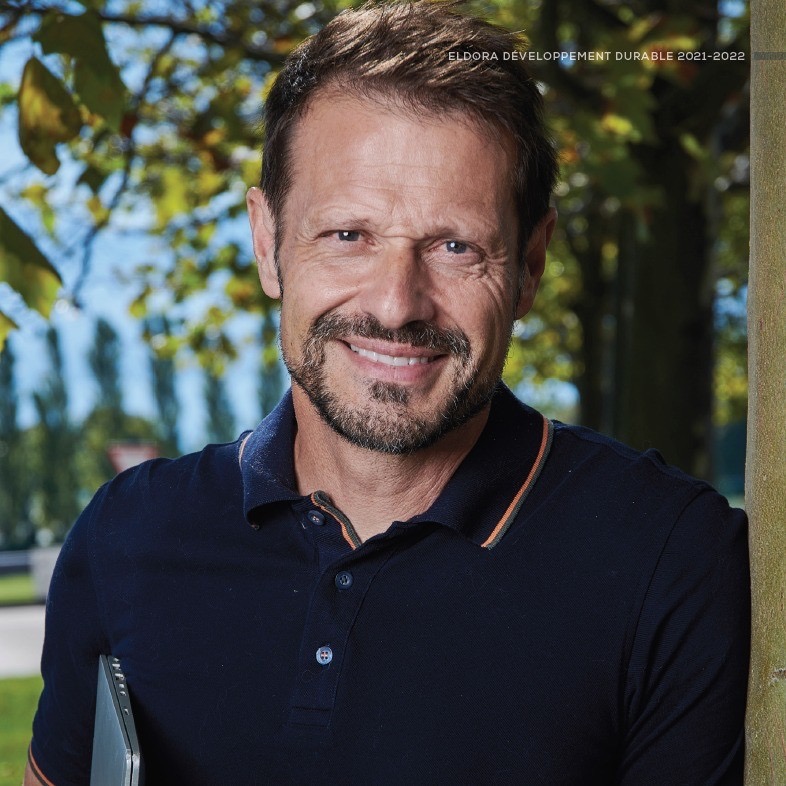
Laurent Pin is the CEO of Le Cercle des Horlogers – a Swiss competence center based in La Chaux-de-Fonds, specializing in the design and production of bespoke watch movements.
Established in 2012, the company serves as a strategic design and manufacturing backbone for the most prestigious brands in the Haute Horlogerie segment. The business model developed by Pin is based on complete discretion and technological partnership – the company does not sign products with its own name but provides the "hearts" of watches, which become the foundation of its clients' narratives.
The scope of the team's competencies under Laurent Pin's leadership includes:
• Engineering unique calibers from the ground up.
• Industrialization of complex prototypes, enabling serial production of the most demanding complications.
• Specialization in micro-rotor architecture and advanced chiming modules (repeaters, carillons).
The influence of Le Cercle des Horlogers is evident in groundbreaking projects for brands such as Trilobe, Louis Vuitton, Jacob & Co., and Speake-Marin. The company is also a key partner in the creation of Jean-Claude Biver's new brand, which confirms its status as one of the most important, albeit behind-the-scenes, architects of contemporary watchmaking.
Le Cercle is a company with strong competencies in movement creation, and the conversation itself shows that in this field, how engineering is articulated is often as important as the engineering itself.
Photo: LinkedIn
WoW:
From the outside, we mostly see the brand’s narrative. From your perspective, at what point does a watch project stop being defined by the marketing brief and start being constrained by physics, materials and construction?
Laurent Pin:
At Le Cercle, several situations coexist. We have projects that originate directly from our watchmaking innovation, and in that case the marketing narrative comes afterwards. We try to build a brief starting from technical innovation.
For more standard products, such as micro-rotor movements, we adapt to a design and a marketing brief. Each project is unique for us.
WoW:
In today’s large brand structures, who is the real author of a watch? To what extent does the creative director design the product, and to what extent do they act as a client of engineers and external partners?
Laurent Pin:
In large brands, the creative director plays a key role. As movement makers, we try to provide the best possible construction to respect the brand’s codes. This work is a collaboration between our constructors and the brand.
WoW:
In the design process, are there situations where a technically optimal solution is rejected because it does not fit the aesthetic or narrative of the brand?
Laurent Pin:
This rarely happens. We always seek technical optimization while respecting the aesthetic. This is central for us: maintaining optimal performance while preserving the brand’s codes. We always find a solution.
WoW:
How has the notion of “in-house” evolved in your experience? Do you see it today as a real technological advantage, or more as an element of brand positioning?
Laurent Pin:
“In-house” is very different from one brand to another. It remains essential for high-end brands in terms of quality control and know-how. It also guarantees that everything is produced in Switzerland.
What we observe, however, is that part of the production is often outsourced in terms of volume.
WoW:
To what extent is contemporary haute horlogerie still a “manufacture”, and to what extent is it a coordinated ecosystem of specialized players co-creating a single product?
Laurent Pin:
Our local industrial structure has also developed significantly around the brands. We can observe many axes of innovation coming from suppliers: new materials, new finishing techniques, new complications.
More and more, a product becomes a co-creation.
WoW:
Which elements of the process - technical or organizational - have the greatest impact on the durability of a watch, while remaining completely invisible to the customer?
Laurent Pin:
The development of the Swiss share in haute horlogerie watches increases the durability of products compared to those often subcontracted in China. The durability of the product itself is very high, as it never goes through a “waste” phase in its life cycle.
The use of recycled materials is also increasing, especially for steel and fully for gold. Sustainability programs are very broad and remain difficult to highlight directly in the product.
WoW:
In every project, there is a tension between cost, quality and brand coherence. At what level are these trade-offs the most difficult to make?
Laurent Pin:
At our level, we never compromise on quality. It must be at the highest level. Any compromise on this point is a short-term mistake.
The brand, however, has broader trade-offs, especially regarding the case. For movements, we are much less concerned by these decisions.
WoW:
Is the model in which the brand acts as an integrator of existing solutions a limitation today, or rather an efficient way to achieve a finished product?
Laurent Pin:
It can be a way to develop innovation and creativity. The brand must ensure that the product remains at the level of quality expected from it.
WoW:
What is today most often misunderstood or overinterpreted by collectors when evaluating the technical value of a watch?
Laurent Pin:
I believe collectors are fully capable of evaluating products. I don’t think there is any real technical overinterpretation. Brands also make significant efforts to highlight complications and make technical solutions understandable.
WoW:
When working on projects where technology precedes tradition, how do you identify the moment when a product stops being a novelty and begins to build lasting value?
Laurent Pin:
The moment when a product becomes a lasting value is determined by the market and demand. A beautiful product with no demand cannot become a lasting value.
It is the meeting between the product and the market, especially the collectors’ market, that creates lasting value.
WoW:
Referring to one of the projects you have worked on, can you identify a concrete decision that had a decisive impact on the final character of the watch?
Laurent Pin:
At Le Cercle, we specialize in striking watches. Our innovations in how the sound is produced have a direct impact on the final result of the watch.
In this case, the design adapts to the technical solution in order to highlight it. You will see this in a few months.
WoW:
From an operational perspective, which element of construction or process is today the main source of problems, despite rarely being discussed at product launch?
Laurent Pin:
The quality of our movements depends greatly on the quality of the components we receive. This is a major issue for us.
We have integrated all processes, from machining to finishing, but we are still not able to produce 100% of our components. The quality of our supplies remains our main problem.
WoW:
You mentioned that “in-house” guarantees production in Switzerland. How should this be understood in the context of a supply chain where some components come from external suppliers?
Laurent Pin:
I do not think that outsourcing creates a risk for quality. Sometimes internal brand workshops are less efficient than specialized suppliers.
What matters is the quality organization and incoming inspection.
WoW:
At which stage do the most difficult compromises appear?
Laurent Pin:
In the case of a new movement, it is difficult to get it right the first time. It is the successive iterations – prototypes, lab parts, watches worn in real conditions – that ensure the final product.
This is a process that guarantees the result.
WoW:
Who ultimately defines the final form of the watch?
Laurent Pin:
Very often, the aesthetic aspect is a strong topic for the brand. So it is rather the client who chooses the aesthetic.
This does not prevent us from proposing special finishes, since we are integrated to carry out this type of operation.
WoW:
Which components are the most critical today?
Laurent Pin:
Everything is important. The performance of the assembly depends on every component – dimensions, positioning, etc.
WoW:
How do you technically manage the conflict between water resistance and sound transmission?
Laurent Pin:
Water resistance (large molecules) still allows proper functioning of the striking mechanism. Sound is a vibration, so we look for the parts of the watch that are most suitable for transmitting it.
The position of the gongs is important, as well as the material, hardness, and the force of the hammers.
We also carry out recordings in dedicated chambers to characterize and measure improvements.
WoW:
Do modern materials risk limiting long-term reparability?
Laurent Pin:
This is a real question. Already today, some very high-end watchmakers do not want silicon.
Personally, I think it is not really a sustainable solution. We do not use it.
After the Conversation
A conversation with Laurent Pin is not one filled with strong declarations or explicit theses. Everything is orderly, rational and, at first glance, devoid of emotional tension. Only a careful reading of the answers reveals how much is actually being said.
The most important points do not appear directly, but rather in the background, in the way the process itself is described.
One such moment is a sentence that could easily be overlooked as obvious: that internal brand workshops are not always more efficient than specialized suppliers. This is neither a provocation nor an attempt to challenge the prevailing narrative. It is a calm statement of fact which, in practice, changes the meaning of “in-house.”
If quality does not result directly from something being produced internally, but rather from the organization of control and process management, then “manufacture” ceases to be a technical category and becomes an organizational one.
In the same way, the recurring theme of co-creation should be read carefully. A watch is no longer the result of a single entity, but the outcome of collaboration between multiple specialized structures. The brand defines the direction and visual language, constructors translate this into technical solutions, and suppliers bring their own capabilities and constraints. The boundaries between these roles are fluid, and responsibility is distributed.
In this context, the idea that quality is non-negotiable takes on a different meaning. It is not a starting point, but the result of a process built on iterations, testing and successive refinements. The interviewee himself acknowledges that the final product emerges through repeated trials and a gradual convergence toward a viable solution. Quality is therefore not a state, but the outcome of a system at work.
The most concrete part of the conversation concerns an element that rarely appears in brand communication: the quality of components. This is identified as the main challenge. It is not about a single element, but about the relationships between them. In a system of this complexity, every component matters, and the problem has no single source.
Against this background, one of the few clearly expressed positions concerns the use of silicon. In the interviewee’s view, it is not a truly durable solution, which runs counter to the direction taken by parts of the industry. This points to a deeper issue that goes beyond technology and touches on the very definition of a watch as an object intended to last for decades.
The role of companies such as Le Cercle des Horlogers is to operate in a space that remains invisible to the end customer. They do not build their own narrative, but enable others to do so. It is there that decisions are made which directly shape the design, repeatability and long-term durability of the product.
From this perspective, a watch ceases to be the work of a single manufacture. It becomes the result of a system whose most important elements remain out of sight, and the brand visible on the dial does not always coincide with the place where the watch was actually designed and built.