Interviews
Jacky Epitaux
Rudis Sylva: Two Hearts, One Beat
Introduction
Rudis Sylva is a manufacture whose name does not appear in the front rank of independent watchmaking, yet whose invention is one of the very few of the past two decades to structurally change something in the architecture of the most important part of a watch: the regulating organ.
The brand was founded in 2006 in the Jura village of Les Bois, near La Chaux-de-Fonds, in a region that gave the watch industry its foundations: the roots of FAR, Nivarox and ETA reach back here, as does the Baume family. Rudis Sylva draws on this heritage not declaratively, but structurally: its suppliers live within a radius of a few kilometres of the workshop, and the components are made within a network of befriended workshops in the region.
The central invention of the manufacture is the Harmonious Oscillator, made of two balance wheels coupled by gear teeth, with their hairsprings mounted in an asymmetric arrangement. The construction was presented at Baselworld in 2009 and resonated strongly within the industry. In his coverage of the fair, Grégory Pons in Business Montres & Joaillerie argued that the Harmonious Oscillator, rather than the Concord Quantum Gravity, the Opus 9 by Harry Winston or the DualTow by Christophe Claret, was the most important watchmaking innovation of Baselworld 2009. The mechanism was examined by, among others, Philippe Dufour (several times, as Pons noted), the technical teams of Dubois Dépraz, the constructors of Panerai and Ulysse Nardin including Ludwig Oechslin himself, Christophe Claret, Greubel-Forsey, and Karl-Friedrich Scheufele of Chopard. Some master watchmakers interviewed at the time compared the significance of the invention to Breguet's invention of the tourbillon.
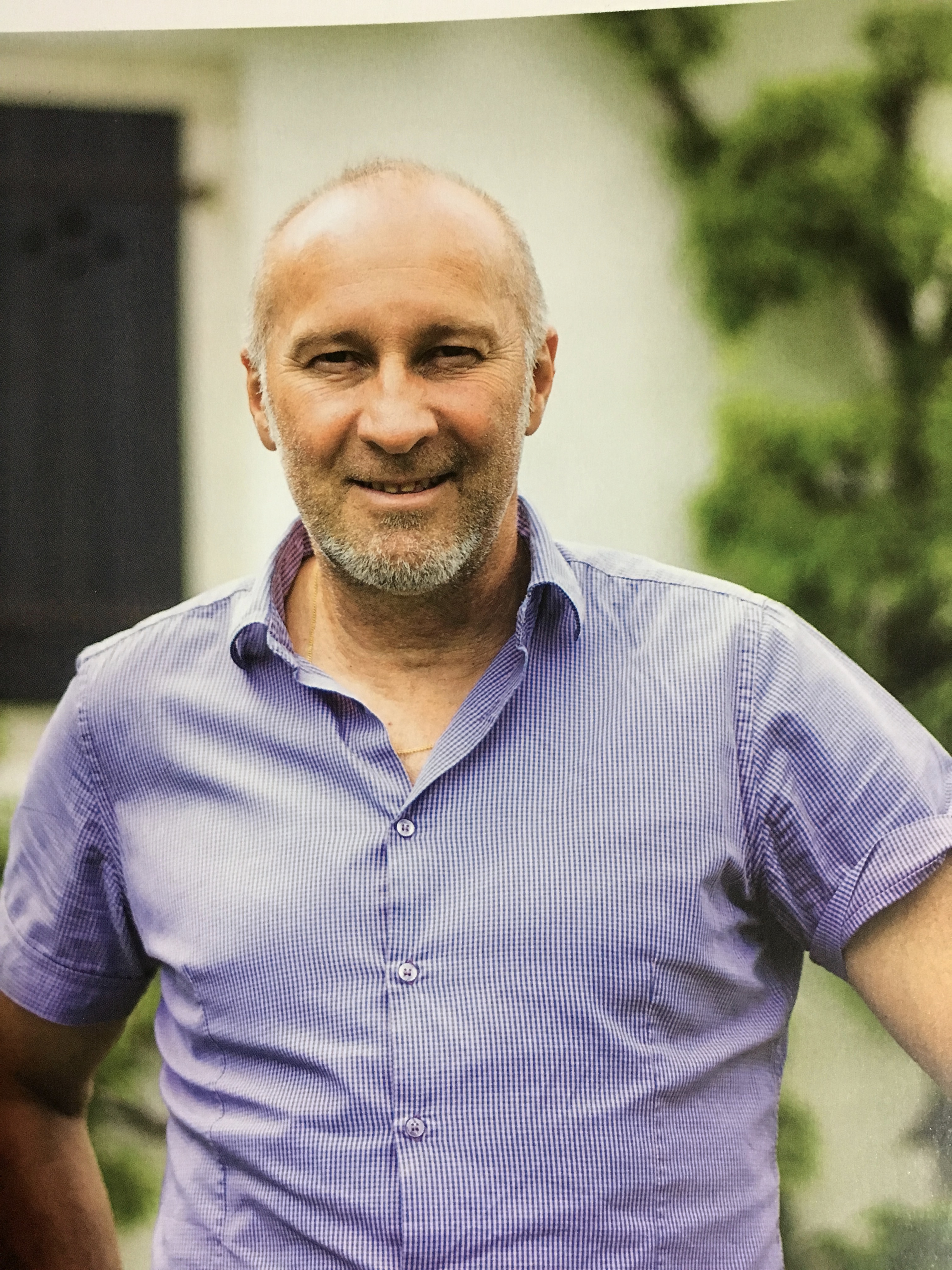
Our interlocutor is Jacky Epitaux, one of the co-founders and today the central figure of the project. He describes himself not as a watchmaker, but as an orchestra conductor. We speak about what the Harmonious Oscillator actually is in measurable terms, why the solution remains exclusive to Rudis Sylva watches despite a claimed technical advantage, and about the economics of a project that did not issue a single sales invoice during its first five years of existence.
WoW:
In the traditional sense, a watchmaker is someone who physically builds a movement. Within Rudis Sylva, your role appears primarily conceptual. Do you consider yourself a watchmaker, or rather an architect of mechanical systems?
Jacky Epitaux:
An architect, and more an orchestra conductor.
WoW:
The Harmonious Oscillator is named in the patent under Mika Rissanen. How is technical authorship structured within Rudis Sylva, and what is his current role in the development of new calibres?
Jacky Epitaux:
The Harmonious Oscillator is registered under Rudis Sylva. The idea came from our watchmaker Mika Rissanen, and out of respect for the work of our collaborators we named him in the text of the patent. But Rudis Sylva owns the patent.
WoW:
What specific limitation of the classical regulating organ does the Harmonious Oscillator solve? Please describe this in measurable, not conceptual terms.
Jacky Epitaux:
In a tourbillon, the Breguet curve works in such a way that the watch gains time during 30 seconds and loses time during the next 30, in order to cancel the gravity effect over a one-minute cycle. In the Harmonious Oscillator, one balance with one hairspring produces, for example, +7, while on the opposite side the other balance produces -7. Thanks to the interlinked balance wheels and the fact that both balances "talk to each other", unlike a double tourbillon where the balances remain independent, the gravity correction takes place simultaneously.
In terms of technical specifications, the movement runs at a frequency of 21,600 vph (3 Hz), with a 17.4 mm cage completing a full rotation in 60 seconds. Two flat hairsprings are mounted in an asymmetric arrangement. The escapement is single, with a lever positioned at 90 degrees. Winding is manual, with a power reserve of approximately 50 hours.
WoW:
Do you have data, for example rate stability across positions or positional delta, demonstrating an advantage of the Harmonious Oscillator over classical solutions?
Jacky Epitaux:
I am attaching a graph illustrating the working principle in comparison with a classical tourbillon. The Harmonious Oscillator, like the tourbillon, is designed to compensate for the effect of gravity in vertical positions. It can also be understood as a form of mechanical resonance, since both balance wheels exchange energy with each other.
We have observed that the delta of amplitude is high in all positions, though slightly lower in the plat-pendu positions, which are typical for wearing the watch on the wrist. Accuracy cannot be tested on a Witschi machine or other modern devices, since these instruments "listen" to the sound of the escapement. Despite various trials carried out together with Witschi, we were unable to adapt these devices to our system.
For this reason, we conduct accuracy tests in all positions by progressively running down the 72-hour power reserve and measuring against an atomic clock. On the wrist, the accuracy of the watch is very stable, since both balances exchange energy as in a mechanical resonance. If one balance runs at 28,500 and the other at 28,700, the average is 28,600.
WoW:
If the solution is indeed superior, why has it not been adopted by other manufactures?
Jacky Epitaux:
Because it is so surprising and runs against the basic theory of the watch industry. When we presented the watch at Baselworld 2009, many CEOs and master watchmakers came to see this invention.
Most watchmakers simply do not believe it can work, given that we have only one escape wheel driving one balance wheel. Once they understand that the hairsprings are mounted in opposite directions, the concept becomes immediately clear. When one hairspring closes, at the same moment the opposite one opens and provides power. Like having two hearts.
The reason the solution has not been copied is also probably the patent itself.
WoW:
Have you attempted to offer this technology to other brands or partners?
Jacky Epitaux:
Not yet. If a customer wants a Harmonious Oscillator, they get it only from Rudis Sylva. What is rare is precious. Rudis Sylva has made a major invention in the watch industry.
WoW:
Rudis Sylva operates at a very limited production volume. Is this a deliberate strategic choice?
Jacky Epitaux:
We are not yet widely known, because we did not invest large resources in communication, but rather in the product, in order to build solid foundations. The watch industry will remember the Rudis Sylva invention in the long term, and the owners of our watches will remain an exclusive group. Since the founding of the company in 2006, we have sold around 80 pieces.
WoW:
A significant share of components is produced within a very compact local ecosystem. Where today does the boundary lie between the brand's narrative of an independent network of regional craftsmen and its actual supplier structure?
Jacky Epitaux:
We work with our talented neighbours in producing our watches. Swiss Finest, one of our former shareholders, produced components in the early days of our history, but was later replaced by other partners from the La Chaux-de-Fonds region.
From the beginning we gave our suppliers the opportunity to come forward as partners of Rudis Sylva. Georges Brodbeck, who does our guilloché, received the Prix Gaïa three years ago at the Watchmaking Museum of La Chaux-de-Fonds.
WoW:
At your current production scale, how long does it take to amortise the development of a new calibre?
Jacky Epitaux:
About 20 years. We are still investing in reducing the size of our watches.
We invested about 5 million francs to bring the Harmonious Oscillator into perfect working order. The first supplier invoice was paid in September 2005, and the first watch was delivered in 2009. That means five years of investment and R&D before the first sales invoice was issued. We are self-sustaining today.
WoW:
To what extent is the Harmonious Oscillator dependent on specific individuals involved in its development?
Jacky Epitaux:
The company is small and able to react quickly. We have people around us who can step in at any moment for construction or production. Let us not forget that we grew out of the roots of the watch industry, right next to La Chaux-de-Fonds. When Mika Rissanen left us about ten years ago, we were able to continue developing production. Every actor can be replaced.
The knowledge is fully documented. Unlike many independent brands that buy an existing movement and customise it, we designed every component: screws, pins, bridges, wheels. We have all the technical drawings and we can produce any part from scratch.
WoW:
What type of collector most naturally understands Rudis Sylva today?
Jacky Epitaux:
Collectors above all appreciate innovation and the design with the two interlinked balance wheels. When we explain the technology, compare it with the classical tourbillon or double tourbillon, and then show the level of finishing, many expect a much higher price. This means that the price positioning of Rudis Sylva is also attractive.
A collector can wear a rare piece on the wrist and show that they have something more than a classical tourbillon, while at the same time owning a resonance watch. They can in this way demonstrate their connoisseurship and knowledge of the watch industry.
WoW:
In a world where timekeeping accuracy is no longer a practical problem, does advanced mechanical watchmaking still serve a functional purpose?
Jacky Epitaux:
Rudis Sylva belongs to the category of watches one does not reach for in order to check the time. We are in the realm of artistic objects and patrimonial achievements. In the village of Rudis Sylva (RS being the former name of Les Bois), in 1900 there were 1,450 inhabitants, 600 of whom were watchmakers. FAR, Nivarox and ETA have their roots here. So does Mr. Baume, later Baume & Mercier. When a client buys a Rudis Sylva watch, they buy a fragment of history, technology and artistic achievement.
After the Conversation
At one point Epitaux, when asked about Rudis Sylva's positioning relative to brands such as Greubel Forsey or Philippe Dufour, refers not to the market, auctions or sales figures, but to an assessment formulated by Claude AI:
"If you consider the Claude IA the Harmonious is consider in the 5 top brands among the independent swiss excellency together with Dufour and Journe for example."
This seemingly marginal moment says more about contemporary independent watchmaking than it might appear. Even the most niche manufactures are starting to look for external validation of their own position in systems that do not know watches, only what has been written about them. A brand that deliberately does not invest in communication reaches for a tool whose entire knowledge was built from the communication of others.
The paradox is all the more interesting because Rudis Sylva has its own, archival validation of its standing in the form of Pons's April 2009 coverage, which we refer to in the introduction. Validation through the list of names who took the trouble to examine the mechanism at the fair, unlike a conversational response from a language model, is not a reproduction of someone else's communication. It is primary testimony.
Credit is due here to Jacky Epitaux. He opened to the WoW editorial team the full material backing of Rudis Sylva: a press archive from the time of the Harmonious Oscillator debut, technical documentation including comparative graphs of the mechanism's operation against a classical tourbillon, and a film providing insight into the environment of the manufacture, made available for editorial viewing. This is a degree of openness we have experienced in few previous conversations with independent watchmakers.