Interviews
Max Büsser
Risk instead of luxury - Max Büsser on success, pride, and illusion
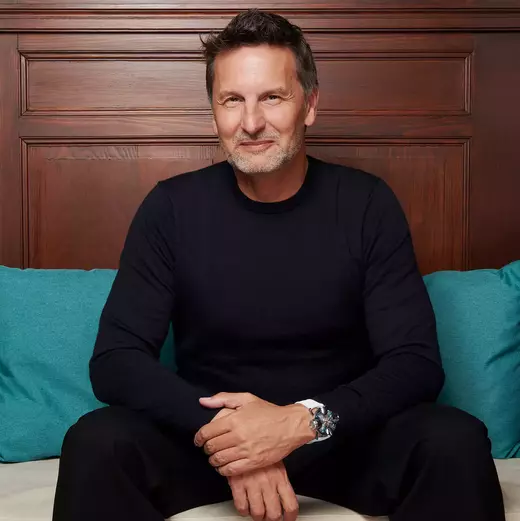
Introduction
In a world where success is the goal and luxury its natural language, Max Büsser reverses this narrative. He calls success toxic, luxury an empty word, and builds the foundation of his brand on financially irresponsible projects.
A conversation with the founder of MB&F is not about complications or mechanics. It's about risk, responsibility, and the fine line between rebel and institution.
I first met Max Büsser personally when he accepted my invitation to the annual meeting of the Watch and Clock Enthusiasts Club in 2013. He captivated not only me but the entire room, not even with watches, but with a story about passion, risk, and the courage to create. His presentation made an impression not only on me but on the entire community, as he was sincere and devoid of corporate calculation.
He remains so to this day.
WoW: When MB&F started to grow, what became harder to maintain – creative freedom or strategic control?
Neither of the above. The hardest thing was, and still is, to maintain the start-up mentality of "nothing is impossible" within the team. The one where everyone helps each other, where everyone anticipates potential problems and takes initiative. This is what allowed MB&F to survive the first 15 years, when very few collectors were interested in our creations. We even named 2026 "Back to the Roots" to reset the team's mentality to the spirit of the early years.
WoW: How do you distinguish a bold project from a financially irresponsible one?
We built the foundation of MB&F on the most financially irresponsible projects. Some turned out to be successes, others great failures—at least financially. However, we have no regrets, because every project filled us with pride. When pride is the driving force, there are practically no regrets regardless of the outcome.
WoW: Is there a project you decided not to pursue solely for business reasons?
We have no problem with something incurring a loss if it brings us pride and makes our clients happy. If we don't see these two effects, then we give up.
WoW: Do you feel pressure for each new "machine" to be more spectacular than the last?
It's not about spectacularity, but about the need to explore new territories and step out of our comfort zone. When we founded MB&F, we were terrified that no one would buy our creations. Twenty years later, the level of expectation from our "Tribe" and fans is quite overwhelming. As my mother would say: "That's good—at least it keeps you on your toes!"
WoW: Has success significantly complicated your life as a creator?
Success is incredibly toxic. There is a very real risk that a brand will stop taking creative risks and start treating people—the team, clients—with arrogance. We have seen several such examples in our industry over the last five years. We, on the other hand, have tried to use our "success" to take even greater creative risks (M.A.D. Editions, SP1, collaboration with Bvlgari, Dinosharpener, etc.) and to be even kinder. This is one of the elements that distinguishes us from most brands.
WoW: If you had to remove one of these three words: art, engineering, luxury, which would disappear first?
Luxury—immediately. I really have a problem with that word. We have never used it at MB&F. It means nothing. For a billion people in the world, luxury tonight will be finding enough food. Luxury has most often become a shorthand for "expensive" or, worse, "for show," while creativity, innovation, and kindness are priceless.
Our MB&F watches have a very high price because each creation requires 3 to 5 years of research and development, thousands of hours of machining and hand-finishing, and only 20–30 pieces of each reference are produced annually.
M.A.D. Editions, on the other hand, are industrial products that embody our creativity and offer exceptional value for money—they cost one-fiftieth the price of an MB&F watch.
WoW: Have you ever killed an idea—not because it was flawed, but because you felt responsible for too many people to truly take the risk?
Not really. Especially in the first fifteen years, the level of risk was maximal with at least half of our creations. We didn't create because it was easy, but because it was extremely difficult and risky.
After the Conversation
Max Büsser speaks of risk with rare consistency. He calls the foundation of MB&F "financial irresponsibility," defines success as "toxic," and discards the word "luxury" without regret. This is the coherent narrative of a rebel who refuses to become an institution. A rebel who, thanks to his "mad" consistency, has built something far more than just a manufacture of "horological machines." He has, in fact, built an institution, but in the best sense of the word.
The most interesting aspect of this conversation, however, is not the rejection of luxury, but the question of the nature of risk. The risk of the early years, when survival was uncertain, differs significantly from the risk faced by a brand with waiting lists and an established position. Max claims he has never killed a project out of fear. This is a declaration of courage.
The true challenge today is not to create another "machine." It is to maintain the spirit of the laboratory at a time when the laboratory has become a powerhouse.