Interviews
Qian Guobiao
Od repairing masterpieces to creating one's own
Introduction
The name Qian Guobiao has appeared on the independent watchmaking scene only relatively recently, although the experience behind it goes back much further.
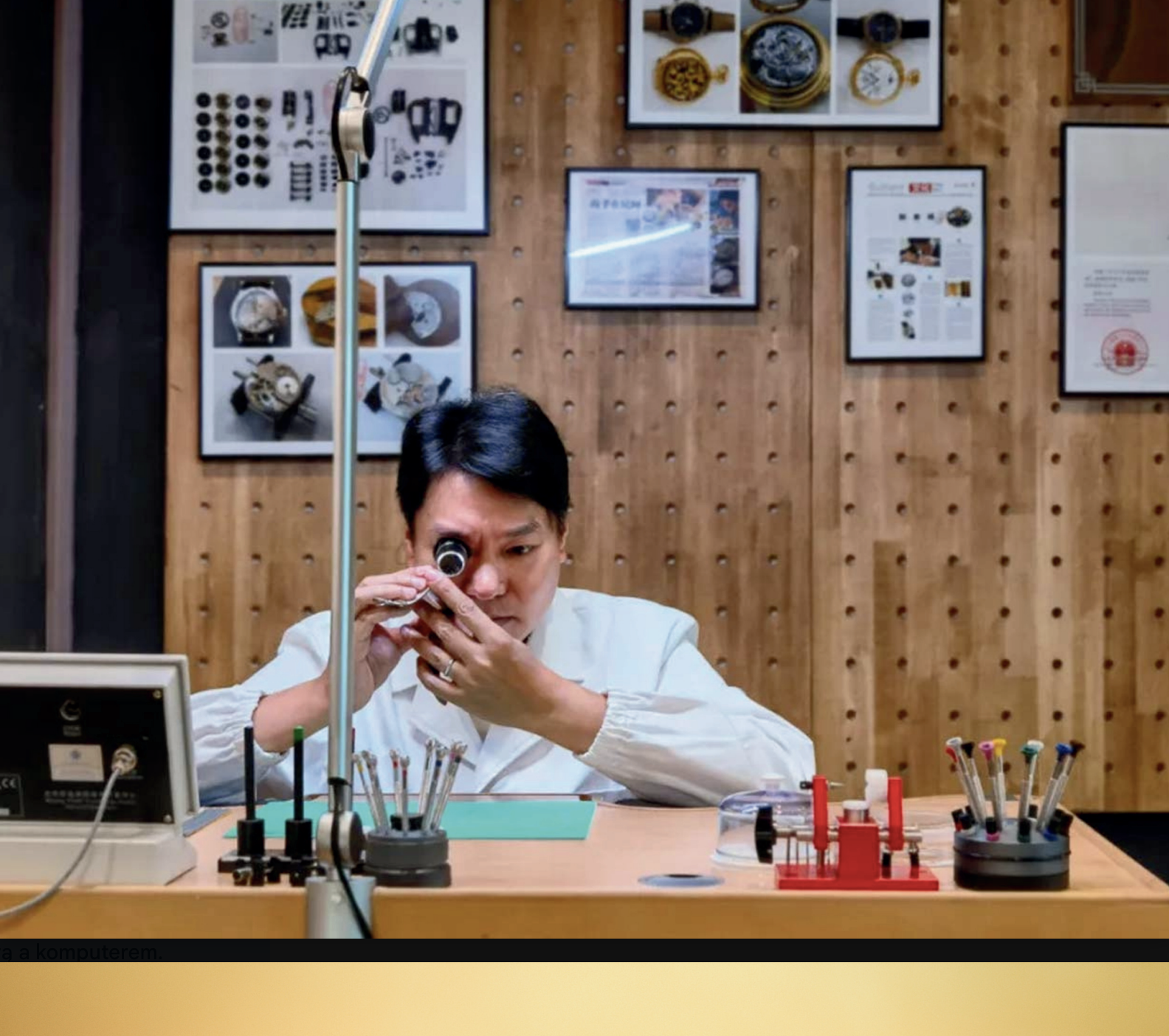
Before creating watches under his own name, Qian spent more than two decades working with mechanical movements. He came to watchmaking from the mould-making industry, taught himself the craft, and became known among collectors and clients for repairing complicated watches that others were reluctant to take on. In 2005, watch repair became his full-time profession, and over time he earned the nickname “Tourbillon Doctor”.
But repair was only one part of the story. From around 2008, Qian was already creating personal watches and pieces under the A.Biao name, treating them primarily as a field for experimentation rather than as a commercial venture. Only much later, in April 2025, did he officially launch a commercial brand under his own name.
His watches today include the AB-01 Small Seconds, AB-02 Facing the Sky, AB-02.0 Facing the Sky 2.0, AB-03 Double Balance Wheel, AB-04 split-seconds and AB-05 Skylight.
This sequence is precisely what makes his story particularly interesting. Qian did not enter watchmaking by first creating a brand and then learning how to make watches. The order was almost exactly the opposite. Years of repairing, studying movements and experimenting came first. The brand arrived much later.
In our conversation, we return to that journey: from mould-making and watch repair to creating his own movements, the lessons learned from working on highly complicated watches, the difference between reputation and genuine engineering, and what Qian Guobiao still hopes to accomplish before he finally puts down his tools.
WoW:
You grew up far from the traditional centres of watchmaking and began your career in the mould-making industry. What made your interest in watches become something more than a hobby?
Qian Guobiao:
From a young age in Ninghai, Zhejiang — the “home of molds” — I was endlessly curious about mechanical things. I would disassemble anything I could get my hands on, including my father’s Shanghai Watch. That childhood fascination with how tiny parts worked together never left me. While working as a precision mold technician in Dongguan from the early 1990s, repairing a colleague’s watch in 2000 sparked something deeper. The precision required mirrored my mold-making skills, but the intimate, living rhythm of a mechanical watch felt profoundly personal. In 2005, watch repair became my full-time profession. Repairing became my profession, yet the creative pull toward building something of my own grew irresistible. It was never just a hobby; it was a calling to understand and honor the soul of time.
WoW:
Do you remember the moment when you first thought: “I will try to build my own movement”? What gave you the confidence to believe it was possible?
Qian Guobiao:
It was a gradual awakening during my repair years, but the decisive spark came as I began creating personal pieces and watches under the A.Biao name from around 2008. Having taught myself through books, endless disassembly, and reassembly of complex pieces — earning the nickname “Tourbillon Doctor” for handling high-complications that others sent back to Switzerland — I realized I could craft precision components from my mold-making background. Confidence came from years of practical mastery: I knew materials, tolerances, and mechanics intimately. Interest truly is the greatest teacher. What began as personal experimentation eventually developed into a commercial brand under my own name, officially launched in April 2025.
WoW:
At what point did you realise that you no longer wanted only to repair other people's watches, but to create your own? Was it a single defining moment or rather a gradual process?
Qian Guobiao:
It was a gradual process. Repairing is for others — solving their problems with care and skill — but creation is for myself, an expression of my own aesthetic and mechanical vision. I began working full-time in watch repair in 2005, and from around 2008 I was also creating personal watches and pieces under the A.Biao name. Alongside repairs, the desire to share original designs with enthusiasts grew. The majority of my work remains repair, but the creative pieces fulfill a different part of my soul. This path ultimately led to the launch of the commercial brand under my own name in April 2025.
WoW:
When you began your journey towards creating your own watches, where did you acquire your knowledge, and who were the most important sources of inspiration or guidance for you?
Qian Guobiao:
I am largely self-taught. My mold-making expertise gave me the ability to fabricate precision parts independently. I studied books, repeatedly took apart and rebuilt complex movements from many brands, and learned through hands-on trial. Exchanges with fellow enthusiasts on forums, plus exposure to global watches through repairs, refined my eye. No single mentor — the greatest teacher was persistent curiosity and the watches themselves. Architectural forms and natural geometry also inspire my designs.
WoW:
Looking back today, what was the moment when you came closest to giving up? What made you continue instead?
Qian Guobiao:
Every independent watchmaker faces technical dead-ends and the loneliness of long hours in the workshop. The closest moments came during early prototypes, when a movement simply would not come together after countless iterations. What kept me going was the same passion that started it all — the joy of seeing a balance wheel come alive, the belief that persistence in craftsmanship honors the art. Creating for myself, and later sharing with collectors who appreciate the hand-made, renewed my resolve. There is always another refinement possible.
WoW:
What was the most difficult fault or mechanical problem you have ever had to diagnose and solve as a watchmaker?
Qian Guobiao:
High-complication repairs, like PP 6002 and watches with tourbillons + minute repeaters + perpetual calendar from various brands, tested me most. Diagnosing subtle issues in rare or vintage pieces — where parts are irreplaceable and tolerances unforgiving — required deep intuition developed over years. The “Tourbillon Doctor” reputation came from solving problems that others found too costly or time-intensive to send back to manufacturers. Each success reinforced the value of patient, methodical analysis.
WoW:
Throughout your career, you have had the opportunity to analyse and repair many highly regarded movements. Have you ever come to the conclusion that the reputation of a particular solution exceeded its actual engineering quality? What have such experiences taught you about the difference between reputation and genuine engineering?
Qian Guobiao:
I have seen that reputation often stems from heritage, marketing, and consistency rather than flawless innovation in every detail. Some respected solutions have clever ideas but practical weaknesses in longevity or serviceability under real use. This taught me to prioritize genuine engineering: robust, hand-finishable designs that perform reliably and can be maintained with care. True quality lies in thoughtful execution and harmony of components, not just prestige. My own work aims for that authenticity — visible, understandable mechanics that serve both beauty and function.
WoW:
How many failed attempts, prototypes, or dead ends preceded your first movement with the balance wheel displayed on the dial side? What most often failed to work as intended?
Qian Guobiao:
The original “Facing the Sky” concept took shape around 2018 after many years of experimentation (I had been refining ideas for nearly 5 years in some form). Numerous prototypes and adjustments were needed — challenges with poise, regulation, the floating illusion of the flying balance, and integrating the gooseneck while maintaining structural integrity. The arrow-shaped bridge and overall architecture went through iterations. Failures often involved timing inconsistencies or aesthetic-mechanical mismatches until everything harmonized.
WoW:
Which component of your watches is currently the most difficult to manufacture or regulate, even though most owners will probably never notice it?
Qian Guobiao:
The balance wheel and its regulation system - especially achieving the precise “floating” effect and harmony in pieces like Facing the Sky or the Double Balance Wheel - demand meticulous hand-finishing and adjustment. The hairsprings, jewel settings, and subtle geometry require constant testing. Owners enjoy the visual poetry, but the invisible precision behind stable rate and reliability is where the quiet struggle lies.
WoW:
In one interview, your admiration for the Patek Philippe Calatrava reference 5026 and your collection of its various versions was mentioned. Yet your own creations are often bold, architectural, and visually expressive. What do those classical watches give you as a lover of watchmaking that you consciously choose not to pursue as a creator?
Qian Guobiao:
Classical pieces like the Calatrava 5026 embody timeless elegance, restraint, and perfect proportions that I deeply admire and collect. They represent the pinnacle of refined simplicity and heritage. For my own creations, I choose a bolder, more architectural language - exposing mechanics on the dial side, playing with depth, symmetry, and symbolism (like the skyward arrow) - because it allows me to express my background in industrial precision and my fascination with visible rhythm. Both paths honor watchmaking; I draw inspiration from the classics for harmony while pursuing my own voice in contemporary independent expression.
WoW:
Looking back on your journey from the mould-making industry to creating your own calibres, what from that first professional life do you still carry with you in the way you design watches today?
Qian Guobiao:
The discipline of precision engineering, the ability to fabricate complex parts from raw concepts, and a deep respect for materials and tolerances. Mold-making taught me independence in production and attention to functional geometry - qualities I apply when drawing designs by hand with pencil and compass, then prototyping and refining. It instilled a utilitarian yet poetic approach: mechanics as both structure and art.
WoW:
What is the one thing you have not yet achieved in a watch, but know you must accomplish before you finally put down your tools?
Qian Guobiao:
I continue refining and pushing boundaries - perhaps a more integrated grand complication or new material explorations like gold or copper in my architectural style, while scaling my output thoughtfully. Ultimately, I aim to create pieces that further bridge Chinese independent horology with global recognition, each one a perfect expression of hand-crafted soul. There is always one more refinement, one more story to tell through mechanics. I will know when the tools are ready to rest.
After the Conversation
While talking to Qian Guobiao, for most of the time I found myself thinking not about his watches, but about his workshop.
In contemporary watchmaking, it is easy to be captivated by the finished product: a hand-finished movement, striking bridge architecture, or a spectacular balance wheel displayed on the dial side. It is much harder to see the road that leads to the point at which such a watch can exist at all.
For more than twenty years, Qian has done work that most collectors will never see. He repaired movements. He diagnosed faults. He solved problems left behind by other constructors. There is not the slightest attempt in his answers to diminish the importance of that work. Quite the opposite, he speaks about it with enormous respect. It was through this work that he learned to look at movements not as objects of worship, but as technical solutions with their own strengths and weaknesses.
What stayed with me most was his answer about the difference between reputation and genuine engineering. It is something that could only be said by someone who has spent years looking at grand complications from a perspective their owners will never see. From a watchmaker’s point of view, prestige ceases to matter. What matters is whether the construction actually works, whether it will remain reliable twenty years from now, and whether someone will still be able to repair it.
The story of his own watches is equally interesting. They were not created because the market needed another brand. For many years, they were primarily personal experiments and a way of testing his own abilities, including pieces created under the A.Biao name from around 2008. Only in April 2025 did Qian decide to launch a commercial brand under his own name. At a time when many companies begin with a logo, a website and a marketing campaign, and only later go looking for a product, the sequence here is almost exactly the opposite.
I do not know whether Qian Guobiao’s watches will one day become icons of independent watchmaking. The market will determine that far better than any journalist can.
What I do know is that before he dared to put his own name on his watches, he spent more than twenty years repairing the creations of others. And perhaps that is precisely why this conversation turned out to be much deeper than yet another story about a new movement or the launch of a new model.