Interviews
Alexander Gutierrez Diaz oraz Jens Schneider
Lang & Heyne - on the other side of the atelier
Introduction
Contemporary watchmaking increasingly operates at the intersection of craftsmanship, technology, and organizational structure. In this context, brands that have evolved from small ateliers to more complex operating models are particularly interesting.
Lang & Heyne is an example of such an evolution. A brand that for years was strongly associated with an individual approach to watchmaking, today relies on teamwork and a clear division of competencies between the technical and managerial layers.
It is no longer a classic atelier in the traditional sense of the word, but it is also not a typical manufacture operating on a large scale. It is rather an intermediate model where craftsmanship, technology, and organization coexist and complement each other.
An important element of this picture also remains Dresden as a place with its own watchmaking history, which allows for greater freedom in interpreting Saxon tradition than the more formalized environment of Glashütte.
The following conversations present two complementary perspectives on the brand's operation.
On one hand, we have a strategic view concerning the direction of development and Lang & Heyne's place in contemporary watchmaking.
On the other, a constructive perspective, focused on mechanics, materials, and technical decisions.
Together, they create a picture of a brand that is developing while maintaining its distinct identity.
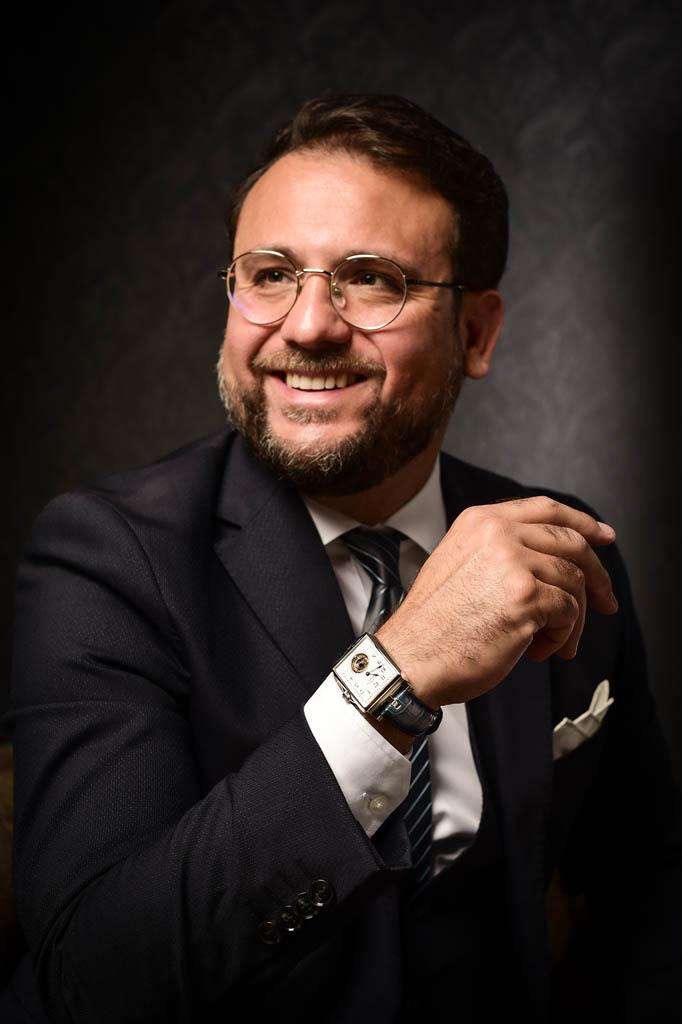
Alexander Gutierrez Diaz - CEO of Lang & Heyne, responsible for the brand's strategic direction and positioning in the independent watchmaking segment.
Lang & Heyne - Between Atelier and Structure
WoW: Lang & Heyne was founded as a small watchmaking atelier in Dresden. Today, the company operates within a more structured organizational framework. How do you define Lang & Heyne's current identity – is it closer to an independent atelier or a classic manufacture?
Alexander Gutierrez Diaz: We are neither one nor the other. We combine the characteristics of an atelier, a true manufacture, and a modern watchmaking company. We bridge classic craftsmanship, for example, in the highest quality finishing, with advanced technology, such as CNC machining. It is important for us never to lose sight of our DNA, which has guided us for 25 years. At its core, there is still a very strong element of true, traditional watchmaking.
WoW: Before joining Lang & Heyne, you worked for many years within the Richemont Group. How does that experience influence the way you lead a much smaller, specialized watch brand?
Alexander Gutierrez Diaz: Being part of a large group like Richemont gave me a broad, international perspective on markets, sales networks, strategies, and products. I tried to gather these experiences and translate the best elements of each area into the reality of Lang & Heyne. The foundation and idea of the brand already existed, and my role was to further develop, organize, and communicate them to strengthen Lang & Heyne's position as an established and enduring brand on the international independent watchmaking scene.
WoW: In recent years, many brands described as "independent" have started to grow dynamically. Do you think there is a natural limit to the scale for a manufacture like Lang & Heyne, beyond which something essential is lost?
Alexander Gutierrez Diaz: We are fully aware of this risk. That's why Lang & Heyne has never strived for growth at any cost. Instead of significantly increasing production beyond approximately 150–200 watches per year, we decided to develop the depth of our craftsmanship and the range of techniques we master, some of which we had to develop entirely from scratch, such as our ceramic dials. It is crucial for us to remain true to our own DNA. This also means maintaining a very high level of vertical integration where over 90% of the movement is produced in-house. This approach naturally limits the scale of production, as true craftsmanship can only develop at a certain pace.
WoW: Saxon watchmaking is traditionally associated with Glashütte, but Lang & Heyne operates in Dresden. Does this geographical distinction still matter for the brand's identity today?
Alexander Gutierrez Diaz: From a historical perspective, Dresden is the true cradle of Saxon watchmaking – Glashütte appeared later. Today, we are not bound by the regulations or conventions applicable in Glashütte. This gives us a certain kind of freedom, which we use to interpret classic Saxon watchmaking in a contemporary way. The Georg model is an excellent example of this approach.
WoW: Lang & Heyne operates within the broader Dresden watchmaking ecosystem, including, among others, Uhren-Werke-Dresden. How important is such technological cooperation for the development of the brand's modern movements?
Alexander Gutierrez Diaz: In our case, this cooperation involves a very close exchange of technical knowledge within a single structure operating in Dresden and under one roof. Although UWD and Lang & Heyne function as separate brands, they are part of the same operational environment, which allows for a direct flow of know-how into the development process.
UWD was founded in 2013 with the ambition of creating a German alternative to industrially produced movements. Although this concept was not further developed in its original form, its technological foundation remained very valuable. Since 2021, we have been using it to develop the Hektor model in a manner fully consistent with Lang & Heyne standards, yet deliberately different in character.
Hektor was not conceived as a simplified version of classic Lang & Heyne models, but as a more accessible entry into the brand – with a steel case, less customization, more standardized finishing, and its own design language. At the same time, it maintains the attention to aesthetics, mechanical construction, and details that define Lang & Heyne.
Therefore, we treat the LUH 33.2 caliber as a full-fledged Lang & Heyne movement, possessing its own identity.
WoW: In recent years, the structure of collectors has changed – a younger and more global group of recipients has emerged. Does this affect the brand's strategy?
Alexander Gutierrez Diaz: The environment in which we operate has changed, but not the essence of what we do. I wouldn't say that the audience is simply getting younger – our collector base has long been international.
What we see more clearly today is a growing interest in individuality, authenticity, and smaller, independent brands, rather than exclusively large, established names. This aligns very well with what Lang & Heyne is.
The market has changed, but this has not changed our direction. If anything, it has rather confirmed our belief that it is worth remaining true to our own identity.
WoW: Lang & Heyne was founded as the founder's atelier; today it functions as a stable watchmaking institution. Can a brand maintain authenticity when its founders are no longer directly involved in its operations?
Alexander Gutierrez Diaz: One of our greatest strengths is that we do not rely on one person, but on a team of outstanding specialists in various fields. Watches in their current form could not be created by the work of one person. Every watch is the result of teamwork.
Many of our clients know individual team members by name and remain in contact with them. I do not believe in putting one person in the spotlight, especially for marketing reasons.
WoW: How do you define Lang & Heyne's success in the next 10–15 years?
Alexander Gutierrez Diaz: Success for us is not primarily about increasing the number of watches produced. It is rather about deepening what Lang & Heyne is. Every development must remain in full harmony with our identity, level of craftsmanship, and meticulous execution.
I see Lang & Heyne as a brand producing about 200 watches per year, enriched with further complications and some unexpected directions of development. However, more important than the number itself is that we continue to clearly define our character and remain true to what distinguishes us.
Jens Schneider - Head of Development and watchmaker responsible for the construction of Lang & Heyne movements.
Matter, Construction, and the Limits of Modernity
WoW: Lang & Heyne movements have a very distinctive architecture – large bridges, clear symmetry, and strong references to Saxon tradition. How do you define the constructive "DNA" of the brand's movements?
Jens Schneider: The architecture must meet the traditional principles of precision watch construction, because for us, a watch remains primarily a time-measuring instrument, albeit a very beautifully crafted one. This means that space is divided between the mainspring barrel, the balance, and the going train. The materials must be high-quality and durable, and all constructive solutions should serve artisanal execution and ease of servicing. As for the form itself, there are no rigid rules – the design must simply meet these functional assumptions.
WoW: What does the process of designing a new movement look like today – from the first concept to the finished caliber?
Jens Schneider: First, it must be clear what the watch is supposed to do and what character it should have. Then come the considerations regarding technical implementation. This is often a combination of proven solutions, inspirations from other areas, and our own ideas.
The next stage is the design of the gear train in a 2D sketch. The same applies to lever and switching mechanisms – at the beginning, these are purely geometric linear constructions that define pivot points, movement paths, and angles. Simultaneously, the arrangement of indications on the dial is determined.
Then, design concepts are created. After their approval, 3D modeling and the preparation of material lists and technical drawings follow.
For the construction of prototypes and the zero series, the same machines are already used that will later serve for serial production. In parallel, technologies and specialized tools are developed.
WoW: Lang & Heyne uses classic watchmaking elements, such as screwed gold chatons and extensive hand finishing. Historically, these also had a functional purpose – for example, allowing the replacement of jewels without interfering with the mainplate. How do you perceive their role today?
Jens Schneider: Gold chatons had functional significance in times when bearing jewels were press-fitted and could not be easily replaced. Today, they are primarily an element of visual refinement of the movement, although the plasticity of gold means that stresses arising from jewel setting are not transferred to structural components. Due to space constraints, we no longer use them in all calibers.
The function of a watch today is also to provide the owner with the aesthetic pleasure of interacting with a technical object. In this sense, every finish has its function. Of course, there are also finishes of purely technical significance – primarily polishing, which reduces friction between elements.
WoW: How has the approach to movement construction changed in recent years – both in terms of technology and design philosophy?
Jens Schneider: At the beginning, after 1989, we were fascinated by new technological possibilities and eagerly utilized them. However, I quickly understood that not everything new is actually beneficial.
Silicon can be sensitive in use, synthetic oils can change their properties over time, and adhesives are also not without problems related to aging.
Today, I prioritize artisanal control over construction and ease of servicing.
WoW: What does the cooperation between the Lang & Heyne watchmaking team and the technological back-end of Uhren-Werke-Dresden look like?
Jens Schneider: Uhren-Werke-Dresden was also tasked from the beginning with producing semi-finished products for Lang & Heyne. Since the original concept of this company was not continued in its intended form, both structures were merged, which was not easy.
We adopted some organizational solutions, particularly the material management system, but many elements had to be adapted to the requirements of a manufacture. To this day, adapting some machines designed for large series to small-batch production remains a challenge for us.
WoW: Modern technologies today allow for extremely precise machining of components. Where is the line between industrial production and true craftsmanship?
Jens Schneider: I would not agree with the thesis that modern technologies inherently mean greater precision. Tolerances in watchmaking have not changed significantly since the 1950s.
The difference lies rather in flexibility. CNC machines allow for quick programming and execution of complex shapes, enabling the production of various components in small series without the need to create new tools each time.
At the same time, this carries some risk. We see constructions today that are technically feasible but very difficult to operate or even impossible to repair. It requires a great deal of effort to design elements in a simple and logical way – and not everyone wants to make that effort.
WoW: Is there still room for fundamental mechanical innovations in high-end watchmaking?
Jens Schneider: Innovations emerge when product requirements change or when new technical possibilities become available. An example could be our ceramic dials, which are not only very aesthetic but also more durable than enamel.
In many areas, there is still potential for development, as proven solutions are often replicated without deeper reflection. This applies, for example, to the ergonomics of watch operation.
If we look at the efficiency of a classic lever escapement, which is about 40–50%, it is clear that there is still room for improvement. However, the problem is not so much with technology as with decisions – many projects are not realized because it is difficult to convince decision-makers of their technical and market value.
WoW: Finally, a more personal question: what gives a watchmaker greater satisfaction today – creating a new movement or perfectly refining the details of an existing construction?
Jens Schneider: I wouldn't want to separate them, as both aspects provide similar satisfaction.
If a movement works better and better over time, is technologically refined, and becomes a classic, it can be very satisfying – especially when other watchmakers enjoy working with it.
On the other hand, trying new solutions and making them work brings just as much joy.
After the Conversation
After this conversation, one impression remains: Lang & Heyne does not try to define itself by a single category.
It is no longer an atelier in the classical sense of the word, but neither is it a manufacture built around scale or maximizing production. It is rather an attempt to find its own model between craftsmanship, technology, and structure.
Importantly, this is not about growth at all costs, nor about demonstrating technique or revolving around concepts such as "in-house," as control over the pace of development, over what is worth doing and what is not, seems much more important, and this is evident both in the strategic approach and in very specific design decisions.
On the one hand, we have a conscious limitation of scale, and on the other, a technical approach that does not want to follow the latest solutions if they do not meet the requirements of durability and serviceability.
In this sense, Lang & Heyne does not try to be more modern or more traditional, but rather consistent, which is quite unique in a world that increasingly optimizes every element of a product.
Lang & Heyne leaves room for choices that are not always simple and obvious, but remain consistent.