Interviews
Hajime Asaoka
In Search of Harmony
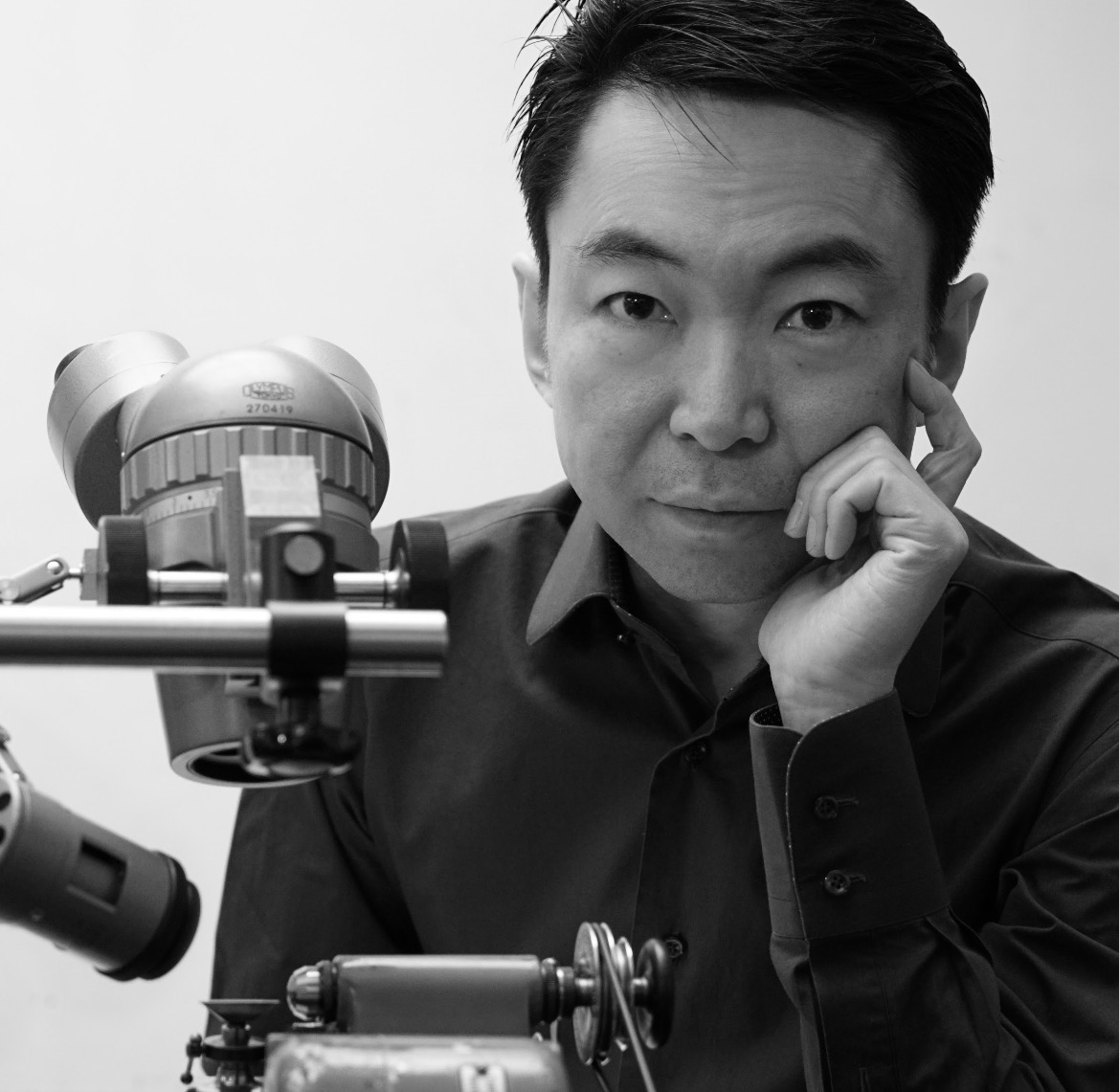
Introduction
In a country that gave the world Seiko and Grand Seiko, Citizen, and Credor, for decades there was no independent watchmaker whose name would be mentioned in the same breath as Philippe Dufour, Kari Voutilainen, or Roger W. Smith. Hajime Asaoka changed this situation.
Asaoka was born in 1965 in Kanagawa Prefecture. He studied design at Tokyo University of the Arts, graduating in 1990, and two years later founded his own design studio. Watchmaking was not his first profession. He entered the world of mechanical timepieces as an industrial designer and a self-taught individual who decided to master a craft usually associated with years of education in Swiss schools, manufactures, or family workshops.
The breakthrough came in 2009 when he presented the first Japanese wristwatch with its own tourbillon movement. This was an exceptional achievement not only in Japan but also in contemporary independent watchmaking, as this complex movement was created outside the structures of a large manufacture, in the workshop of a man who had not previously operated within the classical system of watchmaking education. In 2011, Asaoka began selling watches under his own name.
Since then, his atelier has remained one of the most intimate workshops for contemporary independent watch projects. Annual production is counted not in hundreds, but in single pieces, and each watch is largely created under the personal supervision and with the involvement of the creator himself. In a world where even many prestigious brands use extensive networks of subcontractors, such a scale of work is of particular significance.
Asaoka's most recognizable models include the Tourbillon, Tourbillon Pura, Tsunami, and Chronograph. Their common denominator is a clear fascination with Art Deco aesthetics, classical proportions, and a very rigorous approach to detail.
These are generally not watches that are showy in a flashy way. Their strength lies rather in focus, discipline of form, and a sense of harmony that distinguishes them from many contemporary constructions attempting to impress primarily with design or technical records.
It is worth noting, however, that for Asaoka himself, Art Deco does not only mean a characteristic language of forms.
As he explains, before the advent of Art Deco, designers often directly copied the forms of plants and animals. Examples include table legs resembling cat paws or window frames modeled after climbing plants. These were primarily craft objects where form was not always strictly related to function.
Art Deco, on the other hand, was an attempt to discover the beauty of function and to answer the question of what form the industrial world should take. The production process was incorporated into the design itself. As Asaoka emphasizes, what makes Art Deco unique is not a compromise between form and industry, but a harmonious collaboration of both elements. It is this idea of harmony, and not merely the replication of historical shapes, that remains most important to him.
In 2016, Asaoka founded Precision Watch Tokyo Co., Ltd., a company that became a broader platform for his activities. Its orbit included Kurono Tokyo, Takano, and Otsuka Lotec, as well as a collaboration with Jiro Katayama.
Kurono Tokyo is of particular importance – a brand designed by Asaoka, but based on a more accessible production formula and external movements. Thanks to it, his design language reached a much wider audience, without diluting the unique character of the watches created under the name Hajime Asaoka.
Asaoka is a member of AHCI, Académie Horlogère des Créateurs Indépendants, one of the most important organizations bringing together independent watchmakers. His presence in this group is symbolic, as it showed that contemporary independent watchmaking does not have to be exclusively a Swiss story.
Although his watches impress with their technical level, Asaoka himself rarely speaks of records, prestige, or complications for the sake of complications. Much more often he refers to concepts of harmony, nature, and simplicity. In his approach, designing a watch is not about adding more elements, but about removing everything superfluous until a form remains as close as possible to the internal logic of the movement.
The interview you are about to read offers a glimpse behind the scenes of this journey. It is a story of how an industrial designer from Kanagawa became one of the most important representatives of contemporary Japanese independent watchmaking, and why, in his world, simplicity can be harder than complexity.
WoW:
In many contemporary independent watches, attention is focused mainly on complications or the spectacular appearance of the movement. In your work, proportions, light and surfaces seem equally important.
Where does the design of a Hajime Asaoka watch really begin?
Hajime Asaoka:
First of all, as wristwatches are intended to be used for a long time, I believe their design must be timeless.
So, what is the ultimate timeless design?
I believe it is ‘nature’.
Therefore, if we approach design in the same way as nature does, we will undoubtedly create a timeless wristwatch.
Nature does not begin with outward appearance; rather, whether we are talking about animals, plants, or even the universe as a whole, its creation is an approach that starts with external factors and harmonises them with one another.
Applying this to wristwatches means taking accuracy, durability and ease of use as our starting point.
I believe this naturally leads to a design that is not ostentatious.
WoW:
In one of your posts, you mentioned that you personally develop the paints and lacquers used for your dials.
At what point does a detail stop being just a “detail” and become a key part of the entire project?
Hajime Asaoka:
I believe the very purpose of an independent watchmaker is originality.
Consequently, I do not simply fit off-the-shelf movements into my watches.
Therefore, in the manufacturing process, I strive to use methods and materials that are as unique as possible.
In other words, rather than conforming to established methods, I develop everything from the manufacturing process and materials upwards in pursuit of originality.
In particular, as the dial is the most important component of a wristwatch, I believe it is vital to start from the very beginning—with the creation of the paint.
WoW:
Your watches are highly technical, yet at the same time visually very calm.
Do you think contemporary watchmaking too often tries to attract attention?
Hajime Asaoka:
As long as watchmaking is a business, I think it is only natural that the designs become ornate.
However, I believe we must not forget that the purpose of watchmaking is not business.
WoW:
For many years, Japan was associated mainly with industrial perfection and large manufacturers.
Do you think there is now something that could be described as an independent Japanese watchmaking language?
Hajime Asaoka:
Japanese watch enthusiasts are of a very high calibre; in fact, half of the watches produced by Philippe Dufour are owned by Japanese enthusiasts, and it was in Tokyo that maisons such as Franck Muller, Lange & Söhne and FP Journe first established their boutiques.
I believe this environment has a positive influence on independent watchmaking in Japan.
Japanese watch enthusiasts quietly seek out the watches they love. It is a diverse and intellectual pursuit.
And it is precisely because they are quiet that my imagination remains free.
WoW:
The name TSUNAMI evokes enormous force and chaos, while the watch itself feels extremely calm and ordered.
How do you personally interpret the relationship between the name and the character of this project?
Hajime Asaoka:
The name ‘TSUNAMI’ derives from the large balance wheel and the large barrel that drives it.
Both are on a par with those found in pocket watches.
The TSUNAMI is a watch that houses these components within a compact 37mm case, achieving the stability and precision of a pocket watch.
WoW:
Your movements feel very controlled and precise, but at the same time they do not feel “cold”.
How do you find the balance between technical perfection and the character of a mechanical object?
Hajime Asaoka:
Although design is based on logic, when I am given the freedom to choose components and the overall form, I make it a point to pursue aesthetic appeal.
What is interesting is that the pursuit of aesthetics can sometimes enhance functionality.
I believe that is what design is all about.
WoW:
You wrote that the purpose of watchmaking is not business.
How do you personally define the true purpose of watchmaking?
Hajime Asaoka:
For me, a watch is a medium through which I express my own way of thinking.
I wish to convey this to you through the entire process of watchmaking.
WoW:
Do you believe that exceptional collectors can be just as important to the development of watchmaking as exceptional watchmakers?
Hajime Asaoka:
Japanese watch enthusiasts quietly seek out the watches they love.
It is precisely because they are quiet that the imagination remains free.
That is what matters.
WoW:
Which components do you consider absolutely essential for preserving your own identity and independence as a creator?
Hajime Asaoka:
I believe it is essential for the overall structure of a watch to possess a unique character.
Therefore, I have no objection to using off-the-shelf components for parts such as the balance spring or bearings, provided that the structural uniqueness is not lost.
WoW:
Are there any specific aspects of nature that have influenced the way you think about watchmaking and watch design?
Hajime Asaoka:
For me, the concept of ‘harmony’ is more important than any specific aspect.
My life’s work is to discover what process will yield results that rival the harmony found in nature.
WoW:
You have written that your life’s work is to discover a process capable of producing results that rival the harmony found in nature.
Have you ever come close to finding that process, or do you believe it is something that can never be fully achieved?
Hajime Asaoka:
Nature is so vast that the scope within which humans can intervene is extremely limited.
Furthermore, whilst nature appears at first glance to be a highly complex system, there is a constant pursuit of how simple it ought to be.
That, in itself, is what we call harmony.
With this in mind, I strive to simplify the structure of my wristwatches as much as possible.
If I feel that further simplification is impossible, perhaps I can say that I have come a little closer to capturing a ‘fragment’ of nature’s system.
Simplicity is difficult; complexity, in fact, is not.
After the Conversation
Throughout this conversation, Hajime Asaoka repeatedly returned to the same ideas: harmony, simplicity, process, and originality.
This is no coincidence. In contemporary watchmaking, it is easy to talk about complications, new materials, limited editions, or auction records. Asaoka, however, consistently directs attention elsewhere. Not to the result itself, but to the path that leads to it.
While reading his answers, I was reminded of a documentary I once watched about the production of traditional Japanese calligraphy ink. For many months, sometimes even years, soot is carefully collected from the flame of special lamps. What follows is a long process of mixing, shaping, and maturing the material until it is finally capable of leaving a single brushstroke on paper in the perfect shade of black.
I do not know whether Hajime Asaoka himself would agree with such a comparison. Yet it is difficult not to notice a certain similarity. In his answers, the process of arriving at a result seems just as important as the result itself. It is no coincidence that when asked about dials, he speaks not about colours, but about creating his own paints. When asked about watch construction, he speaks not about complications, but about harmony. When asked about independence, he points not to individual components, but to the character of the overall structure.
Particularly interesting was the fact that, when asked about the essence of independent watchmaking, he did not speak about craftsmanship, tradition, or luxury. He spoke about originality. Likewise, when asked about the purpose of watchmaking, he answered that a watch is a medium through which he expresses his own way of thinking.
Perhaps that is precisely why his watches leave such a distinctive impression. They are not an attempt to demonstrate how much can be added to a movement. Rather, they are an exploration of how much can be simplified without losing its character.
Towards the end of our conversation, we returned to the subject of nature, which Asaoka described as the ultimate model of timeless design. Asked whether he had come close to discovering a process capable of achieving the harmony found in nature, he replied that whenever he reaches a point where further simplification seems impossible, he feels he may have captured a small fragment of nature’s system.
A moment later, he added a sentence that perhaps best summarises not only his own design philosophy, but also the essence of every mature craft:
“Simplicity is difficult; complexity, in fact, is not.”