Interviews
Soichiro Ikeda
How to build your own watch with a tourbillon and camera-style winding at the age of 22, without watchmaking school?
Introduction
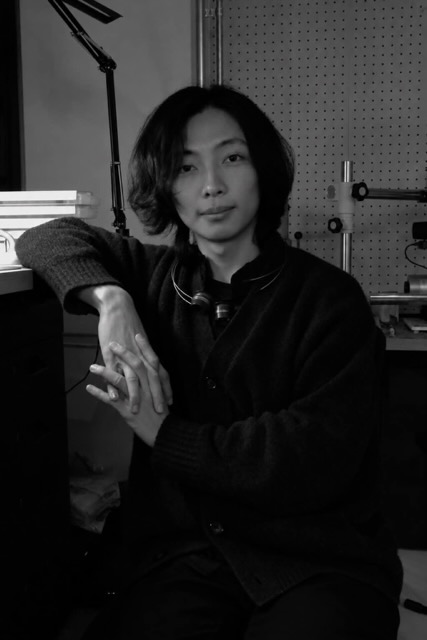
Soichiro Ikeda is just 22 years old and comes from Okayama Prefecture, Japan. He is a mechanical watch designer and the founder of I.S.ICASA, a young watchmaking brand based in Kyoto. In October 2026, at Tokyo Watch Week, he presented his first model, the Tourbillon 01.
Ikeda is naturally among the youngest generation of Japanese independent watchmakers. What is most remarkable, however, is that he did not attend a specialist watchmaking school or begin his career with an apprenticeship at an established manufacture.
He has arrived at this point almost entirely through his own efforts. His path led from reading books and teaching himself movement design to acquiring precision-machining skills and eventually working with the Japanese industrial company CASTEM.
CASTEM provided access to the technological facilities that allowed him to turn computer designs into working constructions. That partnership became the foundation of I.S.ICASA, while Ikeda independently designs and manufactures the watches himself.
The debut Tourbillon 01 is a manually wound mechanical watch with a one-minute tourbillon, housed in a Grade 5 titanium case measuring 43.5 mm in diameter and just 9.7 mm thick. Its movement beats at 18,000 vibrations per hour. The watch stands out for an unusual operating system without a conventional crown and for the use of titanium not only in its case but also in movement components. Production of the first model is limited to five pieces.
Japanese independent watchmaking already has internationally renowned figures such as Hajime Asaoka and Masahiro Kikuno. Ikeda is only beginning his career, and it would be premature to judge his achievements by the same standards. His debut nevertheless deserves particular attention for the extent of his own design work, its unusual technical solutions and the way he has combined individual ambition with the capabilities of modern industry.
I recently interviewed Shin Ohno, another self-taught Japanese maker who, as he told me, constructed a minute-repeating clock despite having no previous practical experience with that kind of mechanism. Both stories demonstrate that there are routes into contemporary watchmaking quite different from traditional schooling and years of formal apprenticeship.
In this conversation for WoW – Watcher of Watches, Soichiro Ikeda discusses his path into watchmaking, the development of his first watch and his plans for the future.
WoW:
According to your biography, your interest in mechanical watchmaking began when your grandfather gave you a watch at the age of fifteen. What kind of watch was it, and what fascinated you so much about it? Was it curiosity about how the movement worked, an interest in its construction, or something else entirely? How did that fascination develop into the ambition to design and make a mechanical watch yourself?
Soichiro Ikeda:
My grandfather gave me a simple Seiko automatic watch that cost around 20,000 yen.
Before that, I had only known quartz watches, so my first encounter with a mechanical watch was a tremendous experience for me.
All those tiny gears meshing together and producing a delicate, rhythmic sound. I thought it was extraordinarily beautiful. Ever since then, I have had the habit of holding a watch up to my ear.
I think what fascinated me most was the way the movement seemed almost like a living organism.
Later, I learned about the independent watchmaker Masahiro Kikuno and decided to follow the same path. Until then, I had never imagined that one person could make a watch by hand. It was a real revelation. At that moment, I felt as though I had discovered what I wanted to do with my life.
Even today, when I come across an interesting watch or a mechanical solution I have never seen before, I remember the feelings I had when I first encountered a mechanical watch.
I hope that one day people looking at my watches will experience something similar to what I felt back then.
WoW:
You have mentioned that you began teaching yourself watchmaking using books obtained from abroad. Which books or authors were particularly important to you? There is something else about this approach that fascinates me. Learning watchmaking solely from books is a little like trying to learn to drive without ever sitting behind the wheel. You can understand the theory perfectly, but it cannot replace practical experience and the manual skills developed over years. How did you overcome this difficulty? How did you acquire your first practical skills? Were you truly self-taught throughout this period, or did you also receive guidance from experienced watchmakers or precision-machining specialists?
Soichiro Ikeda:
First and foremost, I would mention George Daniels’s book Watchmaking.
Many people describe it this way, but I genuinely regard it as the watchmaker’s bible. It helped me enormously as well.
I also used photographs showing how watches are made, available in various places on the internet, and blogs written by independent watchmakers.
As for gaining practical experience, you could say that I taught myself almost entirely. I never received direct technical instruction from a professional watchmaker.
I started by taking watches apart myself. Then I tried putting them back together, replacing components, and making parts from 3D models I had designed to see whether they actually worked. I moved forward in this way, in very small steps.
Just a few years ago, my knowledge and skills felt like a collection of disconnected fragments.
Only recently have they gradually begun to come together. I feel that they have finally started to take the form of a complete watch.
WoW:
At seventeen, you approached various companies looking for someone who could help turn your designs into actual mechanical constructions. How did you come into contact with CASTEM? What did you show them, and what persuaded the company to take your ambitions seriously?
Soichiro Ikeda:
While I was still in high school, I completed a watch design and looked for somewhere I could actually make it.
I visited several companies. In the end, CASTEM agreed to let me use its machines.
I approached the company because I had heard that its president was an exceptionally interesting person.
When I met him, I found that he really was. He said something along the lines of, “We have an interesting young man here, so let’s see if we can let him use the machines.”
At first, I showed him the design data for the watch I was working on. The project was already fairly advanced, so he apparently thought that I might actually be able to complete it.
The president’s decision to support my project back then is the reason I am where I am today.
WoW:
You took an unusual route into watchmaking, learning precision machining in an industrial environment rather than through a traditional watchmaking apprenticeship. How did this experience influence the way you think about movement design? Do you believe it allowed you to question certain conventions that a traditionally trained watchmaker might take for granted?
Soichiro Ikeda:
Departing from the traditional route into watchmaking had many disadvantages, but it also brought me quite a few benefits.
I took a very roundabout path, but it helped me develop the ability to solve problems independently.
I also think that using Grade 5 titanium, which is not commonly used in watch movements, was possible precisely because I entered watchmaking from outside its traditional environment.
In fact, I have adopted many other solutions as well.
For example, I use pre-hardened steel to make pinions. I also make some parts from super duralumin. I anodise them and then introduce a fluorine-based lubricant into the porous layer formed by that process to improve the surface’s lubricating properties.
You can also see the influence of an engineering approach in the movement’s construction. For instance, to position the plates, I use locating pins machined as an integral part of the component.
Perhaps that is why my watches give a slightly different impression from others.
Of course, I sometimes question existing design solutions and watchmaking methods. I do change some of them.
On the other hand, when I examine traditional constructions more closely, I often discover why they were designed in precisely that way. It reminds me once again how knowledgeable and ingenious earlier generations of watchmakers were.
WoW:
One of the most distinctive features of the Tourbillon 01 is its winding mechanism, inspired by the film-advance system of a mechanical camera. First, why did you decide to dispense with the traditional crown altogether? Was it mainly about creating something different from existing watches, or did you see specific mechanical or practical advantages? Could you then explain exactly how the mechanism works, from the movement of the lever to the winding of the mainspring? What was the most difficult engineering problem to solve in order to make the system reliable?
Soichiro Ikeda:
The initial motivation was the fact that I am left-handed.
Operating a conventional crown is uncomfortable for me, so I wanted to develop a new way of operating a watch that could replace it.
Winding a traditional hand-wound watch also takes some time. It requires small movements and a certain amount of manual dexterity.
That is why I decided on a lever mechanism that would be intuitive to operate for both right- and left-handed people.
Of course, the fact that I have long liked analogue film cameras also played a part.
I also wanted to make the construction as resistant to damage as possible, because traditional crowns can fail too. I designed the lever mechanism so that even somewhat less delicate handling would not easily cause problems.
As for the construction itself, the lever has a range of movement of about 100 degrees.
When it is raised, the motion passes through a gear beneath it to an adjacent wheel equipped with an axially acting clutch.
The drive then reaches a winding wheel with wolf’s-tooth gearing and ultimately winds the mainspring inside the barrel.
When the lever is released, it automatically returns to its starting position thanks to a small spring dedicated solely to that purpose.
Because the system contains a clutch, the lever’s return movement is not transmitted to the mainspring barrel.
The most difficult task was probably designing the mechanism that returns the lever automatically.
A great deal of work went into using a small, separate spring and choosing its characteristics so that the lever would feel right while winding and return smoothly and automatically to its initial position when released.
WoW:
The I.S.ICASA website states that the tourbillon cage is mounted directly to the case, which helped reduce the watch’s overall thickness. What exactly does this mean from a mechanical design perspective? How is the cage supported, and how did you maintain precise component alignment while still allowing the movement to be assembled and serviced?
Soichiro Ikeda:
There is a construction known as the flying tourbillon, but personally I am not particularly fond of it.
I believe rotating components should, wherever possible, be supported on both sides.
Normally, this requires two plates.
However, if you place a tourbillon, which is already fairly thick, between two plates and then add the necessary clearance between the movement and the case, the entire watch becomes very thick.
I therefore decided to transfer the function of one of those two plates directly to the case.
This allowed me to keep the watch’s overall thickness below 10 mm.
To position the components, I milled two integral locating pins on the inside of the case, which connect directly to the movement’s mainplate.
The other plate is designed to be removable from the mainplate, allowing the tourbillon cage itself to be taken out as well.
WoW:
According to published information, Grade 5 titanium accounts for more than 95% of the watch’s component volume. This material has numerous advantages, including high strength and low weight, but it also presents challenges in machining, friction and wear. Why did you choose to use titanium so extensively? Which movement components are actually made from it, and where did you decide another alloy would work better? Did you have to develop any special solutions to reduce friction or component wear?
Soichiro Ikeda:
In my view, titanium’s main disadvantages are its high material cost and the exceptional difficulty of machining it.
In almost every other respect, however, I consider it a metal very close to ideal.
Brass, for example, requires protective plating. It is also relatively heavy, and if the plating is damaged, discolouration and corrosion can become problems.
Using titanium significantly reduces these problems.
In the Tourbillon 01, the case, bracelet and movement plates are all made from Grade 5 titanium.
Where components come into contact, I generally use bearings or ensure sufficient lubrication to minimise friction and wear.
It is an extremely difficult material to machine, but I believe the benefits justify the effort.
WoW:
Your brand’s documentation suggests that you personally design and manufacture almost every component, with certain exceptions. Could you clarify precisely which parts are made in your workshop and which come from outside suppliers? I am particularly interested in the balance, hairspring, escapement components and hands. To what extent do you personally carry out the machining, assembly, regulation and hand-finishing of these parts?
Soichiro Ikeda:
Essentially, I machine almost all the parts myself.
In my workshop, I make the case, bracelet, movement plates, gear wheels, pinions, dial and even the crystal.
I mainly source springs and ruby jewel bearings from outside.
For the remaining components, I personally carry out every stage, from design and machining through finishing to assembly and regulation.
WoW:
The Tourbillon 01 runs at 18,000 vibrations per hour. Why did you choose this particular frequency? Was the decision primarily driven by the movement’s energy balance, the tourbillon architecture or the characteristics you wanted from the regulating organ? What did your tests reveal about timekeeping accuracy and power reserve?
Soichiro Ikeda:
Of course, I considered timekeeping accuracy and energy efficiency, but my choice of 18,000 vibrations per hour was largely a matter of personal preference.
I like watching the slow rotation of a large tourbillon cage and the way the movement works when you can clearly see its oscillations and feel its rhythm.
Tourbillons also tend to have shorter power reserves than ordinary watches.
The power reserve is approximately 30 hours.
As for accuracy, because I make all the components myself, including the escapement, I cannot yet say that I have achieved a very high level of timekeeping precision.
That is one of the areas I would like to improve further.
WoW:
According to available information, you completed your first mechanical watch in 2025, several years after beginning your design work. How many prototypes or fundamentally different versions of the construction did you produce during that time? Could you describe one solution that ultimately failed and explain what you learned from the experience?
Soichiro Ikeda:
In fact, it was not a case of making many completely different prototypes. Instead, I repeatedly made small improvements to the same construction.
Among the more significant recent changes were redesigning the escapement and changing how it was manufactured, as well as replacing the original winding wheel with one using wolf’s-tooth gearing.
In the escapement, the initial construction caused problems with its proper operation.
The interaction between the escape wheel and pallet fork was not correct, so I had to reconsider the design and also change how the components were made.
During that work, I personally machined the pallet jewels, adjusting both their working angles and their thickness.
The change to wolf’s-tooth gearing on the winding wheel was intended to improve the tactile click when operating the lever.
Compared with the earlier solution, both the feel of the operation and the sound made by the mechanism became much more pleasant.
It was the accumulation of such small improvements that led to the present Tourbillon 01.
WoW:
CASTEM has played an important role in your development as a watchmaker. How is the collaboration organised today? Which design and production decisions do you make entirely independently, and in which areas do you draw on the company’s engineers, equipment or expertise? What does watchmaking independence mean to you within such a partnership?
Soichiro Ikeda:
If I had to describe our current relationship, I would say it most closely resembles an internal start-up operating within a company.
I am the one who wants to make watches, and CASTEM supports me in doing so.
At present, I make the decisions and carry out all the tasks myself, from styling and design to production planning, machining, finishing, assembly and sales.
In that respect, I believe my work is not very different from that of a typical independent watchmaker.
I am genuinely grateful that I can make watches in these conditions.
In the future, I would also like to undertake new collaborative projects combining CASTEM’s technologies with watchmaking.
One major advantage of working with CASTEM is not only greater financial security, but also access to the company’s experience in administration, human resources and organisation.
As a result, I do not have to worry excessively about those matters and can concentrate on making watches. It is an exceptionally favourable working environment for me.
WoW:
Production of the Tourbillon 01 is limited to just five pieces. Developing an entirely new mechanical watch at such a small production scale must demand considerable time and resources. Why did you choose this number? Is the Tourbillon 01 primarily the realisation of your personal vision of watchmaking, or also the beginning of a venture you would like to develop on a larger scale? Have you considered how these watches will be serviced and kept running several decades from now?
Soichiro Ikeda:
At the beginning of my career, above all I want to try making as many different kinds of watches as possible.
That is why I intend to produce relatively few examples of each model.
The Tourbillon 01 is my first creation. Naturally, I can see things in it that I would like to improve in the future.
Rather than spend a long time producing a single model, I prefer to move on to new constructions. That way, I can apply the experience gained and problems encountered with the previous watch to the next project.
Making a variety of watches is also extremely important to me as a way of gaining experience.
That is why I decided to limit production of the Tourbillon 01 to five pieces.
I do not yet have a clearly defined plan for the future, but I would like to gradually increase the number of watches I make.
Today, watches made by independent creators are usually extremely expensive and produced in very limited numbers.
I would like this world to become a little more accessible and reach a wider audience.
Even if my brand grows considerably in the future, I intend to continue making watches personally.
I would like to keep making them until the very end of my life.
Long-term maintenance and servicing are important challenges that I take very seriously. At present, I am the only person responsible for making and servicing my watches. If something were to happen to me, there is not yet an established system to ensure that they could continue to be repaired. One of the central themes of my watchmaking is to create watches that can be preserved and passed down to future generations. I therefore hope to establish a system that will allow my watches to be maintained and repaired even after I am no longer here.
WoW:
Japan has developed an extraordinary community of independent watchmakers, including Hajime Asaoka and Masahiro Kikuno, both of whom have followed highly individual creative paths. Have either of these watchmakers influenced your thinking or offered you advice? And if we were to meet again in ten or twenty years, what would you like I.S.ICASA to look like? What kinds of watches would you like to make, and what would you hope to have achieved as a watchmaker?
Soichiro Ikeda:
The person who inspired me to become an independent watchmaker was Masahiro Kikuno.
For that reason, I think he has had the greatest influence on me.
Recently, we have occasionally met and talked about various things.
Kikuno has an extraordinarily rich imagination and is interested in practically everything. I still admire his attitude very much.
As far as manufacturing techniques are concerned, Hajime Asaoka’s blog was an enormous help to me. I therefore regard him as another person who has had a major influence on me.
I also owe a great deal to Mr Hida and the other members of the NH Watch team.
The people at NH Watch taught me a great deal about the attitude of a watchmaker and how to think about this work.
I always wear a ring on the index finger of my left hand. It was engraved by Mr Kano, an engraver, during my first visit to the NH Watch workshop.
I remember that it was then that I once again felt very strongly that I wanted to devote my life to watchmaking.
That ring reminds me of the feelings and the decision I made when I resolved to become an independent watchmaker.
It is an extremely precious keepsake to me.
If I had one wish for I.S.ICASA ten or twenty years from now, it would be that I had not forgotten how much pleasure I take in making watches.
I would like to continue making watches that no one has ever seen before, watches that arouse curiosity and excitement.
At the same time, I want them to be beautiful watches that reflect my own imagination and inner world.
I hope I will still be able to make such creations in the future.
After the Conversation
Watchmaking remains strongly attached to the traditional route to acquiring skills: school, apprenticeship, years of work under an experienced master and only then the independent design of movements. The value of that education is hard to dispute. History nevertheless offers many examples of rigid structures beginning to constrain young talent. One need only recall Dominique Renaud and Giulio Papi, and their path from Audemars Piguet to founding their own company. The traditional model of training and professional development cannot therefore be regarded as the only possible route.
Soichiro Ikeda’s case confirms this very well. That does not, of course, mean that reading a few books, mastering 3D design software and gaining access to a CNC machine is enough to become a watchmaker. Between designing a component and producing a reliable movement lies an enormous amount of work involving experience, knowledge of materials, manual skills and thousands of hours of practice. Ikeda himself discovered this as he repeatedly refined his own construction.
His story also draws attention to a change taking place well beyond watchmaking. Knowledge once available almost exclusively to students at specialist schools and employees of manufactures has become much easier to access, partly thanks to the internet and social media. At the same time, design software and modern machining technologies allow an individual constructor to tackle tasks that, only a few decades ago, would have required the facilities of an entire company.
We should not confuse the ability to build a complicated movement with the ability to bring it to technical maturity. The fact that a watch runs does not mean that it will run equally well for decades to come. Nor does it guarantee that the construction will perform consistently in repeatable production, even in very small series. A final assessment of the Tourbillon 01 will require time and, above all, experience of the watch in actual use.
What I also appreciate in Ikeda’s answers is his humility. He does not try to present every solution of his own as an achievement surpassing those of his predecessors. Quite the opposite: he admits that when he examines traditional constructions more closely, he often begins to understand why earlier watchmakers made precisely those design decisions.
That is a valuable attitude, particularly in an industry where the word “innovation” is overused and solutions known for decades can reappear under new names, presented as breakthroughs.
I am also intrigued by the Japanese context of this story. Masahiro Kikuno, Hajime Asaoka, Shin Ohno and now Soichiro Ikeda. They are, of course, very different creators, with different experience, achievements and ways of working. Yet it is difficult not to notice that Japan has become a place where independent watchmaking also develops outside traditional vocational education structures. Perhaps this is no coincidence. In Japanese craft culture, patience, persistent refinement of skills and respect for one’s work occupy a particularly important place. It is worth asking whether these qualities help foster such remarkable individual undertakings.
Perhaps we should pay closer attention to this phenomenon instead of treating Switzerland as the only natural point of reference for contemporary watchmaking.
I do not know how Ikeda’s career will develop. He is only 22, and the Tourbillon 01 is his first model. He probably has more difficult technical problems, unsuccessful attempts and costly decisions ahead of him than he can currently imagine. Perhaps in a few years his constructions will be considerably more mature. Perhaps he will also change the way he thinks about designing and producing watches.
That is precisely why I am interested in observing people like him at the beginning of their journey, rather than only once they have gained the recognition of collectors and industry media. I have often said that they can be much more interesting interviewees than the CEOs of large corporate watch brands. The latter frequently speak in the language of statements prepared by PR departments, carefully avoiding anything that might stray beyond the company’s official narrative. Talking to someone who personally designs and makes movements, by contrast, allows us to discover not only what he has achieved but also what he has not yet managed to solve.
In Ikeda’s case, I would particularly like to see his second and third watches. The first demonstrates, above all, that he was able to bring his own project to completion. The next ones will show what he learned in the process.