Interviews
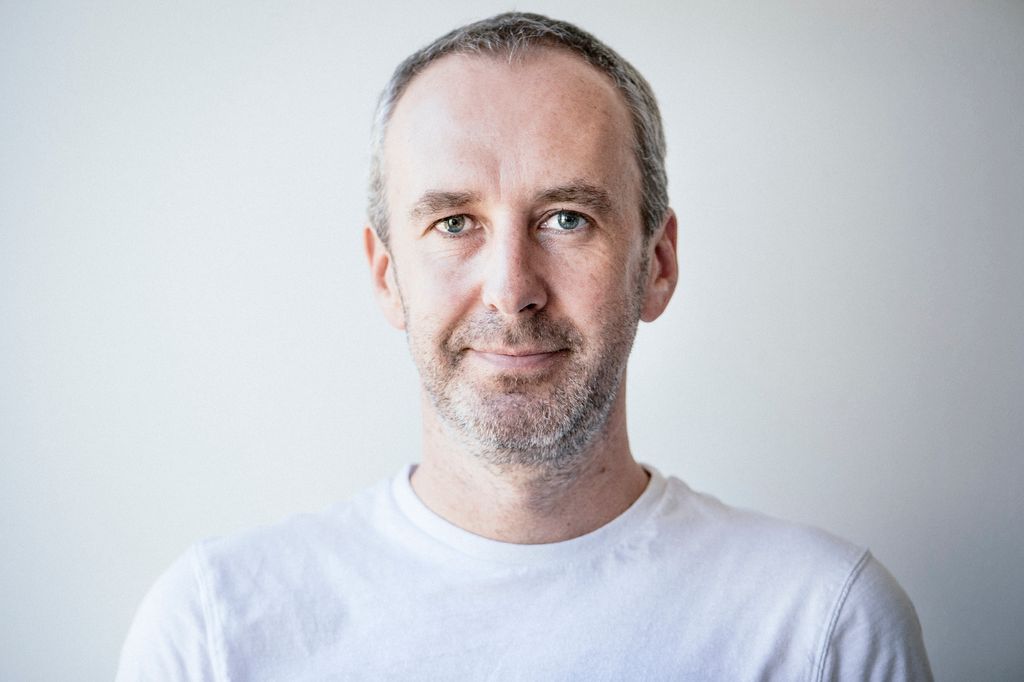
Andreas Felsl
Horage - a rebel by choice
Introduction
Andreas Felsl is the co-founder and CEO of Horage, an independent watchmaking company from Biel/Bienne, which in recent years has become one of the most technologically interesting young brands in the Swiss market.
Unlike most microbrands, Horage has developed its own movements from the beginning, instead of relying solely on off-the-shelf ETA or Sellita calibers. The company has created, among others, the K1, K2, and K3 calibers, is developing constructions with micro-rotors and tourbillons, and in recent years has also heavily entered the area of silicon components for the regulating organ.
The brand operates mainly in the segment of several to a dozen thousand Swiss francs and has gained recognition primarily by attempting to bring solutions previously associated with much more expensive watchmaking, such as micro-rotors, tourbillons, or proprietary calibers, to a much more accessible price point. Horage produces relatively small series and operates outside the classic distribution model of luxury brands, selling a large portion of its watches directly to customers.
The company's portfolio includes both sporty tool watch models and more technical constructions showcasing the capabilities of their proprietary movements. One of the most well-known projects in recent years was the Tourbillon 1, which caused quite a stir in the industry by attempting to offer a Swiss tourbillon at a price many times lower than most of its competitors.
Since 2024, Horage has also been developing the MicroReg system, allowing the user to independently regulate the accuracy of the watch's rate without the need to send it for service. The company's team includes engineers who previously participated in the development of, among others, Omega 8000 movements, Eterna Caliber 39, Vauchers' constructions, and calibers developed for ValFleurier and La Joux-Perret.
This interview took the longest to prepare of all conversations published so far on WoW. I sent the first questions to Andreas almost two months ago, and the final version is the result of many rounds of clarifications, elaborations, and additional questions. From the outset, Andreas noted that the questions went beyond standard industry discussions and required more detailed answers.
Indeed, the conversation very quickly moved from marketing declarations to the level of process, competence, and real control over movement development. The last five questions, the most technical ones, were added after the first editing of the conversation, as earlier answers left too much room for interpretation. Andreas, however, agreed to continue the discussion, and it was this part of the interview that ultimately proved to be the most interesting.
The interview was conducted entirely in writing, which well explains both the length of the answers and their sometimes very technical nature.
Horage as an exception or a direction
WoW
Looking at Horage from the outside, it feels less like a brand and more like a model of how a company can operate. Do you see what you are building as an exception, or as an early indication of where the industry will eventually have to go?
Andreas Felsl
Horage is certainly not a standard Swiss luxury watch company. Most brands begin with marketing and storytelling, and only later try to improve product performance, delivery, or supplychain resilience. Very few seriously consider precision, because luxury is often treated as something that doesn’t need to be accurate.
We approached things differently. We see ourselves in the business of a hobby — and when someone invests in a hobby, the expectation is not to be disappointed. That responsibility starts with the movement. A precise mechanical watch creates a far stronger emotional alignment with the brand than one that doesn’t run well, even if precision is not strictly necessary today.
This insight pushed us to build our technical and manufacturing capabilities first. Rolex succeeded for similar reasons: they leave no room for disappointment on the product side.
Deep vertical integration at low volumes requires a lean operational model. We believe the industry will split into two groups:
brands with real watchmaking credibility in the midpremium segment, and
brands selling status in the ultrahighend segment.
The lower segment — historically protected by distribution advantages — will struggle. Many brands contributed little to the progress of watchmaking and existed mainly because they had access to retail networks. Without innovation and credibility, they will fade.
Microbrands face the same challenge. A unique design or a good story is no longer enough. Longterm relevance likely will come from technical contribution, not aesthetics alone.
Independence without illusion
WoW
In watchmaking, “independence” is often understood as doing everything inhouse. At Horage, however, it seems to be more about control over IP, engineering and decisionmaking rather than full vertical integration. Does this mean that the traditional definition of independence is simply no longer valid?
Andreas Felsl
The value of a product comes from its intellectual property — and IP is far more than patents. It is the combined knowhow that allows a company to make things better, faster, or more efficiently. It is the ability to design, engineer, source, and assemble highperformance products independently.
The industry has misled the market by presenting “inhouse manufacturing” as the ultimate requirement for excellence. That is fundamentally wrong. IP creates value; manufacturing creates cost.
Watchmaking involves dozens of specialized processes — milling, turning, hobbing, stamping, polishing, hardening, plating, joining. No company in our industry is large enough to master and continuously improve all of them internally. The CAPEX would be enormous.
We spent more than ten years mastering the full productcreation workflow — design, engineering, toolmaking, assembly. Only once that foundation was solid did we bring the most costintensive processes inhouse, supported by mature CAM technologies and the need for greater agility.
A movement requires around 3,500 information transactions before machining even begins. Bringing too much inhouse too early inflates complexity beyond what most companies can manage.
True independence lies in controlling IP and processes — not in owning every machine. Because we understand how our partners manufacture, we can innovate with them. This creates a healthy equilibrium between independence and dependency.
“Inhouse” as a boundary concept
WoW
“Inhouse” has become one of the most powerful terms in the industry. At the same time, even the largest manufactures rely on complex supplier networks. In your view, does “inhouse” still carry real technical meaning, or has it become primarily a narrative construct?
Andreas Felsl
“Inhouse” has become a marketing term. Many companies claim it simply because they own machines. But owning machines does not mean understanding how to conceptualize, design, or fundamentally improve a movement.
Real inhouse capability means:
the ability to design and engineer a movement from scratch,
understanding every step from raw material to T0/T1 assembly,
managing the supply chain across all relevant processes, and
knowing the quality requirements at each stage.
It does not mean buying equipment without understanding the upstream and downstream processes. Without that knowledge, you cannot improve the product — and improvement is the essence of watchmaking.
Transparency vs. managing perception
WoW
You mentioned that if there is nothing to hide, transparency comes naturally. At the same time, the industry often doesn’t hide facts as much as it shapes how they are understood. Is Horage consciously stepping away from that model, or do you simply not need it to build value?
Andreas Felsl
Rolex operates with a culture of secrecy, yet they could reveal everything and still remain the leader. Most companies cannot, because they have created narratives that don’t match reality.
Our mission is to advance watchmaking. We speak to clients who value substance. We are not here to protect heritage or play the scarcity game. We want to make watchmaking exciting for the next generation.
When people visit us and see how we work, they understand the value. Excessive secrecy does not create value — it creates doubt. Eventually, companies must invent stories to cover earlier claims, and that destroys trust. The secondary market reflects this erosion of credibility.
We build value through engineering excellence, founderled storytelling, and strict avoidance of overproduction.
Manufacture as intellectual property
WoW
If one looks at Horage through the lens of IP, engineering and process control, it could be argued that you represent a different kind of manufacture. Do you think that the future definition of a manufacture will be more closely tied to intellectual property than to physical production?
Andreas Felsl
Manufacturing is highly specialized and CAPEXintensive. Many hardware manufacturers struggle to innovate because they lack strong software capabilities.
Our approach focuses on the software stack required to elevate traditional processes. The industry is shifting from volume manufacturing to highmix, lowvolume production. That shift requires investment in IP — meaning skills, not machines.
AI, vision systems, and robotics will play a major role. In micromechanics, we are working toward AIdriven 100% quality control. That is impossible without strong software expertise.
Limits of the model
WoW
A model based on partnerships and control has clear advantages, but also potential limitations. Where do you see its limits? Is there a point where not being fully vertically integrated becomes a constraint rather than a strength?
Andreas Felsl
There will always be a balance between independence and dependency. As long as supplier relationships remain fair — with neither side exploiting the other — this model has no inherent limitation.
MicroReg and the shift of roles
WoW
MicroReg suggests a fundamental shift — moving control over accuracy from the watchmaker to the user. This affects not only technology, but also the role of service, certification and even the concept of regulation itself. Do you see MicroReg as a natural evolution of watchmaking, or as a challenge to its existing foundations?
Andreas Felsl
MicroReg fundamentally changes the landscape. It shifts accuracy control from the watchmaker to the user — and no traditional system can match a useradapted MicroReg watch on the wrist.
We remain fully within the definition of a Swiss mechanical watch, yet we created an innovation that even the largest companies cannot compete with, regardless of scale.
The industry spends an estimated CHF 800 million per year regulating watches — and this cost does not make consumers happier. It increases total cost of ownership and reduces industry volume.
MicroReg cannot eliminate this cost entirely, but it can dramatically reduce it. Where major cost exists, innovation wins. MicroReg has Black Swan potential — in a positive sense — because it makes owning a watch more enjoyable.
Certification vs. technological reality
WoW
Do systems like COSC still carry real relevance today, or are they becoming a legacy framework that no longer reflects current technological capabilities?
Andreas Felsl
Certification still matters. It is not a guarantee of precision but a guarantee of process stability. If a company can certify at scale, its internal processes are robust.
Many highend brands do not certify because they likely could not pass consistently. Reworking failures would be too expensive. Their lack of certification is often masked with luxury storytelling and handfinishing narratives.
Stable processes create quality. Certification exposes whether those processes exist.
Biel/Bienne instead of Swiss Made
WoW
In many of your watches, you replace “Swiss Made” with “Biel/Bienne”. From a global marketing perspective, that could be seen as a step back, but from a transparency standpoint, perhaps a step forward. Do you believe that “Swiss Made” has shifted from being a precise indication to a simplified symbol?
Andreas Felsl
“Swiss Made” has been diluted. Many companies using the label have no real watchmaking capability beyond casing movements. The term has shifted from being a precise indication of origin and expertise to a broad marketing symbol that often hides how little actual watchmaking happens inside the company.
In our case, when we talk about movement parts — we source or manufacture roughly 98% of them in Switzerland, almost all within a 30 km radius of Biel. Only three parts are made in Germany, and those relate to the etching of our silicon components. For movement parts, Switzerland is simply the best place in the world. There is no reason to go elsewhere.
Where we take a different approach is with structural parts — cases, bracelets, dials, hands, straps. These are not performance‑critical in the same way, and the required manufacturing capabilities vary widely. Here, we follow a simple philosophy: buy from the best, not from a passport.
For example: Asia leads in complex case and bracelet manufacturing. Diamond‑cut hands cannot be sourced in Switzerland because no factory here specializes in that technique. One of the best dial makers sits in Thailand. Whereas most companies source leather straps in Asia, we buy in Switzerland, because we get the best quality and low MOQs.
So we source structural parts internationally, based purely on capability, not nationality. It is not a price question; it is a who can do it best question.
We are a globally operating company with its roots in “Biel/Bienne.” It is a precise, verifiable statement of where our watchmaking capability resides. It reflects the reality of our work far better than a national label that can be stretched to its limits.
Price as a consequence of the model
WoW
Horage is often described in terms of its strong “specstoprice” ratio. But that assumes price is a deliberately positioned parameter. In your case, is price a goal, or rather a consequence of a model that removes traditional layers and markups?
Andreas Felsl
Our strategy is simple: top product at an acceptable price. Achieving top performance requires heavy investment in engineering and innovation. To keep prices reasonable, we must operate D2C.
We still work with physical points of sale, but we do not transfer the risk of unsold inventory to retailers — a practice that forces artificial margins. Instead, we collaborate with partners we call concierges, who support clients preferring offline interaction.
Our 10 person software team built our own omnichannel retail system, enabling integrated transactions with minimal friction compared to traditional multilayer retail.
Design as a potential constraint
WoW
Horage has built a very strong position in terms of engineering and value. At the same time, watches operate not only on a technical level, but also on design, form and emotional appeal. Do you think that at a certain point, design — rather than engineering — becomes the main constraint to scaling a brand?
Andreas Felsl
Design is subjective. Our philosophy is subtle, comfortfocused, and detaildriven. We do not design for status signaling.
There are two design strategies:
the Patek approach — subtle, diverse, slowbuilding, low risk,
the Hublot approach — one strong signature, fast scaling, high saturation risk.
We follow the Patek approach: different looks across the collection, unified by a modernclassic language, legibility, and comfort. It is slower but far less risky and appeals to a broader range of tastes.
Luxury without distance
WoW
Traditional luxury is built on distance: boutiques, controlled distribution, limited access. The D2C model reduces that distance significantly. Do you see this as still being luxury, or as something that is evolving into a different category altogether?
Andreas Felsl
Luxury has two major dimensions: status, and aesthetic experience.
We focus on the latter. Buying an Horage watch requires engagement — understanding our work, meeting the team, appreciating the engineering. That investment of time is part of the luxury.
A friend once said we offer “independent watchmaking for independent thinkers.” For people who value substance over display, this creates a unique form of luxury.
K3 and a potential shift in industry structure
WoW
If the K3 calibre becomes widely available to other brands, Horage moves beyond being a watchmaker into a technology provider. Is this a deliberate step towards a role that could challenge the historical position of suppliers like ETA or Sellita?
Andreas Felsl
K3 is among the highestperforming movements available. Whether other brands adopt it remains to be seen. We do not aggressively pursue OEM business — it is difficult, and many brands undervalue movement development while overspending on marketing.
K2 and K3 form the foundation for MicroReg, which could challenge the entire movement industry. The key question for us is strategic: Do we remain a premiumsegment innovator, or do we build a monopolylevel technology platform that could dominate Swiss, Chinese, and Japanese movement production?
MicroReg forces us to consider these possibilities seriously.
The decision no one saw
WoW
Every company has a moment where a decision is made that is invisible from the outside, but defines its future. What was that moment for Horage?
Andreas Felsl
Few people realize that Horage contains a highly capable software company. We built omnichannel software that solves the longstanding disconnect between online and offline retail — the root cause of grey markets and retail decline.
We used Horage as a simulation environment to understand these problems deeply and developed a unified solution, now protected by a U.S. software patent.
This solution is not limited to watchmaking. It applies to nearly all consumer retail — a USD 30 trillion global sector. Nobody expects a watch company to tackle a problem of that scale, but that is exactly what we have done.
Concepts that no longer mean what they used to
WoW
In every industry, there are terms that once had precise meaning but gradually became diluted. Which concepts in modern watchmaking do you consider today to be the most disconnected from reality?
Answer: Two concepts have become disconnected from reality:
that watches are an investment class, and
that rarity automatically creates value.
Secondary market data does not support the investment narrative. And rarity is clearly not the main driver of value — the most profitable brand in the industry, Rolex, produces around one million watches per year.
Rolex is the competitor we all face for one of the two wrists available.
One sentence
WoW
If you had to describe in one sentence what truly differentiates Horage from most of the industry — what would it be?
Andreas Felsl
We advance watchmaking by applying modern technology across every layer of the company instead of relying on heritage as a substitute for innovation.
Internal vs. external development of key movement elements
WoW
If we break your movement down into its key elements – the regulator (balance and hairspring), escapement (anchor and escape wheel), gear train and power system – which of these do you fully design and develop internally, and where do you still rely on external suppliers or know-how?
Andreas Felsl
We design, lay out, and engineer every key element of our movements. The intellectual property behind the architecture is entirely ours. Where we rely on suppliers, it is limited to highly specialized process knowhow — for example coatings, technical surface treatments, or other niche processes where Switzerland already has worldclass specialists.
Most companies claiming to have their “own” movement are in reality building on ETA architecture and using offtheshelf components for the most difficult parts: ratchet wheels, friction systems for hands, setting mechanisms, and especially the entire assortment. Many do not understand the mathematics behind the gear train, tooth geometry, force distribution, or any of the fundamentals required to claim true authorship or improved performance.
We control all fixture and toolmaking relevant to T0 and T1 assembly processes. We never buy finished subassemblies (such as riveted wheelandpinion units) unless we have a longstanding relationship with a supplier who fully understands our requirements and gives us complete transparency into their own supply chain.
The reason is simple: when you innovate and improve a movement, you must be able to debug it. If you do not know every process step behind a subassembly, you cannot identify the source of a problem. At this small micron-level scale, even an incorrect washing process can cause a movement to fail.
This is the real skill of movement making: controlling the core IP in design and process knowhow. It is not about owning machines; it is about understanding every step that leads to a reliable, highperformance movement.
Control over the regulator and hairspring
WoW
Focusing on the regulator, meaning the balance and especially the hairspring – do you have full control over their design and parameters, or do you still depend in any way on external solutions or expertise?
Andreas Felsl
For the hairspring, we work with an experienced mathematician who provides the theoretical foundation. We then translate those numbers into a functional 3.5 Hz system. For the escapement, we now perform all mathematical work internally, same for laying out tooth shapes. Since 2011, we have gone through more than eleven improvement iterations on our escapament, and that accumulated knowledge feeds directly back into our simulations, geometry, and process optimization.
In the early days, we did not fully understand the mathematics behind the escapement. Today, we combine deep theoretical understanding with more than a decade of practical experience.
One clarification: one of our shareholders, Florian Serex, is part of our development team and acts as our primary simulator. He works on a contract basis, but after 15 years of collaboration, we consider this inhouse. In complex product development, external theoretic expertise is always part of the equation. Even car manufacturers rely on tools like KISSsoft for gear design, which means they depend on external algorithms and historical data libraries.
No company can draw a perfect line between internal and external knowhow. The real question is: on which side do you lean? The more you rely on external expertise, the less internal understanding you have — and the less you can claim true authorship of your movement.
Where process control ends and dependency begins
WoW
You speak about control of the process. At which exact stage – design, component manufacturing, assembly or regulation – does that control realistically end and turn into dependency on partners?
Andreas Felsl
On the manufacturing side, we naturally depend on external suppliers for machining tools. But what we do with those tools — the processes, tolerances, workflows, and quality control — is entirely internal knowhow.
On the engineering and design side, there are rare areas of mathematics where we rely on experts with decades of experience. It does not make sense to internalize every niche skill, because the scale does not justify it and Switzerland already has multiple suppliers with worldclass capabilities. Transfer stamping, coatings, and technical surface treatments are good examples.
That said, we are evaluating bringing plating and magnet polishing inhouse to reduce timetomarket. In truth, there is very little about our components or their production that we do not understand. We selectively internalize knowhow or processes based on supplychain risk and strategic dependency. Movements are a strategic asset, and as Horage grows, we must ensure that no third party can harm us by controlling a critical supplier. This risk assessment guides our IP and process onboarding, besides cost reduction needs achievable by economies of scale and or inhousing. I think as an engineering driven company there is not much know how or skill we cannot learn or execute within our organization. It is merely a Capex question which is limiting us.
What is truly yours vs. what is integrated from external sources
WoW
Without using the marketing definition of “in-house” – what in your movement is truly yours from concept to final execution, and what is in practice integrated from external sources?
Andreas Felsl
No one in this industry invents everything from scratch. For example, our escapement architecture was inspired by a 1968 Tissot patent from the era when plastics and microinjection molding were entering watchmaking. We took the geometric idea and transformed it into a version optimized for silicon. Many of our components draw inspiration from historical solutions — that is how engineering evolves.
But when you look at our component toolkit — SystemK — which is entirely based on our proprietary engineering and modular architecture across five calibers, then the entirety of the IP is ours. We know how to design, engineer, source, qualitycontrol, manufacture, assemble, and service all of our movements and their parts. At this level of variety and performance, only Rolex and ETA can claim something comparable.
Consider Breitling and Universal Genève. Why did Breitling ask Sellita to industrialize the B31? Why did they ask LTM to handle Universal Genève movements? And why do none of these movements use silicon? Because Breitling can manufacture the B01 — designed by former engineers who also worked on the Daytona — but since then, they have not brought a fully proprietary, highperformance movement to market. Because they have not team internally which can design industrial movements from the ground up.
There is a huge difference between manufacturing something that has already been designed and derisked, and designing something from scratch. Very few people in the world can design an industrially producible movement more or less from blank page. We have several of them in our team, with experience spanning Omega Cal. 8000, the Vaucher microrotor, the Eterna Cal. 39, Richemont ValFleurier and La JouxPerret calibers, and our own K1, K2, K3, KTOU, KTMR — plus another industrial movement that will be revealed in 2026 by a Swiss company.
Areas where the market might overestimate your independence
WoW
Is there any area of your movement or production model where the market might perceive you as more independent than you actually are?
Andreas Felsl
Everyone who has visited our facility — including absolute experts in movement making — raises their eyebrows. They have never seen a small company with this level of vertical integration, process control, and internal knowhow.
But this is something people only truly understand when they see it with their own eyes. That is why we operate an openfactory model. Visitors can open drawers, inspect fixtures, see our tooling, and understand exactly what we do and why we do it.
In terms of industrial high performance movement making, I think only Rolex and ETA have more independence than we do.
After the Conversation
The interview with Andreas Felsl is not a story about a single brand. It's a conversation that shows how concepts that Swiss watchmaking has used for decades, such as "in-house," "manufacture," "Swiss Made," or "independence," are increasingly failing to describe reality as simply as the industry's marketing would like. Not because someone has completely falsified them, but because modern watchmaking has become much more technologically complex than catalog definitions suggest.
This conversation was one of the longest-developing and most technical discussions in the entire WoW project. From the outset, he noted that the questions went beyond standard industry discussions and required more detailed answers.
And indeed, at many points, the conversation shifted from marketing declarations to the level of process, technological dependencies, and the real competencies needed to develop modern movements.
Firstly, the conversation very clearly shows that modern watchmaking is increasingly based not solely on owning machines or factories, but more and more on knowledge, process control, and the ability to design proprietary solutions. Felsl repeatedly returns to the point that today, an advantage is built not only by producing parts but, above all, by understanding the movement, its parameters, and the relationships between individual components.
Secondly, the conversation clearly illustrates how much the concept of "in-house" has become blurred today. Felsl openly admits that even the largest brands use external competencies, specialized software, or technological partners. At the same time, he very clearly tries to shift the definition of independence from the level of full production self-sufficiency towards control of knowledge and process.
And this is where the most interesting area for interpretation arises. Because although Felsl was at times surprisingly open for industry standards, some answers remained deliberately understated. The conversation repeatedly delved into mathematical, design, and technological competencies, but it was much harder to get a clear answer to the question of where exactly process control ends and the full, physical ability to independently produce the most critical movement components begins.
However, this does not change the fact that the level of transparency here was significantly higher than in most conversations conducted by the industry today. Most brands are very reluctant to go so deep into issues concerning suppliers, technological dependencies, or the limitations of the "Swiss Made" concept. Horage, on the other hand, very consciously builds its identity around the message "others prefer not to show this, we will show more." And it's hard not to feel that this controlled transparency has itself become part of the brand's manifesto.
I hope that in the future I will visit Horage and look into the declared "every drawer," as well as thoroughly explore, among other things, the topic of hairspring production.
Thirdly, the critique of the cult of rarity and the investment narrative surrounding watches resonates very interestingly in this conversation. Felsl points out that the world's most profitable brand produces about a million watches annually, yet maintains its position as a symbol of quality and desirability. In this logic, value does not result solely from limited supply, but from process stability, quality of execution, and technological consistency. The rest very often remains a story that the market tells itself.
At the same time, the interview leaves several deliberately unresolved topics. Felsl treats questions about the future of the K3 caliber as a potential platform for other brands with clear caution, which is understandable given the implications of such a model for the entire movement market. The question also remains open as to how scalable the company's model is, building its advantage on high technical competencies and a relatively small structure.
For the WoW reader, however, another conclusion seems most interesting. Modern watchmaking is increasingly defined not by the "Swiss Made" inscription itself, but by the people who truly understand the movement, can develop it, and know why it works the way it does. Theoretically, everything can be bought, but it is definitely more difficult in the case of knowledge and experience.