Interviews
Bernhard Lederer
History is an archive of questions
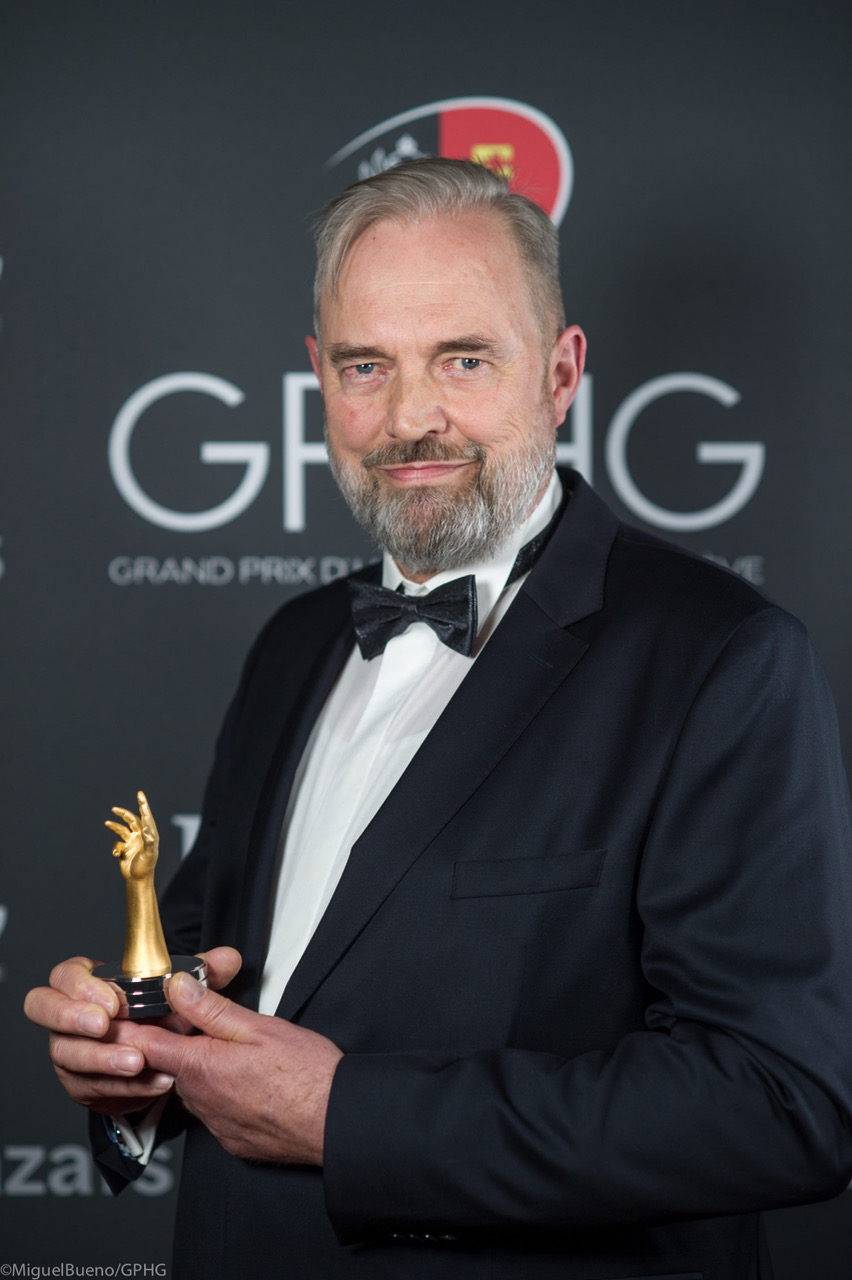
Introduction
Over the past few years, the name Bernhard Lederer has increasingly appeared in discussions about contemporary independent watchmaking. Most often in the context of chronometry, mechanical efficiency, and attempts to re-ask questions that for many brands had long ceased to play a significant role.
However, it would be a mistake to perceive him as a representative of a new generation of independent watchmakers.
He began his own journey long before independent watchmaking became a fashionable term and a separate market category. For many years, he consciously operated outside the mainstream, developing his own projects, undertaking restorations, fulfilling individual orders, and consistently avoiding what he himself describes as merely reproducing existing solutions.
Today, his work is primarily associated with the independent brand Lederer and projects focused on chronometry and escapement architecture. The most famous example remains the Central Impulse Chronometer – a construction that refers to the historical idea of an impulse escapement, but reinterprets it using contemporary knowledge and technological capabilities. It was this project that reignited the discussion about whether there is still room for true innovation in a mechanical wristwatch.
I had the opportunity to meet Bernhard much earlier, before his name began to regularly appear in international media. In 2008, he was a guest at one of the first meetings of the Watch and Clock Enthusiasts Club in Warsaw, of which I was then president. At that time, he was still running the BLU brand.
Looking from today's perspective, that meeting seems even more interesting than it might have seemed then. Even then, one could discern something that has remained unchanged to this day. Lederer was not interested in creating further variations on existing solutions. He was interested in questions about how energy is transmitted, stabilized, and converted into motion.
Therefore, the conversation you will read below is neither a discussion about a specific model nor the history of a brand.
It is a conversation about whether watchmaking, after several centuries of its development, can still ask new questions... and whether it is still able to answer them.
I. The Beginning of the Journey and Personal Context
WoW:
This year marks approximately the fortieth anniversary of your activity in bespoke watchmaking.
Looking back at these decades – do you perceive your path more as a series of consecutive projects, or as a gradual development of certain ideas that have accompanied you since the beginning of your career?
Bernhard Lederer:
I think it's a combination of both. Because for many years I had to make a living from restoration and repairs, I could only occasionally dedicate time to my own projects.
Over time, fortunately, orders for unique pieces for clients emerged, and later also small series.
However, throughout this time, one fundamental principle guided me: I always rejected commissions that involved copying known solutions or reproducing existing designs.
From the very first watch, I was fascinated by escapements, and all the watches I created for myself were subservient to this interest.
WoW:
When we had the pleasure of hosting you in Warsaw in 2008 during a meeting of the Watch and Clock Lovers' Club, you were still working on projects under the BLU brand.
Looking back today, do you see in those creations ideas that you are still developing now?Bernhard Lederer:
The BLU brand allowed me to realize my own ideas and build watches where craftsmanship was more important than the precision of the indications themselves, because ultimately it's always about the beauty of time.
Whether that beauty was expressed through the architecture of the movement, the way time was presented, or the quality of decoration, was not yet so clearly visible then.
The fact that we brought so much joy to collectors with these watches is evidenced by the fact that since 2009, when we had to cease the brand's operations during the financial crisis, until today – seventeen years later – we still receive inquiries about whether these watches can still be purchased.
II. Philosophy of Watchmaking History
WoW:
The history of watchmaking is often presented as an uninterrupted tradition. In reality, however, it was more a series of experiments – successful and unsuccessful – that step by step expanded the boundaries of this field.
Do you believe that the courage to experiment is the most important driving force for progress in watchmaking?
Bernhard Lederer:
Yes, the courage to experiment is the driving force of progress, and not only in watchmaking.
Edison once said that he did not fail a thousand times, but gained a thousand experiences that ultimately led him to his goal.
In this sense, watchmaking indeed constitutes an uninterrupted tradition, because it constantly sought ways to measure time more reliably and accurately.
The fact that paths through electrical and electronic solutions were also attempted demonstrates an openness of thought.
However, it is all the more beautiful that the mechanical watch still exists, develops, and finds more and more adherents – even if it now constitutes only a small percentage of the entire market.
WoW:
One could argue that in watchmaking, there are no true "dead ends." Even projects that at the time found no practical application can, decades later, become an inspiration for new designs.
Do you believe that many ideas of great masters – such as Breguet or later George Daniels – simply outpaced the technological capabilities of their eras?
Bernhard Lederer:
I disagree with that.
Just like in any field, there are dead ends in watchmaking too.
There are many "inventions" that never worked properly. There are also escapements that, although functional, are subject to such large fluctuations due to their design that they do not contribute any progress to watchmaking. These are classic examples of dead ends.
One can travel such a path for a while, but sooner or later one reaches the end.
Nor do I believe that great masters were truly limited by a lack of technological capabilities. Often, it was rather a lack of understanding of certain laws of physics.
Nevertheless, creators like Mudge, Breguet, or LeRoy created truly new things. They made inventions whose significance we feel to this day.
George Daniels drew precisely on such ideas.
In Breguet's case, the problem was not so much technological limitations as a lack of knowledge about certain physical laws.
III. The Watch as an Energy Machine
WoW:
In your work, there is a clear interest in the fundamental principles of watch mechanics – primarily the transmission of energy and the stability of the movement's operation.
Do you believe that it is precisely in this area – at the heart of the movement, i.e., the escapement and energy regulation – that the greatest potential for innovation in watchmaking still lies?
Bernhard Lederer:
Absolutely.
One of the world's largest watch brands recently demonstrated this again.
From the moment this "crowned" brand introduced its new escapement a year ago, the topic of escapements almost overnight became a subject of wider discussion.
The watch industry allows itself the luxury of using systems with an efficiency below 40%.
In any other industry, this would be unthinkable.
This is a vast, still poorly explored area waiting to be discovered.
WoW:
You often emphasize that a mechanical watch is essentially a machine for controlling and distributing energy.
Do you see the true field of a watchmaker's creative work precisely in energy management and its stabilization?Bernhard Lederer:
That has been absolutely accurately stated.
It all comes down to the amplitude of the balance wheel or pendulum.
The more stable the amplitude, the more constant the time between successive oscillations.
Since amplitude depends on the torque delivered to the oscillator – the balance wheel or pendulum – as well as the energy lost due to the escapement and other resistances, it is easy to see that ensuring the most constant possible supply of driving torque becomes paramount.
WoW:
After centuries of battling gravity, friction, and unstable driving torque, a fundamental question arises:
Do you believe that ideal chronometry in a mechanical wristwatch is even achievable, or is the very pursuit of this ideal the true meaning of watchmaking?
Bernhard Lederer:
Today, everyone should realize that ideal timekeeping cannot be achieved with a mechanical watch, and especially not with a wristwatch.
But isn't it fascinating that despite this awareness, movements are still being created that focus on the beauty of time and how it is presented?
The ability to conceive, design, and execute a movement that, for example, significantly reduces the escapement's energy requirement?
This reduces wear on components, and the power reserve can be extended.
The accuracy of timekeeping also improves – sometimes even to the extent that one can observe the effect of high atmospheric pressure, because the watch then has to work in "denser" air and starts to run slower.
Suddenly, external factors become more visible and have a greater impact than the manufacturing precision of the parts themselves.
The ability to observe such phenomena is something extremely fascinating.
IV. Technology and Modernity
WoW:
Today's watchmakers have production methods and technologies that previous generations could only dream of – extremely precise CNC machining, new materials, or computer simulations.
Do you believe that with these tools, it is now possible to realize ideas that were once simply technically unfeasible?Bernhard Lederer:
In that framing of the question, I do indeed believe that today it is possible to realize ideas that could not have been realized before.
However, I am convinced that we are currently suffering from another deficiency, much more serious than the limitations of machines or production capabilities.
We lack imagination.
We are fortunate to have high-speed cameras and we do use them. But when it comes to understanding what becomes visible through them, it very quickly becomes clear who truly understands the observed phenomena and who does not.
In other words:
What good are all these wonderful machines, thanks to which we can now realize the ideas of our predecessors, if we ourselves no longer have the imagination to create something truly new?
Although I say this with some regret, one only needs to look at many new "independent watchmakers." Many of them do nothing more than reproduce solutions invented long ago. What's more, this often no longer even requires special skills, because most of the work that was once extremely difficult is now done by machines.
WoW:
Contemporary watchmaking often focuses on design, aesthetics, and the reinterpretation of historical models.
Do you see a risk of a certain technical stagnation in this field?Bernhard Lederer:
As I just mentioned, this is a very serious threat.
Take, for example, a one-minute tourbillon made a hundred years ago by the best students of the Glashütte watchmaking school.
Today, such a watch fetches only a fraction of the price at auction that is paid for contemporary constructions created in its likeness.
For reproductions made using modern industrial production, which no longer even require the knowledge and experience necessary for watchmakers of old.
This is absurd.
V. The State of the Industry
WoW:
In recent years, we have observed a rapid increase in interest in independent watchmaking.
Do you believe that this phenomenon fosters true constructive creativity, or rather creates new market expectations for independent creators?
Bernhard Lederer:
I think a completely natural selection will happen very quickly.
Most of these "independent watchmakers" will disappear from the market as quickly as they are currently popping up like mushrooms after rain.
Nevertheless, I view this trend very positively, because it allows truly talented watchmakers to find their clients, and clients to find them.
This is also one of the reasons why I actively support the renewal of AHCI. I deeply believe in the future of the mechanical watch, and especially in the future of small brands that, thanks to ingenuity and flexibility, can react to a changing market.
WoW:
Many of the most important innovations in the history of watchmaking came from people working outside the mainstream of the industry.
Do you believe that contemporary independent watchmakers play a similar role to the designers and experimenters of old?
Bernhard Lederer:
Yes, absolutely.
This is the natural difference between industry and creativity.
Allow me to use an example from navigation.
A huge container ship is almost unmaneuverable and needs tugboats to enter port.
Small, agile boats have a distinct advantage here.
VI. Conclusion – The Philosophy of Time
WoW:
Thinking about your own work – are you more inspired by specific historical solutions, or rather by the fundamental questions posed by the old masters of watchmaking?
Bernhard Lederer:
I can no longer separate them.
I have read so much, seen so much, that making such a distinction is no longer possible for me.
However, I can say one thing: the questions that the great masters left unanswered have an almost magical power of attraction for me.
These unresolved questions constantly engage in dialogue with historical solutions that inspire my deepest respect – for the skills of their creators, their analytical minds, and many other qualities.
And all of this was achieved without high-speed cameras, without electronic timing machines, and without microphones.
WoW:
After forty years in this profession:
Is there still anything in watchmaking that can surprise you?
Bernhard Lederer:
Of course.
Just as fifty years ago, I still browse flea markets, auction catalogs, and collections today, and I still find things that surprise me.
I am still discovering something new.
However, what surprises and fascinates me most is the moment when, after weeks of contemplation, months of design and calculations, after manufacturing all the parts and assembling them, something happens that has never happened before.
The melody of a new escapement.
Its acoustic signature, its own unique sound.
And the knowledge that what was conceived truly works.
Additional Questions
WoW:
You mentioned that you actively support the renewal of AHCI.
What role, in your opinion, should an institution like AHCI play today, at a time when "independence" has almost become a marketing concept?
Bernhard Lederer:
Precisely because "independence" has almost become a buzzword, AHCI is needed.
To provide truly talented young watchmakers with a solid and, above all, protective framework for development, while also helping collectors navigate and identify creators who deserve special attention.
We have criteria that we are currently reformulating and which are also intended to clearly show the outside world that membership in AHCI is a privilege and requires meeting high standards.
WoW:
You wrote that contemporary watchmaking today lacks not so much technical capabilities as imagination.
How do you recognize the difference between true creativity and merely reproducing historical ideas using modern tools?
Bernhard Lederer:
As an example, I would cite a minute repeater in the form of an almost one-to-one reproduction of a historical solution, even though it does not always correspond to the modern understanding of function or the perception of time.
When it's 10:43, in most languages we simply say "ten forty-three." No one says "ten, two quarters and three minutes past ten."
So, if one is to build a minute repeater, why not one that first strikes the tenth hour with a low tone, then four double strikes signifying forty minutes, and then three high tones for the remaining minutes?
This is what I would expect from a designer: not just reproducing existing solutions, but considering what they would look like if they were created anew today.
An even more important challenge, however, seems to me to be the creation of a minute repeater with a truly audible sound, because modern watches must also meet other requirements, such as water resistance.
Creativity is not about rejecting history.
It's about engaging in dialogue with it.
After the Conversation
After this interview, my thoughts returned not so much to specific movements, but to a certain way of thinking.
Bernhard Lederer very consciously rejects two convenient narratives that we often encounter in the watch world today. The first assumes that tradition itself holds value. The second, that technology can solve any problem.
However, a completely different picture emerges from his answers. For him, the history of horology is neither a collection of relics nor a catalog of icons to be copied. It is rather an archive of questions. Some of them have been answered, others abandoned, and still others perhaps were poorly posed from the outset.
Interestingly, he is equally far from an uncritical fascination with modernity. During our conversation, a thought emerged that resonates particularly strongly: contemporary horology today does not suffer from a lack of technology or production capabilities.
The problem is not the machines.
The problem is increasingly becoming a lack of imagination.
One may agree or disagree with this view. However, it is harder to escape the question that arises from it: is contemporary horology really creating new answers, or is it merely perfecting answers that were given long ago?
Perhaps that is why this conversation is not just a conversation about watches.
It is a conversation about the boundaries of creativity.