Interviews
Kilian Eisenegger
From Prototype to Industrial Production
Introduction
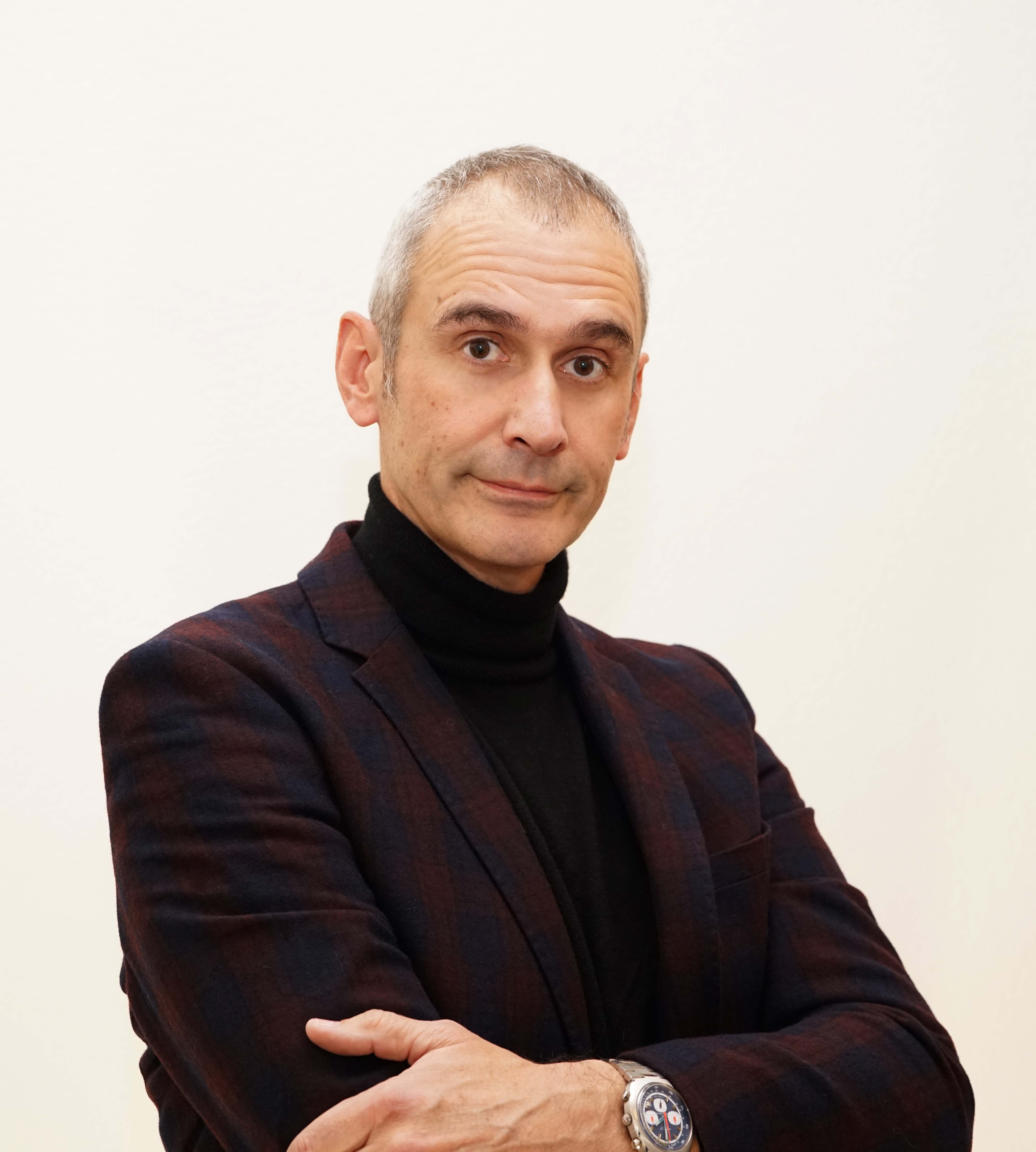
Kilian Eisenegger's name appears too rarely in histories of watchmaking. He is one of those people without whom many inventions might have remained on the designer's workbench. For several decades, he has worked on the least glamorous, yet one of the most difficult stages: making sure that a movement which works as a prototype will also work in thousands of examples, after years of wear and repeated servicing.
He has worked for very different companies: from ETA through IWC, Manufacture Horlogère Vallée de Joux, Sellita and Breitling to Ronda, where he works today. He therefore knows the industry from the perspective of both large-scale production and smaller manufactures. He looks at a movement simultaneously as a watchmaker, a constructor and someone responsible for what ultimately reaches the customer.
He is an engineer in the literal sense of the word. Before he draws something, he calculates it. He creates his own calculation programs, builds physical models, analyses tolerances, teaches watch technology and writes books about it. He believes that constructors today move too quickly into CAD. First, one must understand the phenomenon, examine the loads and weak points, and only then give a component its final shape.
The defining experience at the beginning of his career was his work at ETA. There he learnt that a long road still separates a working prototype from a mature industrial product: testing, corrections, tolerance control and problems that cannot be seen in a single example.
The best-known project on which he worked was the industrialisation of George Daniels' Co-Axial escapement. Eisenegger knew Daniels and Derek Pratt, visited Daniels on the Isle of Man and, at ETA, took part in adapting his construction for series production. The geometry of the components, resistance to shocks, lubrication requirements and the possibility of producing highly precise parts repeatably all had to be verified. Today, the Co-Axial is one of the pillars of Omega's technical identity.
At IWC, he worked on quality and movement development, including large calibres with long power reserves, Calibre 80110 for the Ingenieur and the 89360 chronograph. During a test of one new movement, the central axle of the oscillating weight broke after two minutes of a test planned to last sixteen hours. The launch was stopped and the construction was corrected. For Eisenegger, this was not a failure, but proof that the test had done what it was intended to do.
He later worked on escapements, tourbillons, chronographs, the compact Sellita SW1000 movement and solutions using silicon. He now works at Ronda, where he was involved in the industrialisation of the R01 movement.
He speaks about watches factually, without the language of marketing. His stories concern people, decisions and problems that rarely leave design offices, prototype workshops and laboratories.
Early Career and George Daniels
WoW:
Your career has spanned ETA, IWC, Manufacture Horlogère Vallée de Joux, Sellita, Breitling and Ronda. How did your training and early professional experiences shape your approach to movement construction and industrial production?
Kilian Eisenegger:
For me, ETA SA was the best possible training in robust development and industrial production. There is a fundamental difference between developing a complication in small quantities and developing a simple base movement as a true industrial product. What impressed me most was the rigour with which industrial companies tested their movements. I carried that approach with me throughout my career. At IWC, we even applied these demanding test procedures to the minute repeater – successfully.
WoW:
When and where did you first meet George Daniels, and how did your relationship develop? Did Derek Pratt or members of your family play a part in bringing you together?
Kilian Eisenegger:
I first met George Daniels and Derek Pratt at the Solothurn Watchmaking School in 1989, during the fourth year of my apprenticeship. At the time, I was overhauling a marine chronometer when they visited the school. My father, who was a watch restorer, already knew them, and Derek Pratt in particular. I later visited George several times on the Isle of Man. Those encounters had a lasting influence on me.
WoW:
What position did you hold at ETA when you first presented the Co-Axial escapement internally? Who supported the project, and what were the main technical or commercial objections?
Kilian Eisenegger:
I was part of the middle management team within Technical Operations at ETA. My responsibilities included CAD training and IT related to ASIC development with Mentor Graphics, but I also worked on special projects such as the Co-Axial escapement. The Technical Director at the time, Beat Gilomen, supported the project. Initially, we had no customer for it. The main challenge was therefore not a commercial objection, but how to position the concept. At first, the general assumption was that the escapement would run without lubrication.
WoW:
George Daniels described an agreement that granted ETA exclusive manufacturing rights, whilst at the same time allowing him to continue producing his own watches. How was this agreement structured in concrete terms, and how did the respective roles of ETA, Omega and the entire group develop?
Kilian Eisenegger:
I cannot comment on the details of internal contracts at ETA SA. What I can say is that George Daniels later used the Omega Calibre 2500 movement for a small series of his own watches. Omega believed in the Co-Axial escapement and showed considerable courage in bringing it to the market. Today, the Co-Axial escapement has become an integral part of Omega’s technical identity.
WoW:
A Hamilton wrist watch from around 1996 was described as the first to feature an ETA Co-Axial movement. Why was Hamilton used as a development platform, which base movement was involved, and what did the prototype demonstrate?
Kilian Eisenegger:
This information is incorrect. There was no collaboration with Hamilton in this context.
WoW:
Daniels later suggested that some of his advice was not followed during the early industrial development of the escapement. What were the main points of contention, and how were they ultimately resolved?
Kilian Eisenegger:
There was indeed a misunderstanding concerning the angle of the pallet stones. They had to be made flatter to prevent the pallet fork from locking during shocks. Lubrication was another point of discussion. ETA’s rigorous testing demonstrated that the escapement did require lubrication. Unlike in a conventional Swiss lever escapement, however, the oil plays a much less critical role.
WoW:
Your Omega patent EP1045297A1 was filed on 12 April 1999. What practical problems were resolved by your modifications to the design of the pallet, the anchor geometry and the fork, and why were these important for reliable mass production?
Kilian Eisenegger:
The patent did not address a practical problem with the pallet fork itself. One manufacturing challenge is that the impulse pin lies very close to the edge of the double roller, but Nivarox solved this extremely well. The pallet fork geometry was optimised to reduce friction and is, in itself, straightforward from a manufacturing point of view. One reason the Co-Axial was not simply copied by others is that producing these components reliably requires the kind of specialised manufacturing expertise that Nivarox possessed.
WoW:
The presentation in Basel on 30 April 1999 coincided exactly with the twentieth anniversary of the priority date of Daniels’ original patent. Was this timing chosen deliberately, or was it simply the result of the industrial and commercial timetable?
Kilian Eisenegger:
It was purely a coincidence. The timing of the launch was determined by the industrial maturity of the product, not by the anniversary of the patent.
WoW:
The Co-Axial escapement is often described as lubrication-free. From a technical point of view, which parts can actually function with reduced lubrication, and which still require it?
Kilian Eisenegger:
The Co-Axial escapement cannot operate completely without lubrication, and the same is true of silicon escapements. Their advantage is that the lubricant is less critical and ages more slowly than in a traditional Swiss lever escapement.
In the past, watchmakers often used petrol as a cleaning agent, and it always contains traces of oil. This helps explain why George Daniels could successfully run his escapements apparently ‘dry’: in practice, there was still a very small amount of lubricant present.
IWC and Movement Development
WoW:
You and Pius Brida were involved in the development of the modern Big Pilot, which was launched in 2002 as reference IW5002 with the Calibre 5011. What were your respective areas of responsibility, and which technical decisions proved to be particularly important?
Kilian Eisenegger:
With Calibre 52011, IWC combined elements derived from earlier calibres dating back to the 1970s. It marked the rebirth of IWC’s own large-calibre movements, but with the sensible approach of not trying to reinvent everything at once. I joined IWC in 1999 as Quality Manager and immediately introduced the rigorous testing methods I had learnt at ETA. During one of these tests, the central axle of the oscillating weight broke after only two minutes – in a test intended to run for 16 hours. Günter Blümlein immediately stopped the launch. The original axle had been taken from an older calibre with a smaller oscillating weight and had not been recalculated for the new application. It took approximately six months to resolve the problem. That experience illustrates very well why robust testing is so important.
WoW:
At IWC, you led the team behind the 89360 chronograph and were involved in the development of the Ingenieur calibre 80110. What were the key technical decisions behind these movements, and how did ‘Design for Six Sigma’ influence their development and industrialisation?
Kilian Eisenegger:
The 89360 was a completely new chronograph design. One of my main objectives was legibility. The inspiration for the coaxial hour-and-minute counter came from Patek Philippe. A 7750 chronograph can already be difficult to read; combined with a perpetual calendar, the dial becomes even more complex. I wanted the chronograph indications to be arranged vertically and the calendar horizontally. This thinking also led to the digital perpetual calendar. The result is a much cleaner display in which elapsed time and calendar information can be read at a glance.
WoW:
In 2003, you and Jean-François Mojon were named as the inventors of a constant-force mechanism for watches with an indirect seconds hand. How did this collaboration develop, and was there a direct link between this patent and later constant-force projects at IWC?
Kilian Eisenegger:
At the time, Jean-François Mojon was Head of Mechanical Watch Development at IWC. The constant-force mechanism goes back to a patent from 1926 and was realised in a tourbillon by Derek Pratt in 1987. I had seen Pratt’s watch, just as I had seen George Daniels’ Space Traveller, and both left a strong impression on me. The Sidérale Scafusia was inspired by these ideas. When Jean-François later founded Chronode, he continued working on the project.
Manufacture Horlogère Vallée de Joux and Sellita
WoW:
During your time at Manufacture Horlogère Vallée de Joux, you filed patent CH704903A2 relating to the geometry of the escapement pallets. What were the key projects and technical priorities during that period? Were there any points of contact in your work with Derek Pratt, Peter Baumberger, Urban Jürgensen or Chronode?
Kilian Eisenegger:
At MHVJ, we manufactured the escapement for the A10 calibre. For Leroy, we developed the Strutec Tourbillon with a double hairspring, which went on to win the chronometry competition in 2013.
We also manufactured the chronometer escape wheel for Urban Jürgensen. Peter Baumberger was a good friend of mine, and I remained in contact with Chronode throughout my career.
WoW:
In 2015, you presented the development of the nine-ligne Sellita SW1000 movement as a movement intended for large-scale production. What were the most difficult compromises in terms of size, winding efficiency, component tolerances, production yield and maintenance?
Kilian Eisenegger:
The SW1000 was Sellita’s first in-house calibre. For this compact movement, we chose the 20.3 escapement. The tolerances of the components are essentially the same as for larger calibres; this is not an area where you can simply make compromises because the movement is smaller. The achievable tolerances are determined by the manufacturing technology. The SW1000 is thicker than the ETA 2000, and that additional thickness contributed to making the construction robust.
Breitling Silicon and Material Selection
WoW:
Your Breitling patent from 2023, which you filed jointly with Loris Flota, proposes a hybrid anchor design and discusses the limitations of monolithic silicon constructions. Today, the Ronda R01 uses an all-silicon escapement. What are the arguments in favour of one approach over the other, and what has changed in terms of materials, geometry, manufacturing or costs?
Kilian Eisenegger:
With silicon, cost is strongly related to the surface area used on the wafer. If I manufacture only the pallet elements in silicon instead of the complete pallet fork, the saving can therefore be substantial. A silicon pallet-fork body without a diamond coating is also relatively sensitive to shocks. A fully silicon pallet fork has limits in relation to the balance’s moment of inertia and frequency: with a high moment of inertia, shock loads can potentially damage the silicon component.
Ronda and the R01
WoW:
Andreas Felsl has stated that the R01 project began in 2021, whilst your official employment with Ronda does not appear in public records until 2025. When did you first come into contact with Ronda or the R01 project, and which phases of development or industrialisation fell within your remit?
Kilian Eisenegger:
I joined Ronda AG in November 2024. During 2025, a great deal of work went into the industrialisation of the R01 calibre. That effort was rewarded with full homologation by Laboratoire Dubois, with all tests passed without a single failure.
WoW:
What specific insights from the earlier Ronda R150 influenced the R01? Which were of a technical nature, which related to manufacturing or costs, and which reflected market realities?
Kilian Eisenegger:
The R150 project gave Ronda a great deal of valuable experience with mechanical movements. Today, the laboratory is very well equipped to perform all the relevant tests in-house. Ronda also brings decades of industrial expertise from quartz movements, and it is worth remembering that the company was already producing mechanical movements in the 1970s.
WoW:
Why did the R01 team opt for the combination of 3.5 Hz, unidirectional winding, a free-swinging balance, a silicon escapement and a typical power reserve of around 80 hours? Which trade-offs regarding efficiency, rotor behaviour, reliability and manufacturability were the most important?
Kilian Eisenegger:
The objective of the R01 is to deliver real value to the customer. A contemporary calibre should be multifunctional and make sensible use of modern technologies such as silicon. Omega’s Co-Axial escapement also operates at 3.5 Hz, so this frequency is well established in modern high-performance movements. We did not want to make compromises in the basic architecture: the goal was a robust, multifunctional calibre. The movement was designed so that the power-reserve and GMT displays can be integrated without increasing the overall profile. For chronometer performance, a balance with variable moment of inertia is a major advantage. Today, I would not launch a new movement without one.
WoW:
What special precautions do the silicon components of the R01 require with regard to shocks, cleaning agents and maintenance? How do independent watchmakers receive the necessary training, spare parts and long-term technical support?
Kilian Eisenegger:
In practice, maintenance of the silicon components has proved exceptionally straightforward. We have nevertheless developed special tools for watchmakers working on the balance, and training courses for the movement are available as well.
WoW:
Ronda specifies a magnetic resistance of at least 200 gauss. Is this primarily a guaranteed minimum value that meets a certification requirement, or does it also reflect the practical limits of the entire movement?
Kilian Eisenegger:
The 200-gauss figure represents the minimum requirement for COSC Chronometer Excellence certification. Within this magnetic field, the watch must remain within the specified rate range of -2 to +4 seconds per day. The effective resistance of the movement is higher. We also offer an option with an anti-magnetic balance staff for still greater protection.
Chronometry and Certification
WoW:
The forthcoming COSC Excellence certification will combine the conventional ISO 3159 tests on the unassembled movement with additional tests on the finished watch. How is a movement manufacturer supposed to distinguish between a movement designed to meet these requirements and a complete watch that has actually received the certification?
Kilian Eisenegger:
For the watch manufacturer, there should ideally be no distinction at the design stage: the movement should already be conceived so that the complete watch can meet the certification requirements. A balance with variable moment of inertia is a major advantage, particularly when combined with a silicon hairspring whose frequency remains extremely stable over time. A steel hairspring can deform through shocks and is more susceptible to ageing effects. Rolex, Omega and others are increasingly moving towards certification of the complete watch, which offers clear advantages for the customer. Rolex, Omega and Breitling together account for more than 90 per cent of certified watches.
WoW:
In our interview, Andreas Felsl described certification primarily as proof of process stability rather than a guarantee of accuracy on the wrist. Do you agree with this? How can short-term measurements taken with timekeeping instruments be compared with the longer-term, NTP-referenced observations used in your chronometer app?
Kilian Eisenegger:
For a mechanical wristwatch with a traditional balance, a rate performance around ±2 seconds per day is already close to the practical physical limit. Once a watch with a silicon or Parachrom hairspring has been regulated precisely, its rate can remain extremely stable. Isochronism is one of the decisive factors. Today, we can calculate a silicon hairspring so that its isochronism is matched very precisely to the movement. This is not yet the case with every watch, which is why some still require subsequent adjustment. At Ronda, our approach is to adapt the silicon hairspring to the movement from the outset so that readjustment is unnecessary. This takes us deep into physics and mathematics, and we have developed the required physical simulation models in-house.
Technical Tools and the People Behind the Work
WoW:
Your books and your ‘Watchmaking Gear Simulator’ combine traditional watchmaking with Python, Monte Carlo tolerance analyses, calculations of Hertzian contacts and the modelling of gear efficiency. Could you give a practical example of a problem that these methods can uncover, which conventional CAD or traditional watchmaker’s intuition might otherwise miss?
Kilian Eisenegger:
I think design engineers today often spend too much time modelling directly in CAD. The design process is changing fundamentally. We should first understand and define the physics of a component, then demonstrate that the concept is robust, and only afterwards generate the final geometry. Increasingly, we do this without a mouse: we use programming code.
In the past, a Phillips terminal curve was constructed by hand on a drawing board. Today, using code, we can generate a physically optimised Phillips model and test it almost at the touch of a button. The major CAD manufacturers are now working intensively on integrating AI into their systems. At Ronda, we are already using this approach today through MCP.
WoW:
Looking back on your career: which engineers, designers or industry specialists deserve greater recognition for their contribution to shaping modern Swiss watchmaking? What do collectors most commonly misunderstand when it comes to the work behind the brand name?
Kilian Eisenegger:
There are many people and organisations behind modern watchmaking whose contribution is rarely visible to the customer. The ASRH, for example, is very important to the watch industry. When the industry moves towards lead-free materials or PFAS-free solvents for epilamination, serious research is essential. Companies such as CADFEM also contribute specialist expertise in physical and dynamic simulation when that capacity is not available in-house. With COSC Excellence, COSC is moving in the right direction towards more comprehensive precision testing of watches.
As for collectors, I would actually be careful about saying that they misunderstand watchmaking. Quite the opposite: collectors and customers have become remarkably knowledgeable. Today, it is not unusual for a customer to know more about a particular watch than the person selling it. YouTube, Substack, specialist websites and forums give enthusiasts access to an enormous amount of technical and historical information before they make a purchase. I see that as a positive development.
After the Conversation
One thought remains after this conversation: a prototype may be the work of one person, but an industrial product almost never is.
The history of watchmaking readily shows the moment of invention, but too rarely describes the years that follow: changing the geometry of components, calculating loads, defining tolerances, selecting materials, conducting shock tests and examining what happens to a movement after thousands of hours of operation. That is when it is decided whether a new construction will find its way into a watch or remain an interesting experiment.
The Co-Axial is the best example. Eisenegger does not take authorship of the invention away from Daniels, nor does he deny Omega the credit for having the courage to bring it to market. He shows, however, what usually disappears between the inventor's name and the finished watch: the work of people who have to reconcile the original idea with physics, the capabilities of machines, production costs and servicing requirements. The same can be seen in the story of the broken central axle of the oscillating weight at IWC. A test is not intended to confirm that everything has been designed correctly. Its purpose is to find a weak point in the construction before the customer does.
The same applies to new materials. Silicon offers considerable possibilities, but its behaviour under shock, cleaning requirements, servicing needs and the cost of the wafer surface used must all be taken into account. A new technology makes sense only when it solves a real problem.
The constructor's tools are changing as well. Watchmaking experience is now complemented by physical models, simulations, statistical analysis and programming. Eisenegger uses code to test a watchmaker's intuition earlier and more precisely. Before a component is made, it is already possible to predict where friction will occur, how loads will be distributed and what consequences production variations may have.
His view of collectors is also interesting. He does not regard them as laypeople. On the contrary, publications, films, forums and access to documentation mean that a customer today may be better prepared than the person selling the watch. This forces the industry to speak about technology with increasing precision.
Behind every successful movement are constructors, technologists, component manufacturers, materials specialists, laboratory staff and watchmakers responsible for assembly and servicing. Their names do not appear on the dials. Kilian Eisenegger has spent his entire career working in this part of the industry. This is why his perspective is so valuable: it shows watchmaking from the viewpoint of the people who turn a good idea into a reliable movement.