Interviews
Samuel Gillioz
Everything is a matter of balance
Introduction
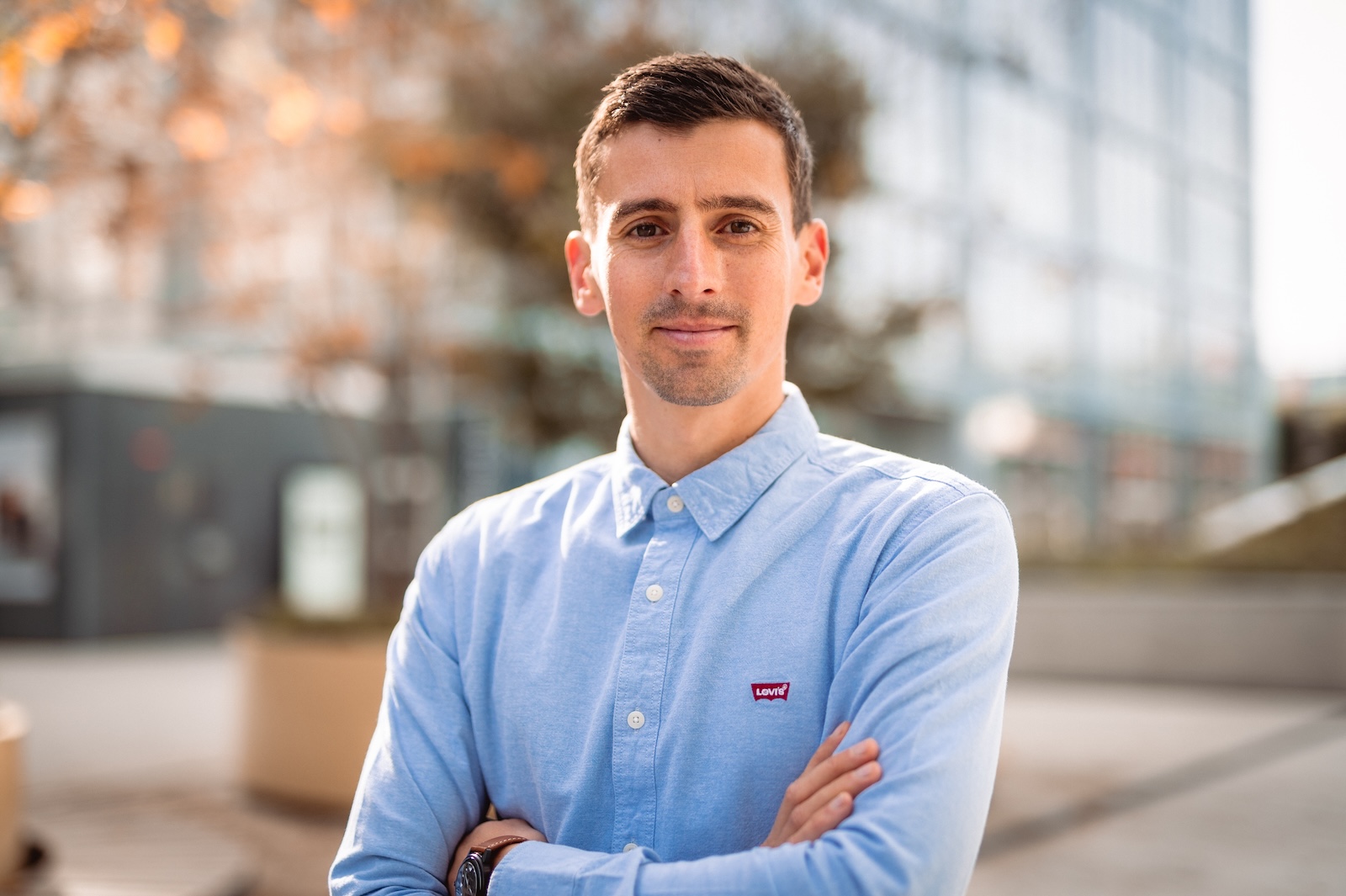
Samuel Gillioz is among the Swiss watchmakers who decided to leverage the experience gained in major manufactures to pursue their own movement construction ambitions. Born in Geneva in 1987, he began his watchmaking studies in 2008. Just a year later, he was awarded the prize for best first-year apprentice, presented at the Grand Prix d’Horlogerie de Genève by Richard Mille.
In 2014, he joined Vacheron Constantin, where he worked as a movement constructor on advanced projects for the Les Cabinotiers team. This experience allowed him to master watchmaking at a level where traditional craftsmanship meets cutting-edge engineering, and where developing a single technical solution can require months of work.
After leaving Vacheron Constantin, Samuel decided to strike out on his own. One milestone along this path was founding KAURI in 2019—a venture that enabled him to gain hands-on experience not only in watch design, but also in setting up production and running his own business.
Today, he is developing S. Gillioz, a new brand distinct from KAURI, born out of his original ambition to create his own movement. The debut model, the Jumping Regulator, offers an unconventional way of reading time: separated hour and minute indications make instantaneous jumps, capturing the observer’s attention with every change of the hour.
In this conversation with WoW, Samuel talks about his professional journey, his technical ambitions, the limits of independence, and the compromises that a buyer of a finished watch rarely sees. We also explore the economics of running a small independent atelier, the significance of artisanal handcraft, and the vital role played by collectors.
WoW:
You have begun a new chapter in your career by founding the S. Gillioz brand. Is it a natural continuation of KAURI, or an entirely separate endeavor?
Samuel Gillioz:
It is a new chapter, a new brand, distinct from KAURI. However, I would like to emphasize that it was KAURI that enabled me to embark on this new stage, thanks to the experience I gained there.
WoW:
In the watch market, there is much talk of vision and passion, and far less about constraints. Which constraint has had the greatest impact on the way you build and run your business?
Samuel Gillioz:
For me, the most significant constraint is the relentless pursuit of consistency and balance.
WoW:
Do you recall a technical or strategic decision that was not obvious at the moment it was made, but later proved to be groundbreaking? What did you see back then that others missed?
Samuel Gillioz:
All the decisions I make stem from the vision of watchmaking that I want to pursue. I do not recall one specific decision, but I firmly believe that you have to stand fully behind every choice you make. Ultimately, each of them reflects our personality, sensitivity, and way of perceiving watchmaking.
WoW:
I will return to this question, however. If you had to single out one decision that truly changed the direction of your project, what would it be?
Samuel Gillioz:
To be completely frank, the shift in direction was actually the result of a whole series of decisions and experiences I went through. However, it is true that I have always wanted to work on my own movement. The experience gained and the people I met along the way finally allowed me to take that step.
WoW:
The term “in-house” is widely used today, often in a rather contentious way. How do you define genuine independence in watchmaking?
Samuel Gillioz:
It is difficult to define this concept unambiguously. Nowadays, striving to manufacture every component of the movement in-house does not necessarily make sense.
For components such as the balance spring or the mainspring, it is better to rely on specialized subcontractors who have the requisite expertise, technology, and equipment to achieve the highest quality.
My goal is primarily to create a movement that stands out technically or aesthetically, while manufacturing and decorating as many components in-house as possible.
In my view, this is precisely the approach that gives meaning to independent watchmaking creation.
WoW:
What role does personally decorating the movements play in your work?
Samuel Gillioz:
Unfortunately, I am unable to provide a comprehensive list of components, but I carry out most of the finishing and decoration work myself, using traditional methods.
WoW:
Every watch is the result of compromises. What, in your opinion, is the most significant compromise that the client never sees?
Samuel Gillioz:
For me, the most important compromise concerns the number of working hours dedicated to each watch.
It is very easy to exceed any working time estimates. Even with my experience, I still often underestimate this factor.
WoW:
How do you reconcile the personal commitment required to create a watch with the practical constraints of running your own business?
Samuel Gillioz:
It is very difficult to answer this question, given the personal dedication required to create a watch from scratch, especially when doing so for your own brand.
The key is finding a balance between personal involvement and making the right decisions for each watch, so as not to try to handle absolutely everything on your own.
WoW:
Have you ever reached a point where further increasing the complexity of the movement ceased to make sense, both from a technical and a practical standpoint?
Samuel Gillioz:
Yes, that happens to me often. When you are passionate, you always want to push everything to perfection and go as far as possible. However, you must know when to stop and retain only those solutions that truly make sense.
WoW:
Your Jumping Regulator is a contemporary interpretation of separated hour and minute displays. Why did you choose this concept?
Samuel Gillioz:
The name Jumping Regulator does not refer to a regulator in the purely technical sense. Rather, it is the result of a modern reinterpretation of separated hour and minute displays—a configuration I am particularly fond of.
I wanted to achieve a time display that appears static, yet highlights the instantaneous jump of both hands.
WoW:
The market often values the story of a watch more than its actual technical merit. What disconnect do you see today between what is truly good and what is desirable?
Samuel Gillioz:
I think the market is moving toward greater authenticity.
Collectors are no longer looking merely for a beautiful object or a well-crafted marketing narrative. They want to understand the creator's philosophy, their journey, and the reasons why a particular watch was brought to life in the first place.
Technique is crucial, especially when it serves the design and creates a cohesive whole with it. In the end, however, what makes a watch desirable is the story it tells and the emotional connection it manages to forge with the person wearing it.
WoW:
Many innovations are the result of teamwork and collaboration among specialists, rather than the achievement of a single individual. How do you view the importance of the individual and the collaborative ecosystem in contemporary watchmaking?
Samuel Gillioz:
I am fortunate to rely on an incredible network of subcontractors!
I believe that two heads are better than one, and three are better than two.
WoW:
Where is the line drawn today between craftsmanship and industry? Does such a distinction still make sense?
Samuel Gillioz:
Of course it makes sense!
The work of human hands is what gives our watches all their magic. It provides them with their uniqueness, character, and the emotion we feel when examining them closely.
Every day, I strive to preserve, deepen, and develop my skills. I believe that learning never ends, and each subsequent watch is a new opportunity to hone one's craft.
I am deeply convinced that the brand founder, the watchmaker, and the person responsible for decorating the movement should, ideally, be one and the same person.
In my opinion, this is what gives a watch genuine coherence and allows one to fully express their vision.
To me, watchmaking is an art. It brings together technique, aesthetics, and artisanal skill, while presenting a continuous challenge at every stage of creation. It is precisely these demands that make it so fascinating.
WoW:
The vintage and luxury watch market has many gray areas. Do you think the industry genuinely wants greater transparency?
Samuel Gillioz:
I don't know whether the watch industry truly wants it, but I believe it needs it.
We need to start making people dream again, rather than selling them dreams.
WoW:
Have you ever experienced a moment of deep doubt in your career, whether technical or financial? What made you decide to keep going?
Samuel Gillioz:
Being an independent watchmaker means accepting life with uncertainty.
Failures, achievements, and successes are all part of the same journey. You have to manage the creative process, the mechanics, the business, unforeseen circumstances, and make decisions every single day.
Over time, you come to realize that nothing is ever guaranteed.
Each watch is a new challenge, and that is precisely what makes this profession so demanding, yet so fascinating.
This adventure is far more than an entrepreneurial journey. It has taught me who I am, both as a person and as a watchmaker.
WoW:
In a market flooded with limited editions and carefully controlled marketing narratives, what is truly rare today?
Samuel Gillioz:
Regardless of what individual independent watchmakers offer—whether limited editions or other projects—what collectors are truly looking for is the opportunity to genuinely take part in an adventure.
I try to involve them in the ongoing story of my watchmaking endeavor.
WoW:
What do you think most people fundamentally misunderstand about watchmaking?
Samuel Gillioz:
I am not sure one can say that most people misunderstand watchmaking.
As I mentioned, watchmaking is above all an art form, and everyone has their own personal relationship with art. It is primarily a matter of sensitivity and emotion.
Appreciating a watch goes far beyond its mechanics, design, or even the quality of its finishing.
It is the combination of all these elements—their coherence and sincerity—that stirs the emotions, sometimes bringing a spark of wonder to the eyes of a collector or watch enthusiast.
After the Conversation
Samuel Gillioz’s journey shows how much changes in a watchmaker’s work when he decides to apply the experience gained in a major manufacture to realize his own ideas. Working on complicated movements allows one to develop engineering and design skills, but running an independent brand also requires making decisions that go far beyond technique alone.
The question of balance recurs several times throughout his remarks: between ambition and capability, working with one’s own hands and collaborating with specialists, and ultimately between the pursuit of perfection and the time that can be dedicated to producing a single watch.
His perspective on independence is particularly compelling. Samuel does not equate it with the necessity of manufacturing every single component in-house. Instead, he emphasizes the importance of personal involvement in creating and decorating the movement, as well as maintaining consistency between the watchmaker’s vision and the finished watch.
In this context, the Jumping Regulator provides the first opportunity to evaluate how his vision translates into a tangible timepiece. The separated hour and minute indications and their instantaneous jumps are not an attempt to multiply complications for their own sake, but rather an exploration of a distinct way to display time.
S. Gillioz is only just beginning its story. Samuel brings to this venture the expertise acquired through demanding watchmaking projects, paired with a clear awareness of the constraints an independent creator must face. It is an intriguing blend of a designer’s ambition and the pragmatism of someone responsible not only for the concept, but for its execution as well.
It will be fascinating to watch which direction S. Gillioz takes and whether future creations will reaffirm the philosophy Samuel shared in our conversation.