Interviews
Pascal Béchu
Angelus- between avant-garde and tradition
Introduction
Angelus has a history that many brands revived today could envy. The company was founded in Le Locle in 1891 by the brothers Albert and Gustav Stolz. Over the following decades, it established itself as a manufacturer associated above all with mechanics: chronographs, repeaters and calibres with long power reserves. Angelus made its own watches, but also supplied movements to other manufacturers.
The company survived through most of the 20th century, but ceased production towards the end of the 1970s. Angelus itself now cites 1979 as the last documented period of activity, while acknowledging that the exact date of closure is unknown. The brand then disappeared as an active watch manufacturer for more than three decades.
A new chapter began in 2011, when La Joux-Perret acquired the rights to the brand. Angelus’ return, however, was not built solely around recreating models from the past. Instead, the emphasis was on modern materials, complex constructions and an unmistakably contemporary aesthetic. The U10 Tourbillon Lumière, unveiled in 2015, became emblematic of this direction.
Seven years later came a clear change of course. In 2022, Angelus introduced the Chronodate, reconnecting the brand with its chronograph heritage. In 2023, it launched La Fabrique, a collection inspired by historic Angelus watches and complications, beginning with the Chronographe Médical.
This did not mean abandoning the original concept behind the revived Angelus. Today, the brand operates in two stylistically distinct worlds. L.A.B., or Legacy and Beyond, encompasses its avant-garde and contemporary creations. La Fabrique draws on the archives, classic complications and the aesthetics of historic Angelus watches. This is how Angelus currently defines the structure of its collections.
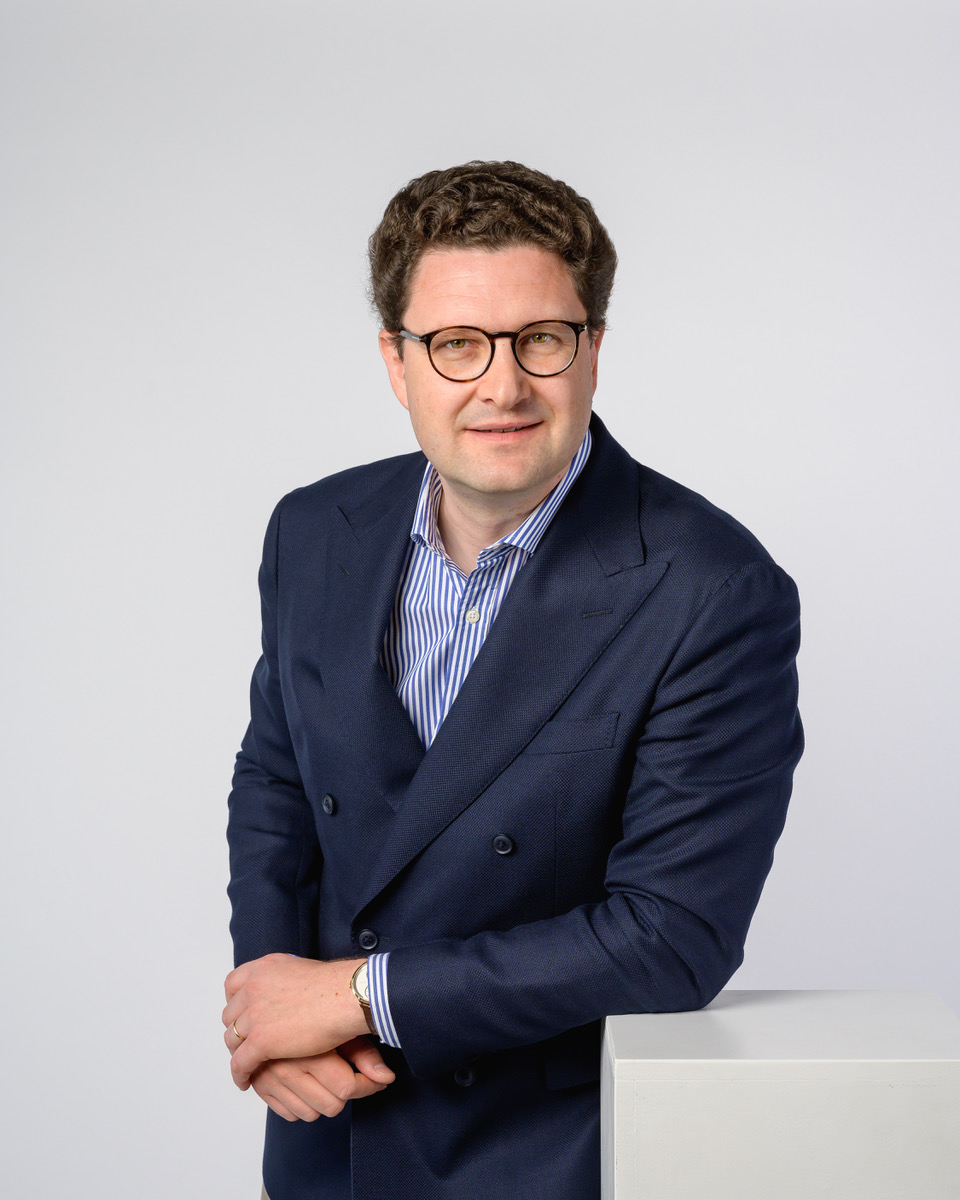
The man responsible for the brand’s current stage of development is Pascal Béchu, who heads both Angelus and Arnold & Son. Both brands belong to the Citizen Group and work closely with La Joux-Perret, with which they share production and office facilities in La Chaux-de-Fonds. Béchu took charge of both brands in May 2024, having previously been responsible for sales.
This structure matters when trying to understand Angelus today. It is not an independent atelier built around a single watchmaker. Behind the brand stands the considerable design and manufacturing capacity of La Joux-Perret, which also produces movements for other companies. Angelus therefore has to build its own identity while drawing on the capabilities of an organisation considerably larger than the brand itself.
The first question almost asks itself. What made a brand revived through avant-garde creations begin, after several years, to turn once again towards historic chronographs and vintage aesthetics? Was this simply the next stage in its development, a correction of the earlier strategy, a response to collectors’ expectations, or some combination of all three?
Then there is the question of movements.
A good example is the A5000 calibre used by Angelus. Its genealogy leads back to the 045MC calibre developed by Techniques Horlogères Appliquées, a company founded by François-Paul Journe, Denis Flageollet and Vianney Halter. The chronograph construction itself was primarily the work of Journe and Flageollet. The rights to produce the movement subsequently passed to Jaquet SA, the company that later became La Joux-Perret. Today’s A5000 is its contemporary development, produced by LJP for Angelus.
Its history leads to a question that goes well beyond Angelus itself: what does “in-house” actually mean today?
I speak with Pascal Béchu, CEO of Angelus and Arnold & Son, about the brand’s change of direction, its historical heritage, its relationship with La Joux-Perret, the limits of technical ambition and the meaning of the term “in-house”.
Identity
WoW:
Since its revival, Angelus has undergone a remarkable transformation—from bold, futuristic creations to collections that draw much more directly on the brand’s historical heritage. What was the main driving force behind this evolution? Was it primarily an internal decision about the brand’s future direction, lessons learned along the way, or changing expectations of collectors?
Pascal Béchu:
When the brand has been relaunched between 2011 et 2015 by the previous management, the idea was to build on the brand’s reputation for being one of the most technically innovative watch manufacturers of the 20th century. With this in mind, the brand launched a series of outstanding tourbillons including the famous U10 “Tourbillon Lumière”. The brand was always combining performance material like titanium, carbon fiber, carbon composite and precious metals to give birth to an amazing line-up of spectacular tourbillons.
In 2022, the new brand management decided to reconnect the brand with its glorious past and brought back the most iconic brand complication: the chronograph. First in its modern collection with the launch for the redesigned Chronodate, the first series chronograph featuring a date and then later a full calendar. In 2023, Angelus created the first chapter of its vintage inspired collection with the Medical Chronograph.
Nowadays, Angelus product portfolio is organized around 2 pillars:
The Angelus LAB (Legacy and Beyond) which regroups all the modern designs from the brands with Tourbillons and Chronograph complications.
The Angelus La Fabrique with its vintage inspired timepieces equipped of chronographs or repeaters
Both pillars will stay in the collection. The “Angelus LAB” timepieces are a unique offering in the watch industry which acquired a new clientele over the last decade. The “La Fabrique” collection is becoming very popular amongst the vintage Angelus collectors. Our objective is to speak to both clienteles.
---
WoW:
You mentioned that in 2022 the new management decided to reconnect Angelus with its historical roots and, subsequently, with collectors who had not identified with the brand’s modern aesthetic. What specifically triggered that decision? Was it primarily feedback from collectors and signals from the market, the commercial experience with the previous collections, or an internal conviction that an important part of Angelus’ identity had remained unexplored?
Pascal Béchu:
This was the result of both a personal conviction and discussions with collectors who are passionate about vintage Angelus watches.
Firstly, when one examines the brand’s heritage, one realises just how much Angelus was at the forefront of watchmaking in the late 19th century and throughout most of the 20th century. Angelus specialised in repeaters, chronographs, calendar watches, watches with a long power reserve – notably its iconic 8-day calibres – and much more besides. The brand launched timepieces that defined their era, featuring these complications; but beyond the technical aspects, it also created a new watchmaking aesthetic, notably with oversized chronographs that enhanced the legibility of these functional instruments.
Then, as we began to engage more frequently with collectors of vintage Angelus watches, we realised the importance of this community and the appeal of these iconic models, which are highly sought after by collectors. Many of these ‘Angelus enthusiasts’ have indicated that they would like to see new versions of these vintage models (which are very hard to find on the market for some of them) in our current collections.
When your intuition aligns with customers’ requests, you have to take the plunge.
---
WoW:
When developing a new Angelus watch today, who do you imagine wearing it? Has your vision of the ideal Angelus collector evolved together with the brand itself?
Pascal Béchu:
The new collectors of our ‘Angelus LAB’ collections are enthusiasts of mechanical architecture, fascinated by three-dimensionality, skeletonised movements and the interplay of transparency. They are urban, active aesthetes who appreciate the use of ultra-lightweight, high-tech materials such as carbon fibre and titanium in Haute Horlogerie watches that are not kept in a safe but worn every day with a confident and relaxed style.
Since 2023, we have also re-established a connection with a large community of collectors of historic Angelus timepieces who did not identify with the brand’s new, modern aesthetic. It is through the ‘La Fabrique’ collection – which reinterprets the brand’s iconic models and complications – that we have successfully brought these long-standing collectors back to our current neo-vintage creations.
The transition took place without any major disruption, and there is an increasingly noticeable degree of overlap between these two groups of Angelus customers.
---
WoW:
Every historic brand carries the weight of its own past. How do you decide which elements of Angelus’ heritage should remain untouched and which deserve to be reinterpreted for a new generation of watch enthusiasts?
Pascal Béchu:
To guide the development of our collections whilst remaining true to Angelus’s DNA, we follow a golden rule: to respect the historical spirit, whilst completely reinventing the technical execution – whether with a vintage aesthetic in the ‘La Fabrique’ collection or a contemporary design in the ‘LAB’
The brand has always been a pioneer in the creation of its movements, and the in-house technical expertise – now carried on by our La Joux-Perret manufacture in La Chaux-de-Fonds – is a non-negotiable element.
Creating an Angelus
WoW:
Angelus benefits from the exceptional technical capabilities of La Joux-Perret. How do you ensure that decisions regarding new movements are driven primarily by Angelus’ identity and long-term vision, rather than simply by the technical possibilities available?
Pascal Béchu:
Having the La Joux-Perret manufacture on our side is an exceptional asset, but it requires the highest discipline to ensure that the technology remains at the service of the brand’s narrative, and not the other way round. We have our own development plan for Angelus (as well as our sister brand Arnold & Son), which is completely independent of the work carried out by the manufacture for external brands. Nevertheless, we benefit from the manufacture’s overall investments and R&D into significant future technical advances such as chronometry, anti-magnetism or improvements to the power reserve of our calibres, for example.
---
WoW:
You mentioned that in-house technical expertise and movement production are non-negotiable elements for Angelus. At the same time, some contemporary calibres have a fascinating and more complex genealogy, such as the movement architecture originating from the historic THA calibre, whose rights later became part of La Joux-Perret. How do you personally define an “in-house movement” today? Is it determined by the original authorship of the construction, ownership of the design, where it is manufactured, the extent to which it has subsequently been developed and modified, or by something else?
Pascal Béchu:
That is a very interesting question. At Arnold & Son, in 2025, to mark the conclusion of the celebrations for the 260th anniversary of John Arnold’s legacy, we launched an exceptional timepiece inspired by A-L Breguet’s first tourbillon escapement, incorporated into a John Arnold chronometer, thus illustrating the collaboration between these two giants of watchmaking history. This shows that watchmaking has always been a collaborative endeavour, right from the very beginning.
I have no objection to Angelus collaborating with other watchmakers or manufacturers to develop its own calibres. Collaborating, not delegating or outsourcing. You mentioned the great minds behind our Angelus 5000. I could also mention the collaboration we had with Dubois-Dépraz on our new quarter-repeater calibre, launched this year at Watches & Wonders. To demonstrate our expertise, I believe that Angelus calibres must be unique, created, designed, manufactured and assembled at least partially, if not entirely, by our teams (I include our La Joux-Perret manufacture here). I don’t like the term ‘in-house’ movement, which has been overused in our industry and sometimes not properly. It means that one holds the rights to a design, but it does not mean that one has actually created, designed, manufactured and assembled – at least partially, if not entirely – that calibre, as we do.
---
WoW:
Modern watchmaking often celebrates spectacular technical achievements. How do you distinguish between an idea that is merely technically impressive and one that truly deserves to become part of Angelus’ history?
Pascal Béchu:
To distinguish mere technical prowess from true Angelus innovation, we apply a fundamental principle: technology must never be a gimmick; it must have historical and functional relevance.
At Angelus, we reject complications that are purely for show. An idea deserves a place in our history only if it is useful and connected to our brand’s heritage: Angelus has built its reputation on practical timekeeping instruments. A modern function, however complex it may be, must offer genuine practical value, such as optimised readability for a calendar or a chronograph, or the sound of time passing with our quarter repeater (i.e. Angelus Tinkler). Furthermore, the innovation we introduce must reflect the brand’s pioneering spirit, by reinventing a function that Angelus’s watchmakers already made or would have sought to develop in their own time, using today’s tools.
---
WoW:
Have there been occasions when you deliberately abandoned a technically feasible project because, despite its merits, it simply did not fit Angelus’ philosophy? If so, what kinds of considerations led to that decision?
Pascal Béchu:
Yes, it happened before. Abandoning a technically viable project is a difficult decision, but one that is essential to preserving the integrity of our brand. It is very tempting to maximise our manufacture’s full capacity, but our internal discipline requires us to say ‘no’ when the Angelus philosophy is not upheld. I am thinking, for example, of complications that are perfectly legitimate for the brand but cannot be integrate into the aesthetic of our collections.
In reality, we rarely abandon these new projects. They are simply set aside for a while, and we regularly return to the drawing board to revisit them with fresh inspiration. It’s a bit like an artist who reworks his canvas when he is not yet satisfied with his work before presenting it to the world.
---
WoW:
You also mentioned that Angelus has sometimes set aside technically feasible projects because they did not fit the philosophy or aesthetic of the brand. Without revealing anything confidential, could you give one concrete example of such a project or complication and explain what ultimately made you decide that it was not right for Angelus at that particular moment?
Pascal Béchu:
I can’t go into too much detail about this sort of project, as they might be reworked and resurface in the future… but when you want to combine several complications within a single calibre and are unable to integrate them into a well-proportioned design, it’s best to put the project on hold.
Looking Ahead
WoW:
What do you see as the greatest challenge for a brand like Angelus today—not from a technical perspective, but in building a distinctive identity in a market where almost every luxury watch brand speaks of heritage, craftsmanship and exclusivity?
Pascal Béchu:
Many high-end niche brands have emerged or been relaunched over the past few decades. But few can boast a history comparable to that of Angelus. This rich heritage enables us to develop an instantly recognisable visual identity and product philosophy.
Furthermore, our brand is not merely a marketing construct, and we share our expertise with the utmost authenticity. We oversee the development of our watches and the manufacture of our own movements. We place great importance on the craftsmen who finish our timepieces and offer our customers truly exclusive watches, produced in limited editions of just a few dozen pieces.
Our watches are known and appreciated only by a small circle of collectors, but the brand is gaining increasing recognition amongst connoisseurs of fine watchmaking.
Our aim is to expand this circle by continuing to share these values through events and a network comprising some of the world’s leading retailers.
The award won last year for the Best Chronograph at the GPHG is a testament to the brand’s growing reputation and popularity, but also an encouragement to continue our teamwork.
---
WoW:
Is there a line that Angelus would consciously never cross, even if doing so could bring greater commercial success? In other words, what is the one thing the brand would never sacrifice in pursuit of growth?
Pascal Béchu:
One of Angelus’s core values is undoubtedly innovation, which has guided the company’s development since its inception in 1891. As such, I find it difficult to predict the future!
Nevertheless, I can assure you that the company will never sacrifice its mechanical integrity in order to become a brand focused purely on design. Throughout the 20th century, Angelus was just as renowned for its timepieces as it was for producing exceptional movements and complications that powered many famous brands.
After the Conversation
Pascal Béchu does not try to persuade us that Angelus’ current direction had been part of the plan from the very beginning of the brand’s revival. The return to historic models and complications resulted both from the convictions of those running the company and from conversations with collectors of vintage Angelus watches who had not found much to identify with in its futuristic incarnation.
I consider that a sensible approach. The history of a watch company should not become a prison, but it is difficult to ignore the fact that it is one of the most valuable assets of a brand more than a century old. Particularly when the archives contain things genuinely worth revisiting, rather than merely another dial from sixty years ago that can be enlarged by two millimetres and described as the “reinterpretation of an icon”.
I also like the fact that Béchu does not try to wrap the change in strategy in an elaborate theory. Collectors told the company what they felt was missing from the contemporary Angelus, and the company listened. His sentence, “When your intuition aligns with customers’ requests, you have to take the plunge,” says more about that decision than several paragraphs about DNA, heritage and brand vision ever could.
His answer concerning movements interests me even more.
“In-house” has become one of the most overused terms in watchmaking. It was supposed to distinguish a manufacture from a company using ready-made movements, but over time it has come to cover such different situations that the term itself means less and less. A company may own the rights to a construction created by somebody else. It may design a movement internally while having some of its components made outside the company. Or it may draw on the expertise of an external constructor or a specialist complication manufacturer.
Béchu makes no attempt to pretend that such relationships do not exist. He speaks about them openly. With the A5000, we have a construction whose history predates the contemporary Angelus by many years. With the new quarter repeater, Dubois-Dépraz enters the picture. At the same time, Angelus has La Joux-Perret behind it, providing substantial design and manufacturing capabilities.
And it is Béchu, with all of this infrastructure at his disposal, who says that he does not like the term “in-house”, because the industry has overused it and has not always used it properly.
I find his distinction far more convincing: collaboration is not the same thing as delegation or outsourcing.
I see nothing wrong with a watch manufacturer drawing on the expertise of other constructors or specialist companies. Watchmaking worked this way long before the modern, and to some extent marketing-created, cult of the “manufacture”. The problem, for me, lies elsewhere: when the contribution of others is left unmentioned and a story is subsequently constructed suggesting that everything, from the first sketch to the last screw, was created under one roof.
That is why the term “in-house” interests me less and less. I would rather know who conceived the movement, who constructed it, who subsequently developed it, who actually manufactures its components and who assembles it.
If I know the answers to those questions, I can decide for myself how much genuine expertise stands behind the manufacturer’s name on the dial.
For that, I do not need the words “in-house”.