WoW Investigations
Who really saved Patek Philippe
The Stern name won't be found on the dial, but without this family, Patek Philippe might not exist today.
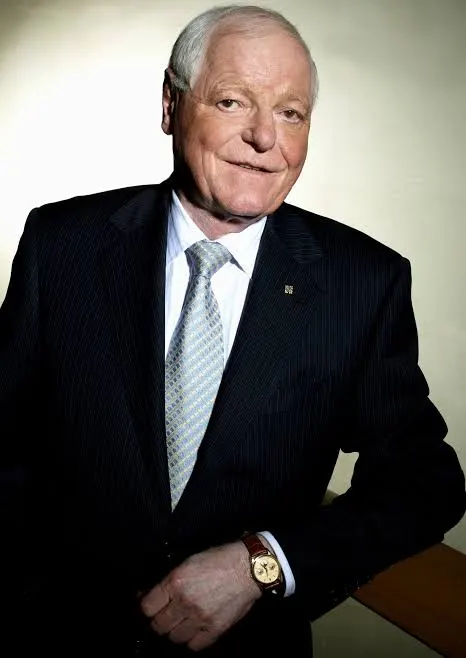
The story of a man spoken of far less often than Antoni Patek, Franciszek Czapek, or Adrien Philippe.
The watch world bids farewell to Philippe Stern.
He passed away on June 14, 2026, at the age of 88. Most comments today recall his achievements as the president of the most famous company from the so-called Holy Trinity, a brand with Polish roots, Patek Philippe.
However, it is worth remembering that without the Stern family, the brand we know today would probably not exist at all.
If we ask a watch enthusiast about three names associated with Patek Philippe, we will most often hear: Patek, Philippe, and perhaps Czapek.
Meanwhile, there is one more name without which the brand would probably not have survived the 20th century.
Stern.
Patek and Philippe created the brand
Antoni Patek and Franciszek Czapek laid the foundation of the enterprise from which Patek Philippe later emerged, as Antoni was joined by A. Philippe after these two gentlemen parted ways in business.
Patek, a Polish emigrant after the November Uprising. Philippe, a French constructor, creator of the keyless winding mechanism, who together eventually created a brand that is today synonymous with the highest watchmaking.
But they did not build the modern empire. Philippe died in 1894. The company passed into the hands of subsequent owners and companies. By the 1930s, it was just one of many struggling Swiss manufactures.
The Great Depression almost killed the company
The early 1930s were a disaster for Swiss watchmaking. The stock market crash of 1929 wiped out the American market, the main consumer of watch luxury. Patek Philippe sought salvation, as after the collapse of its largest trading partner, Gondolo&Labouriau, the company was on the verge of bankruptcy.
And then the Sterns appeared.
The Sterns did not make watches
Charles Stern and his brother were not watch manufacturers. They produced watch dials, running the company Cadrans Stern Frères, which was one of the most important suppliers of these for Patek.
In 1932, they acquired the struggling manufacture, meaning the supplier bought the client.
The greatest paradox in the history of luxury
The brand was saved not by a large bank, nor the state, nor a financial investor. It was saved by a component supplier.
It's a bit like a manufacturer of leather seats taking over a struggling Ferrari today. A person responsible for one component took responsibility for the whole.
It was the Sterns who built the Patek we know
Still in 1932, the year of the acquisition, the Calatrava was created. A model that still defines what a classic wristwatch is. This was not an accident but a brilliantly conceived new direction.
Under the Stern family's rule, everything we consider the essence of the brand today was shaped. Limited production as well as family control of the company. A philosophy of long-term development instead of chasing scale and grand complications. The modern image, along with the slogan "You never actually own a Patek Philippe. You merely look after it for the next generation."
Also, the famous Nautilus watch design by Gerald Genta is an example of how a grand vision anticipates the market and the realities of that period.
Charles Stern died in 1944. His son Henri led the company, building American distribution through the Henri Stern Watch Agency. The third generation was Philippe.
Philippe Stern
Philippe Stern joined the company in 1963. He learned the trade from scratch, first in New York, then in Geneva. He became president in 1993.
For many historians, it was he who played a key role in guiding the company through the final phase of the quartz crisis. When most companies were chasing electronics, and commentators announced the end of the mechanical watch, Stern disagreed. He was convinced that there was still a place for traditional watchmaking and a client who valued craftsmanship over mass production.
From this conviction grew the Calibre 89. A pocket watch with 33 complications, presented on the occasion of the company's 150th anniversary in 1989. At the time, it was the most complicated portable watch movement in the world. Nine years of development work and a unique manifesto composed of gears.
It was Philippe Stern who consolidated scattered production into a single manufacture in Plan-les-Ouates in 1996. It was he who created the Patek Philippe Museum in 2001.
It was he, upon his departure, who established the Patek Philippe Seal in 2009, his own quality standard placed above the Geneva Seal.
Thierry Stern
In 2009, Philippe handed over the reins to his son. Today, the company is led by Thierry Stern.
This means that almost a hundred years after the acquisition, the brand still remains in the hands of the same family. Patek Philippe is practically the last independent, family-owned manufacture of this scale in Geneva. In today's luxury world, divided among several large groups, this is almost an anomaly.
Conclusion
History often remembers the founders. Much less often does it remember the people who saved their work from disappearing.
In the case of Patek Philippe, almost every watch enthusiast knows the names Patek and Philippe. The name Franciszek Czapek appears much less often.
And yet there is one more name without which the brand would probably not have survived the 20th century.
Stern.
The paradox is that the name Stern will never be found on the dial of any Patek Philippe watch.
For almost a hundred years, however, the Sterns were the guardians of a brand bearing the names of other people.
History, however, can be ironic. Since 1851, the brand has borne the name Philippe, commemorating Adrien Philippe – a brilliant constructor and co-creator of its success.
Over a hundred years later, its fate was guided by a man with the same first name.
Philippe Stern.
The name Patek appears on the dial.
The name Philippe also.
And yet, without the Sterns, it is very possible that today there would be no dial on which to place both these names.