WoW Investigations
The price that has nothing to do with the watch
Inflation of prestige, or how the rising tide in the primary market immediately spills over into the secondary, and every pricing decision by a brand changes the valuations of models from years past.
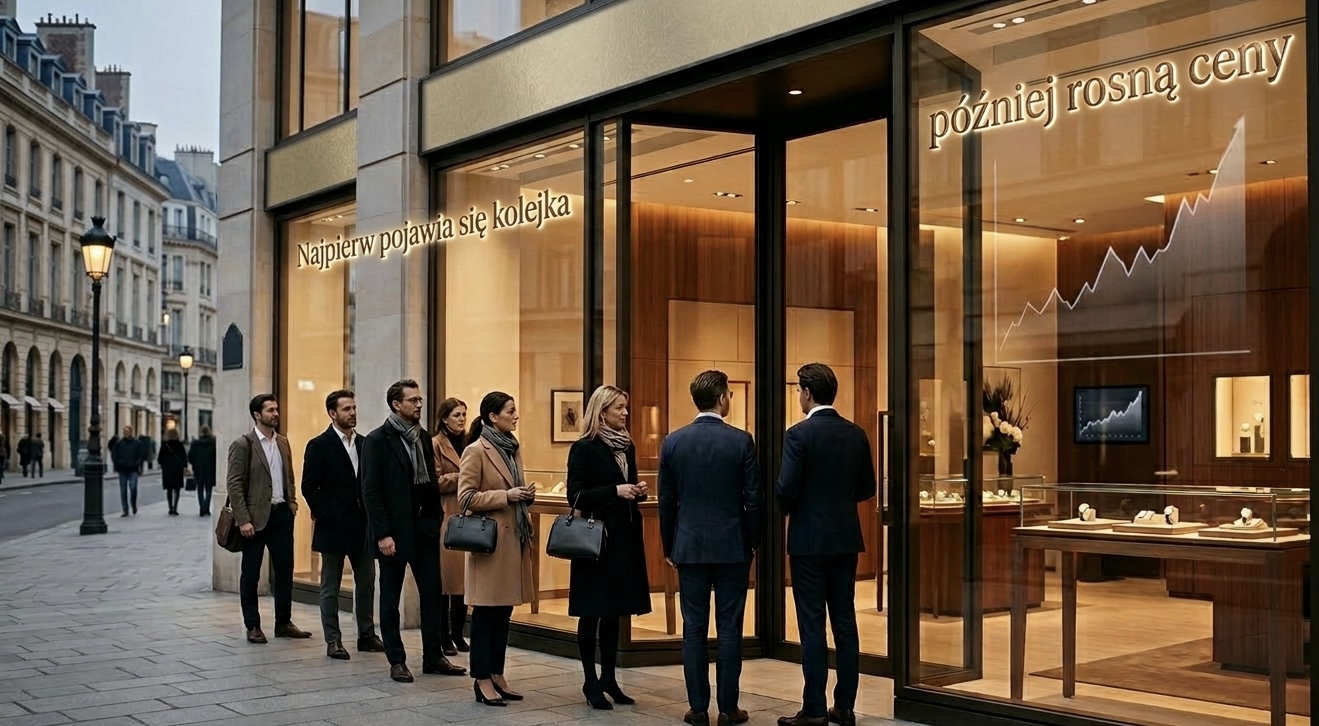
The secondary market as an echo of the primary market
The secondary watch market is considered a kind of "true market," a place where marketing ends and real value begins. After all, no one dictates the price here; we don't have a situation where the so-called RRP (Recommended Retail Price) is set.
This is a rather popular and convenient narrative, unfortunately a bit false, because the secondary market for watches is not independent.
It doesn't discover value; it inherits it.
The illusion of independence
At first glance, everything seems logical. A watch enters the market, a few years pass, it begins to circulate among collectors, and its price "settles" naturally.
Supply, demand, and rarity are at play—classic economics—but the problem is that, in the case of luxury watches, this mechanism is merely the surface, and something entirely different operates beneath.
The price on the secondary market very rarely stems solely from what the watch is as an object. Much more often, it results from what the brand did later and how it is positioned today, what the prices of new models are, how quickly they depreciate, whether they are quick to sell or if one waits months for a buyer. Is there currently a "hype" around it, as it's nicely put today, or is it treated as a burden?
The past rewritten
When a brand raises prices, limits availability, and begins to play on exclusivity, it doesn't just change its current offering; it changes its entire history. Models from five or ten years ago, seemingly almost identical technically and often produced in much larger volumes, suddenly start to become more expensive.
Not because anything changed in them, but because the context changed.
New models are more expensive and much harder to obtain. And when new models become more "desirable," these older models suddenly begin to serve as a substitute.
A hunt begins for something that almost no one noticed before, and offers that had long lingered on various portals, groups, or forums start to disappear, replaced by higher prices.
Substitute instead of choice
The secondary market then ceases to be a collector's market and becomes a bypass market. Buyers aren't looking for a specific watch; they're looking for access to the brand.
So, if a new model cannot be bought, an older one is purchased, and if the new one costs absurd money, then the old one begins to seem like a "reasonable alternative."
Precisely at this moment, price ceases to be a function of quality and becomes a function of the availability of the narrative.
Mechanics without significance
This is the moment when one of the biggest illusions shatters, because if you look coolly, without the logo on the dial, many of these watches:
do not offer groundbreaking mechanics
do not represent an exceptional level of complication
do not differ significantly from dozens of other constructions
Yet their prices rise, not because they are better, but because the brand that created them has become more desirable.
Prestige inflation
This phenomenon can be called, quite simply: prestige inflation.
The brand raises prices, builds exclusivity, controls distribution, and as a result, not only the value of new products increases, but everything bearing its logo increases.
The secondary market here is not a verification mechanism; it becomes a mechanism for transmitting price from new to old, and we have a peculiar transfer of marketing through time.
Incidentally, it's a rare phenomenon for the future to shape the past.
What are you actually buying?
At some point, you have to ask yourself an honest question.
Are you buying a watch?
Are you buying access to a particular brand? Or perhaps just the logo?
Because if the price of a given model primarily stems from the fact that:
the brand is "hot"
new models are unavailable
the market has inflated expectations
then the object on your wrist ceases to be the main carrier of value, but becomes merely a ticket. An entry ticket to the club of owners.
A market that does not exist independently
The most paradoxical thing in all of this is that the secondary market, which was supposed to be "more real," turns out to be even more dependent than the primary one, because it not only reacts to the actions of brands but actually amplifies them.
Every upward wave in the primary market immediately spills over into the secondary, and every pricing decision by a brand changes the valuations of models from years ago.
So, it's not a second market; it's an extension of the first.
And finally
This is not an argument against buying watches or against high prices.
This is an argument against the illusion that price tells the truth, because in the world of watches, it very often says only one thing:
how much access to someone's history costs today.
I personally like vintage watches; I buy them with my heart, not my head, but it's worth knowing what you're getting into.