WoW Investigations
The new era of Saxon watchmaking: between the rigor of Lange and the freedom of the workshop
Kallinich Claeys is one of the most interesting young manufactures from Glashütte.
Glashütte has accustomed us to order. To three-quarter plates, to screws in gold chatons, to ornamentation that is both tradition and a seal of quality. But in recent years, a new type of manufacture has emerged in this orderly landscape, smaller, quieter, and more personal.
And thankfully, Kallinich Claeys is not "the next Lange."
1. Escape or Consequence?
Johannes Kallinich and Thibault Claeys grew up within the structures of A. Lange & Söhne, an environment that is to Saxon watchmaking what Patek is to Geneva. Rigor, procedure, obsessive quality control. Double assembly as dogma, finishing as a manifesto.
Leaving such a place can be interpreted in two ways: either as an escape from a corporate ceiling, or as a natural stage in the maturation of a constructor-creator who wants to take full responsibility for the entire work.
In Kallinich's case, his "Meisterwerk," a master watch built almost from scratch, was a signal that it wasn't about rebellion but about testing his own limits.
In the Saxon system, the title of master is not just another "decoration" for a CV. It's a formal permission to be independent, which Kallinich eagerly embraced.
2. KC001.1 as a Conscious Anachronism
The debut caliber KC001.1 doesn't try to be "the most efficient." It doesn't beat fast, e.g., 4 Hz, and there's no marketing narrative about "performance."
It has a classic and traditional 18,000 bph. A calm, slow beat, reminiscent of pocket watches. In a world that is accelerating, this is an almost provocative gesture.
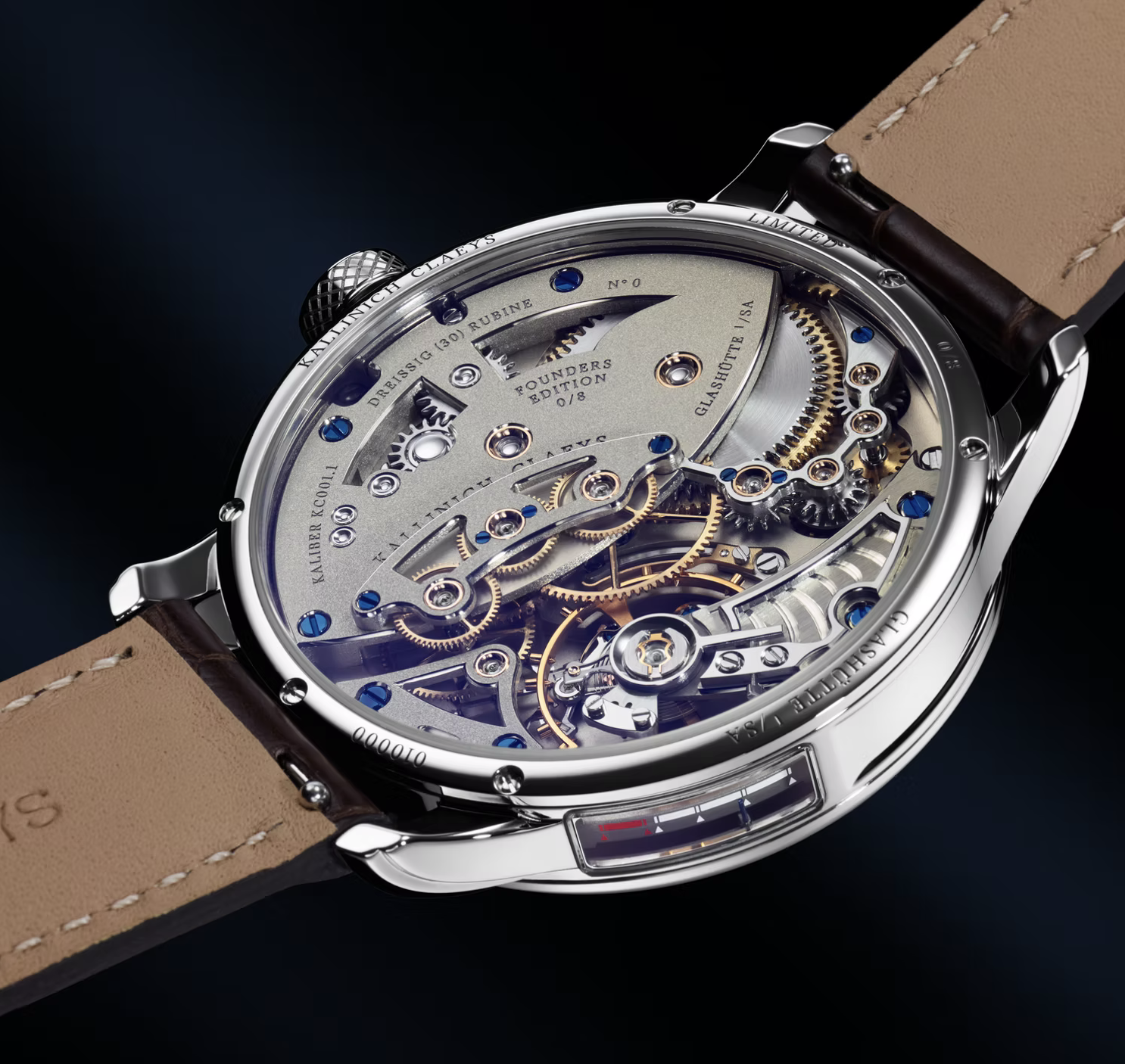
However, the two most interesting things are the indirect central seconds and the unusual power reserve.
The fourth wheel at 6 o'clock and power transmission to the center via an additional gear train. This solution is technically less convenient and more demanding, especially with minimal torque.
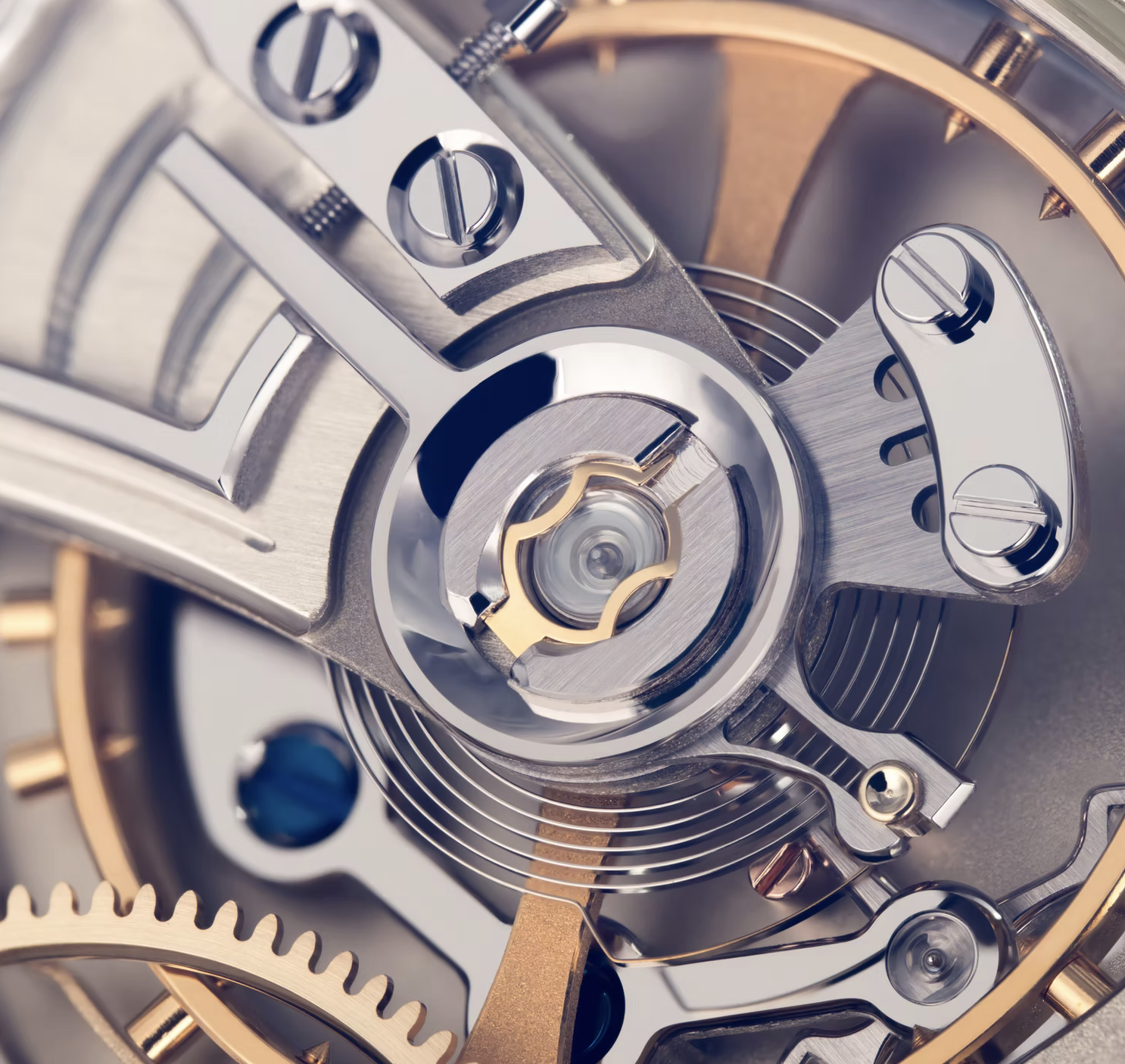
Kallinich solved the problem of the seconds hand trembling with a pressure spring 0.05 mm thick. This is not just some "feature." It's a microscopic answer to the physical problem of backlash.
And the aforementioned power reserve? It's unusual and beautiful.
It's a linear power indicator visible through a window on the side of the case, and it's a solution that balances on the border of concept and engineering.
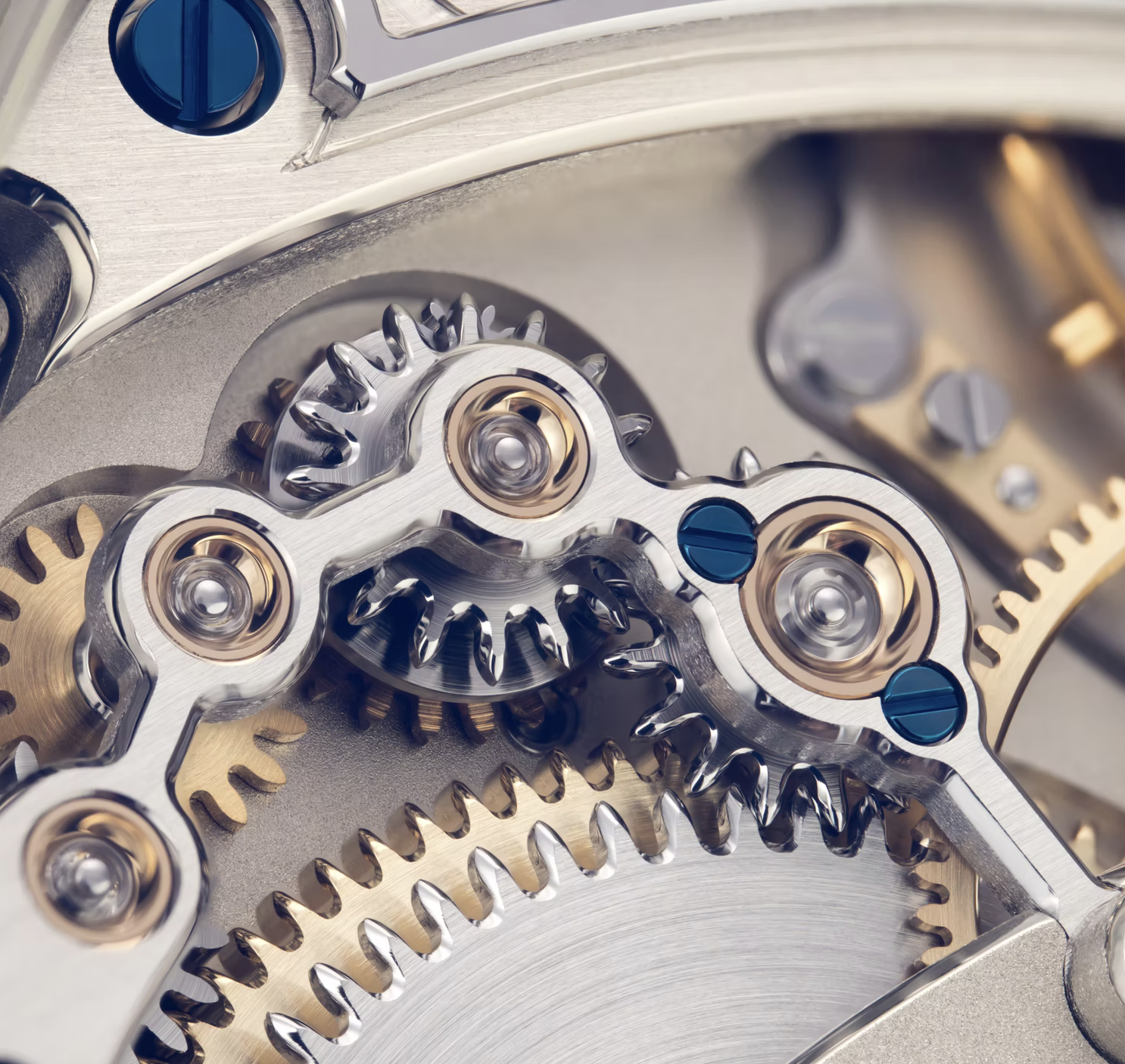
This is not a complication for convenience. It is a complication for the relationship with the movement. Winding the watch becomes a spectacle as we see the differential, miniature planetary gears, and the slider working before our eyes.
This is not a watch that merely "informs" but a watch that shows that energy is a process.
3. Finishing Without Sentiment
In Glashütte, a certain aesthetic canon prevails: floral engraving, swan neck regulator, an almost baroque softness.
Claeys chose a different path.
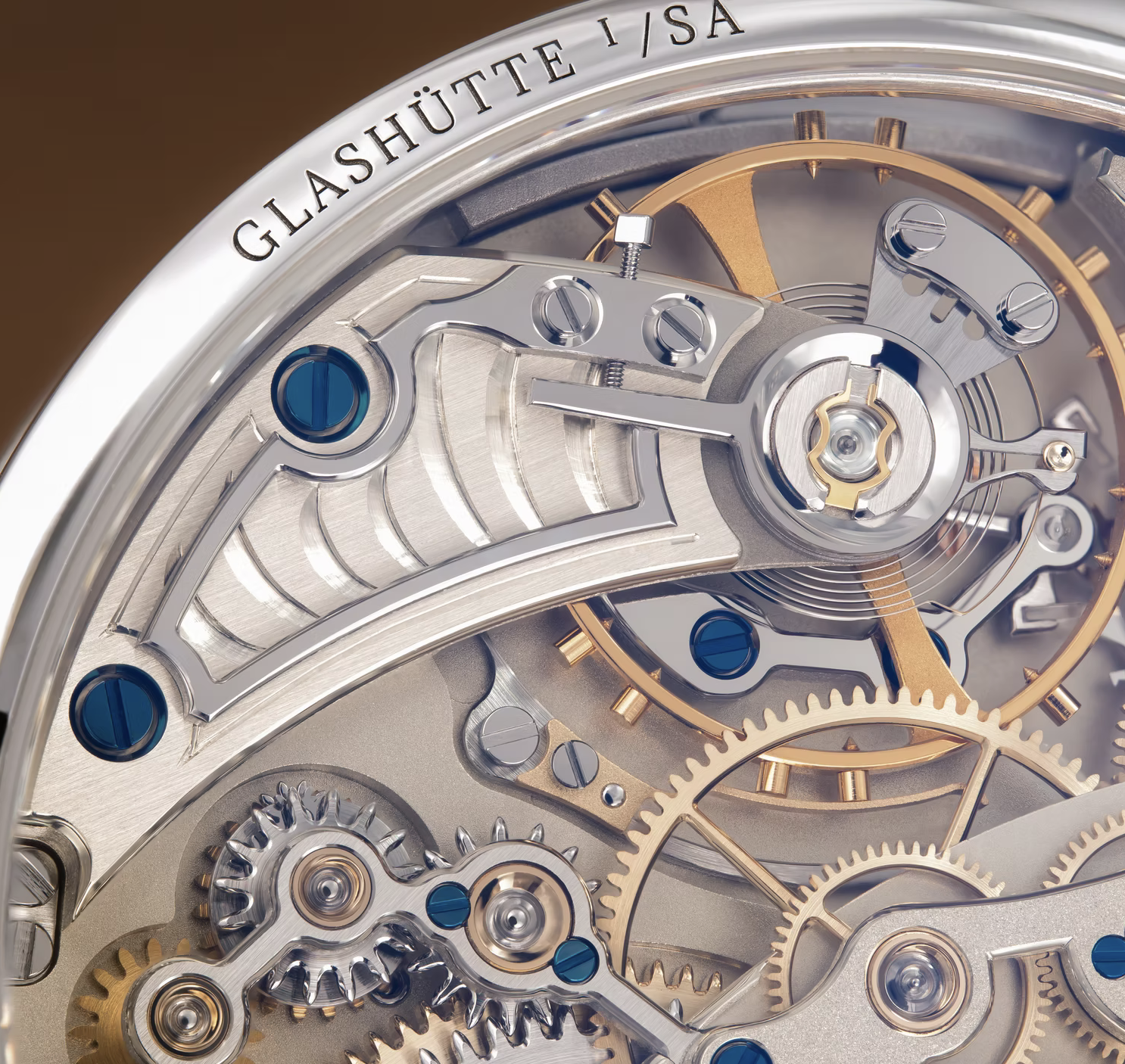
The "Shark Gill" pattern on the balance bridge is inspired by the Mercedes 300SL; it's a rejection of ornamental nostalgia in favor of a technical drawing, one associated with something other than tradition. There's no romantic recreation of the past here. There's reinterpretation.
4. A Price That "Disrupts" the Market
24,900 EUR for a steel watch with such architecture and level of hand-finishing is a strategic move.
But on the other hand, it's a price that, in the world of independent manufactures, looks like an accounting error.
Does this mean that Kallinich Claeys "underestimated" the product?
No, they chose to build reputational capital instead of short-term margins and profits.
My devil's advocate business question, however, is a bit different: how long can such a model be maintained with a production of one piece per month?
5. AHCI and Symbolic Legitimation
Candidacy for the Académie Horlogère des Créateurs Indépendants is not marketing. It's a signal to collectors that we are dealing with a real creator, not an investment project.
Saxony has long been the domain of large structures. If Kallinich enters the AHCI, it will be confirmation that in Glashütte, not only manufactures but also individualities are emerging again.
As of today, he is a candidate; in my eyes, he is already a full member, and as they say, I'd bet dollars to doughnuts that it will happen.
6. Is This a "New Era"?
Saxon watchmaking does not need a revolution. It needs pluralism, and Kallinich Claeys does not overthrow Lange and does not compete with it in scale.
They shift the emphasis from a perfect institution to a perfect atelier.
It's the difference between an orchestra and a string quartet.
Both can be masterpieces.
7. What's Next?
The announcement of a perpetual calendar sounds ambitious. If it's an integrated construction, it could be one of the most interesting debuts of the decade.
Chronograph? Here, Kallinich's experience with the Datograph could be key. The only question is whether the duo will maintain their austere, architectural aesthetic or allow themselves more classic solutions.
8. Conclusion
Kallinich Claeys is not an "Instagram project." It's not based on storytelling about saving tradition.
It's rather an experiment: what happens when two top-tier craftsmen shed the corporate umbrella and try to build watches without compromising on scale?
If Saxon watchmaking has a new era today, it's not because another brand was created, but because young masters no longer want to be just executors for someone else's brand.
And that, in Glashütte, is a real change.
For me, this extremely young manufacture, founded in 2022, creates some of the most beautiful movements I have ever had the opportunity to see in my life.