WoW Investigations
Mechanical watches are back, but watchmakers are not.
The watch market is growing, but the expertise has vanished. A good watchmaker is becoming a rare resource today.
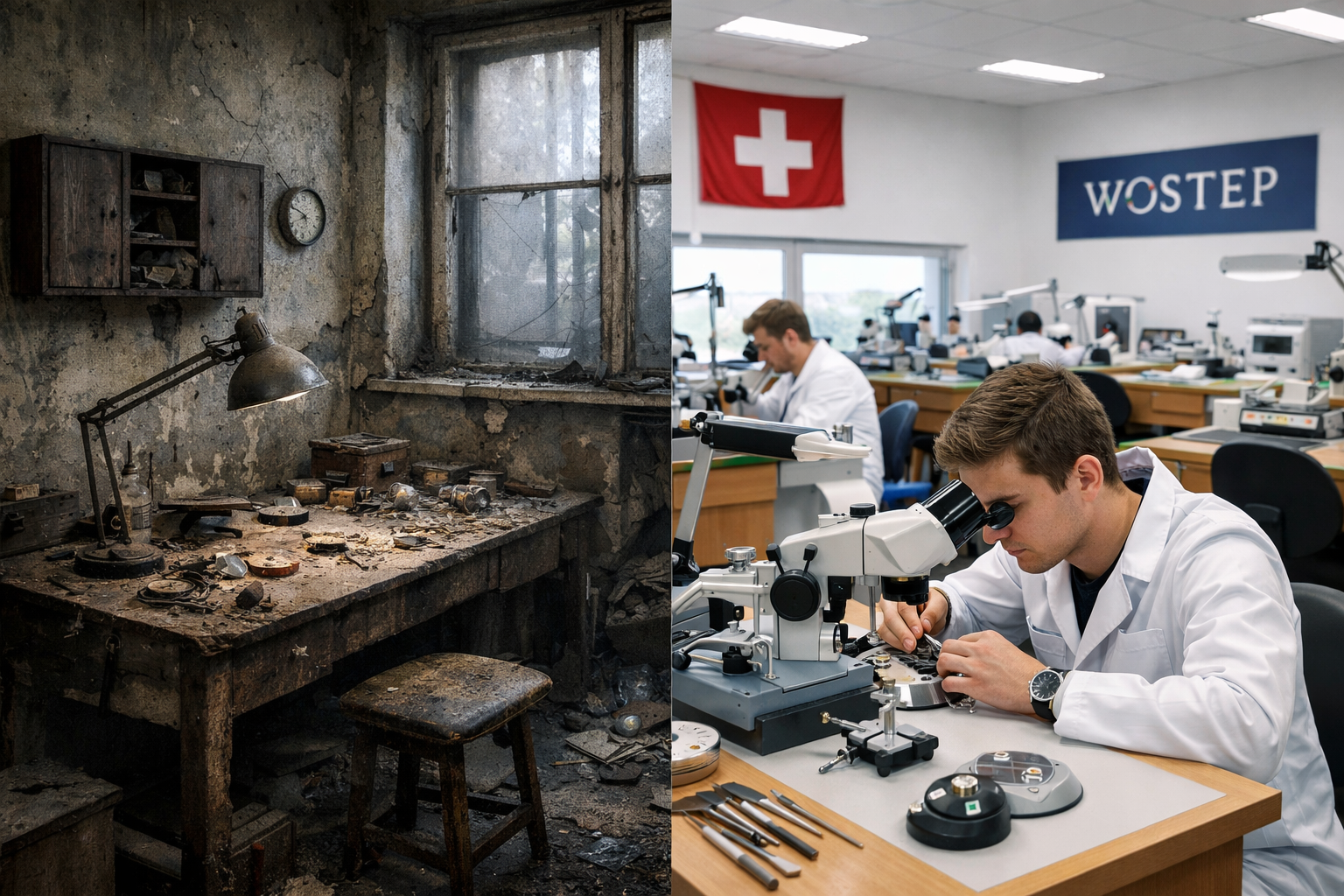
Just a few decades ago, watchmakers in Poland were simply trained. First, in the classic master-apprentice model, then in schools associated with the precision industry in Warsaw, Łódź, or Błonie.
The system had its flaws, but it worked. The most important thing was that it ensured continuity: someone entered the profession, someone left it, and knowledge was passed on.
After the transformation of the 1990s, this mechanism stopped.
Watches became cheap and mass-produced, repairs ceased to be economically viable, and the profession lost its raison d'être in its previous form. Schools began to disappear, factory workshops along with the industry, and for a long time, there were practically no new people entering the profession.
The problem is that watchmaking doesn't disappear overnight. It's a profession based on experience built over decades. That's why for years, everything seemed normal.
Only now is the scale of the gap visible.
The mechanical watch market has returned, and in a stronger form than before. The increased interest in second-hand watches, rising prices, and the development of the collector's market mean that the demand for good watchmakers is very high today.
But there is simply a shortage of good watchmakers.
This is not about people who can replace a battery or perform basic service. The problem concerns people who can work on more complex movements, handle complications, understand watch construction, and make decisions beyond the "replace part with new" scheme.
There are very few such people.
Today's education system exists, but it is fragmented. There are individual schools, craft examinations, manufacturer training, and courses for enthusiasts. However, there is no single, coherent model that leads from zero to master level.
Therefore, increasingly, the best, most structured path turns out to be going abroad, for example, to the WOSTEP program in Switzerland. This is still the gold standard of watchmaking education, but at the same time, it is a costly and demanding path, available only to some people.
And this clearly shows the scale of the problem.
Poland once had its own system for training watchmakers. Today, if someone wants to follow this path in a structured way, they often have to look outside the country.
This is not a matter of nostalgia, but a real competence gap that is already affecting the market.
I elaborate on the full story with specific examples of schools, mechanisms, and the behind-the-scenes of how this system fell apart in my book. It will also cover the costs of WOSTEP and its supplements or alternatives.