WoW Investigations
Junghans and the pistol used in Munich in 1972
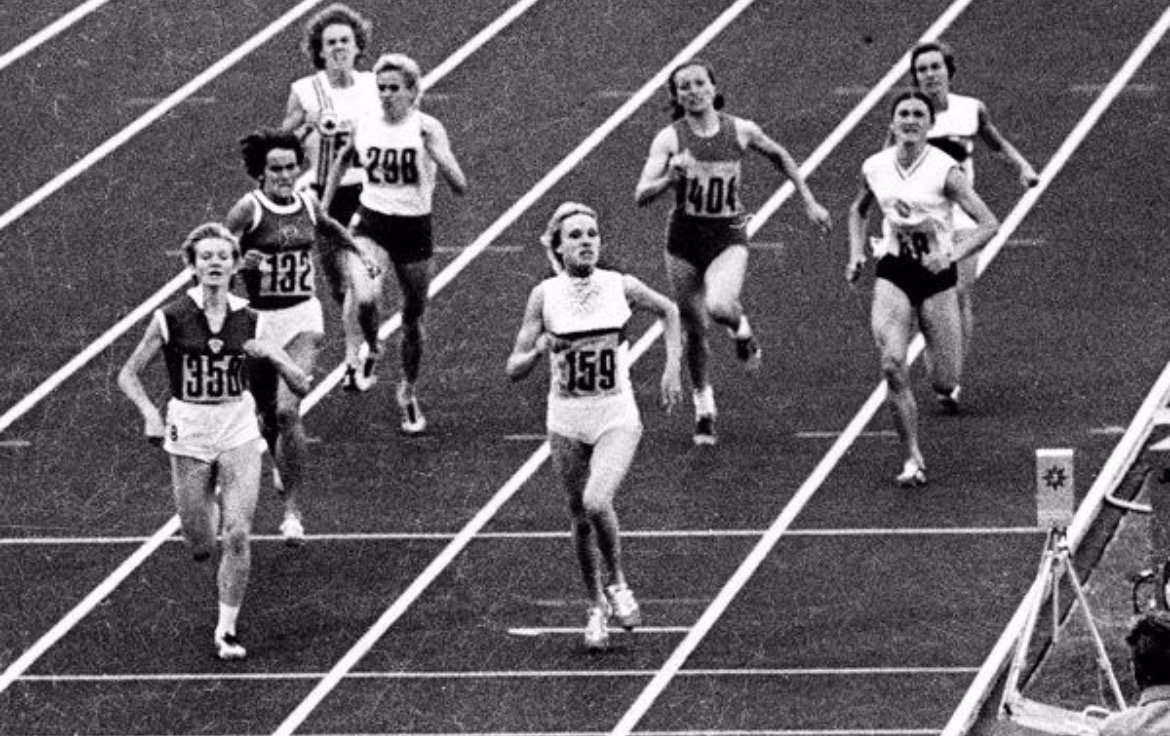
Munich 1972 is the moment when sport stopped trusting human reflexes. Junghans introduced an integrated electronic start: the gun, blocks, and timer worked as one system.
Did you know that Junghans made... a pistol??
Or rather, an entire measuring device with a starting pistol. Apparently, the pistol itself was the result of cooperation between Junghans' defense division, Microtec (which dealt with, among other things, time fuses for bombs and missiles, arming devices for aerial ammunition, etc.), and other German weapon manufacturers, most likely Rohm.
But let's start from the beginning, meaning let's go back to the realities of Olympic measurements at that time.
Today, a result given with an accuracy of 1/100 of a second surprises no one. Digits flash, the commentator announces the time, and we move on. But in 1972, it was a technological shock. And a very specific problem: humans were too slow.
A judge who starts a stopwatch "by eye" has a delay. Always did. And when the differences between competitors began to be measured in hundredths of a second, the sport hit a wall. Something had to be done to know who should actually take first place on the podium.
One also has to remember the speed of sound of the gunshot, where in a staggered start, a competitor in the outermost lane is several meters from the starter, resulting in a 29 ms delay, which can play a role at the finish line. And this is where Junghans comes in, all technical, a bit German, meaning craftsmanship but without marketing fireworks.
Munich 1972 was meant to show the world a new face of West Germany: modern, peaceful, technological. Therefore, the choice of the official timekeeper was no accident. Junghans was not just a "watch company." It was a technological conglomerate, with a background normally associated more with the military than with a stadium.
Because the starting pistol in 1972 was no longer just a pistol. Sure, there was a bang, there was smoke, everything as usual for the competitors. But inside, something new was sitting: an electrical impulse that started the measurement without human reflex.
Did Junghans cast the metal frame of the weapon? No.
Did they make it a measuring device? Absolutely.
The most interesting thing in this story is not what the starter held in their hand. But what the competitors stood on.
In Munich, for the first time at the Olympic Games in athletics, electronically connected starting blocks were used, linked with the pistol and a central clock into one circuit. In addition, behind each competitor was a special speaker, so that the gunshot was heard at the same exact moment for everyone. There were also pressure sensors for detecting false starts with a threshold of 3/1000 of a second! And at the end, a camera with tape, allowing judges to interpret the result with an accuracy of 1/100 of a second. In other words, the start, the competitor's reaction, and the time measurement began to "communicate with each other." A kind of "IoT" prototype, with a wink.
This was the moment when a false start ceased to be a matter of interpretation, and time ceased to depend on the judge's eye, and sport began to rely on a system, not on a fallible and erroneous human.
Today it's obvious, although not always and not everywhere, but back then it was an absolute novelty.
Was Junghans first? Yes. But in a specific sense. To be fair and without exaggeration, of course, Omega was a pioneer of the photocell and long ruled time at the Games, and Seiko was already pushing with quartz and industrial precision.
But Munich 1972 is the moment when Junghans was the first to close the "pistol-blocks-clock" loop in Olympic athletics. There were no algorithms and 100 ms thresholds like today, but without this step, they would never have appeared. It was the foundation.
It is worth mentioning that color also matters. A small detail, but a huge change, as it was the first color photo finish.
It wasn't about aesthetics. It was about readability, identifying competitors, disputes resolved faster, and... television, which was just entering the era of color.
Munich was also an alarm signal for the Swiss. The result? A few months later, Swiss Timing was formed as a common front for Omega and Longines. Because after 1972, it became clear that this war could not be won alone.
Finally, a bit sadly, because the smoke and bang described at the beginning were unfortunately not only the domain of the starting blocks caused by the judge's decision, as these Games went down in history with the sound of gunshots, gunpowder smoke, and the death of a total of 17 people, as a result of a terrorist attack and a subsequent failed attempt to free hostages.
But there will be more about Junghans as a company, because it's worth it.