WoW Investigations
Fashion watches-hit or miss?
Why are fashion brand watches one of the worst purchases in terms of price-to-quality ratio? Who really produces them, what are they made of, and what are you actually paying for. A text about logo-driven watches, emotions, marketing, and why a logo isn't enough.
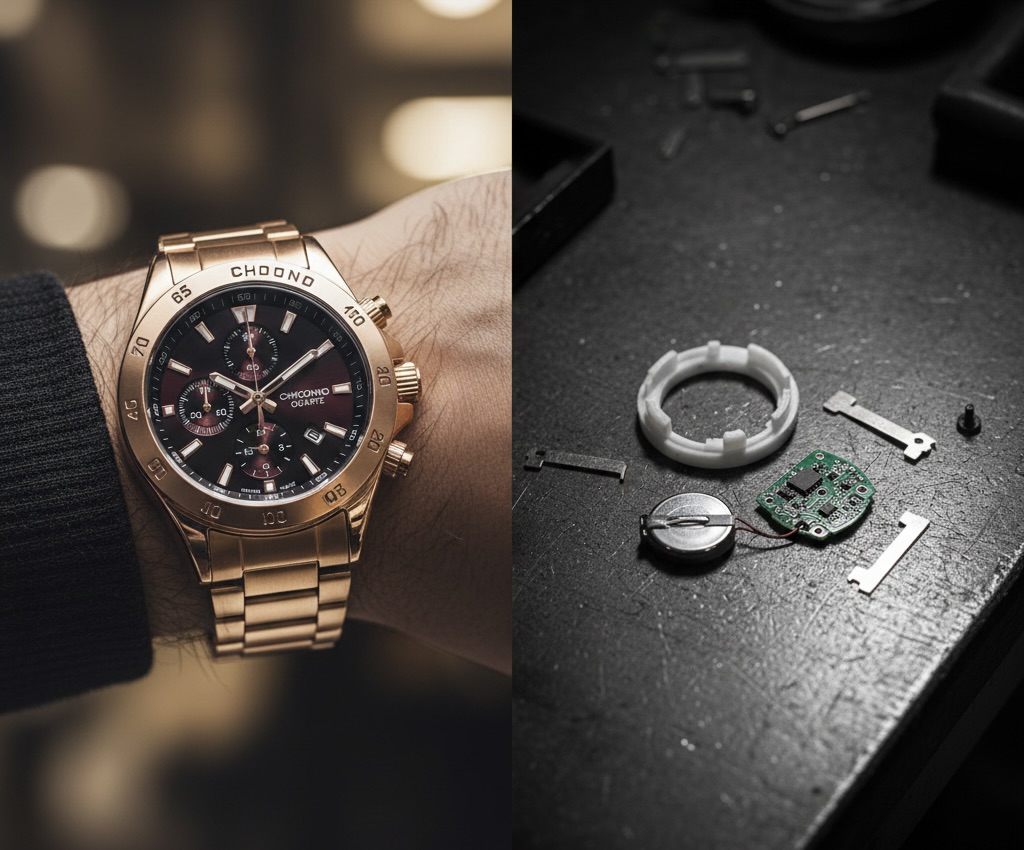
About watches bought with the heart and why it's often a costly mistake
Introduction: this won't be a "snob's perspective" text
Let me warn you upfront, this is not a text written from the perspective of a watch snob who ridicules others' choices.
For years, I myself bought watches with my heart, with emotion, on impulse. And some of those decisions... well, let's just say I wouldn't repeat them today.
The watch market today is a strange place, because alongside watchmaking, manufactures, complications, beautifully decorated movements, and craftsmanship, we unfortunately or fortunately have a powerful lifestyle marketing machine that sells not mechanics or functions, and not even durability, but mainly a logo, often flashy design, and a promise. A promise of quality associated with a brand, which often, in the case of watches, it fails to deliver.
One of the most profitable and at the same time most controversial segments are the so-called fashion watches, often referred to as "panties-watches"in the Polish collecting community (fashion or logo-driven watches)
And that term didn't come out of nowhere.
What exactly is ?
It's a watch branded with a clothing, lifestyle, or automotive brand whose DNA has nothing to do with watchmaking, and the watch is just another accessory alongside a scarf, belt, wallet, or perfume. And that's not the problem in itself.
The problem begins when the customer thinks they are buying a watch, but in reality, they are buying a logo with a movement and a whole lot of worthless extras for free.
Who actually produces these watches?
Here, silence often falls. Because a Michael Kors, Armani Exchange, or Hugo Boss watch is not made in a "fashion house," it's not designed by watchmakers, it doesn't have its own technical infrastructure.
Behind the scenes are large production groups like Fossil Group or Movado Group, which produce watches in bulk, often in the same factories and with the same components, differing only in the dial, case, and... price.
In practice, this means that two different watches with different logos can be technically the same product and are often ordered from the same Chinese factory.
Materials, here begins the sad reality
Is the case steel or something that pretends to be?
In watchmaking, 316L steel is the standard, whereas in the world of fashion watches, zinc alloys, so-called base metal, and thin galvanization "for effect" are very often found.
For the first few months, it looks great, but after a year or two, abrasions, black spots, and even corrosion appear, and WARNING, sometimes allergic skin reactions!
And then suddenly it turns out that the watch bought "for years" was designed for seasons, and not all that glitters is gold, because a golden color can be obtained by various methods, but such "gold" that quickly wears off and causes skin allergies is certainly not worth the money paid for the logo of a "famous" company.
Glass and coatings
Mineral glass that is soft and scratches from everyday life, PVD/IP coatings, often without a solid base.
For comparison, at similar prices, Seiko, Citizen, Timex, Orient, and many other true watch brands offer sapphire glass, better coatings, and real durability.
And this is where it hurts the most.
Movement: the heart of the watch or an accounting cost?
I have no problem with quartz, but I have a problem with pretending that a cheap movement is a luxury.
Many "majtkowce" use movements like a several-dollar Miyota or a Ronda in the "Swiss Parts" version, and these are often modules that are not repaired; if they break, they are simply replaced with new ones. So, it's fine as long as it's under warranty.
This doesn't make them technically bad, but for goodness sake, when a watch with a movement worth a few dollars costs 1200–1500 PLN, you have to honestly say, "you're not paying for the watch, but for the logo and the narrative."
And you're paying dearly, and once you realize it, you can't even easily resell it, let alone recover half of the amount paid.
Automotive watches: not everything with a car logo makes sense
Here it's worth distinguishing three worlds:
The first is mass licenses (e.g., Maserati produced by Morellato),
the second is brands with their own identity (like Jaguar Watches from Festina),
and the third is high-flying partnerships (Ferrari × Richard Mille).
The same badge, completely different content, and again, the problem is not the design, but confusing design with engineering.
Maserati is a car, better or worse, but there's something behind it. A Maserati watch is again a cheap product packaged with a legendary logo and sold for a lot of money.
Often in car dealerships, there are promotional watches. So we can leave with either an Audi promotional item, which is an overpriced quartz cheap watch with a logo, or a watch, for example, Oris, made in partnership for Audi, and here we have a completely different product.
Why do people buy "majtkowce"?
Because they know the brand, and the watch looks "expensive" and is readily available in the same store as clothing.
They buy it with their heart.
And I understand that. Really.
But the heart in watches can be a bad advisor if it's not accompanied by knowledge.
Emotionless comparison
Within the same budget, the aforementioned Seiko, Citizen, and others offer real quality, the possibility of service,
durability, and value that doesn't disappear after leaving the store.
A "majtkowiec" most often:
loses 70–80% of its value,
ages faster than its design,
becomes a disposable accessory.
Conclusions: hit or miss?
Hit, if you consciously know that you are buying "cheap" jewelry and do not expect longevity and are prepared for a loss of value.
Miss, if:
you think you are buying a watch "for years",
you believe marketing stories,
you haven't checked what's really under the hood and subconsciously transfer the clothing or car brand to the watch brand.
I know one thing today: that watches bought with the heart can be beautiful, but watches chosen with the head stay with us longer.
Please also do not apply the pejorative term "logo-driven watches" wholesale to all fashion companies, as many of them, such as Louis Vuitton, Dior, Chanel, Hermes, and many others, make watches that are watchmaking marvels, but that's a topic for another chapter. Which I, of course, promise you.
And that's exactly what WoW is all about, and more and broader on this and other topics will be in the book.