WoW Investigations
Ebel Sold After 22 Years of Missed Opportunities
After 22 years, Movado is selling Ebel at a valuation of approximately 70 million dollars. The brand, which once set trends in Swiss watchmaking, is being acquired by F.P. Journe, Chanel, and Pierre Jacques. What happened to its value over these years, how much did Movado truly earn, and does Ebel have a chance to regain its former prestige?
Ebel for 70 million dollars.
In the 1980s, Ebel was one of the most important brands in Swiss watchmaking. It was their order that brought the legendary Zenith El Primero movement back to life even before the Rolex Daytona, and Ebel produced watches for Cartier and created one of the most recognizable luxury sports watch designs.
Today, 95 percent of the company's shares are set to change hands for just 66.5 million dollars. François-Paul Journe, Chanel, and Pierre Jacques want to rebuild what Movado failed to restore over two decades. However, the story of this acquisition would not be complete without looking into the financial statements.
What is the cost of former greatness?
On October 8, 2026, Movado Group announced the signing of an agreement to sell 95 percent of its shares in Ebel for 66.5 million dollars. The buyer is a consortium led by Montres Journe SA, with the participation of Chanel and Pierre Jacques, who will assume the CEO position after the transaction is finalized.
Movado will retain the remaining 5 percent of the shares, so calculating the transaction price gives an approximate valuation of 70 million dollars for the company's entire capital.
Seventy million dollars.
That is the current estimated value of one of the most recognizable historical brands in Swiss watchmaking. Ebel, founded in 1911, managed for several decades not only to sell watches but also to set directions for the entire industry.
But only comparing this amount with historical results shows the scale of the change.
In December 2003, when Movado announced the acquisition of the brand from the LVMH group, it reported a price of 47.3 million dollars and projected annual revenues for Ebel of approximately 65 million dollars, with these watches then being sold in about 1800 points of sale worldwide.
In other words, almost 23 years ago, Ebel was expected to generate annual sales close to today's valuation of the entire enterprise.
Of course, one should not confuse turnover with company value, and furthermore, we do not know the current revenues, as Movado has not disclosed them separately for years. Today's 70 million dollars also includes assets, inventory, intellectual property rights, and the historic Villa Turque, designed by Le Corbusier.
This is therefore not a valuation of the trademark alone, but the contrast remains striking.
After more than two decades of managing a historic luxury brand, its valuation is close to the annual revenues it was expected to achieve even before its acquisition by Movado.
How did this happen?
Ebel, which the younger generation may no longer remember
In the 1980s, Ebel was a completely different company than it is today.
Under the leadership of Pierre-Alain Blum, the grandson of the founders, it became one of the most interesting Swiss watch manufacturers. The Sport Classic, introduced in 1977, with its distinctive bracelet featuring wave-shaped links (the wave line) and softly flowing case lines, was among the most original and characteristic designs of its time.
Ebel therefore did not have to imitate the Royal Oak or the Nautilus, as it had developed its own design language and a strong enough position to effectively promote it.
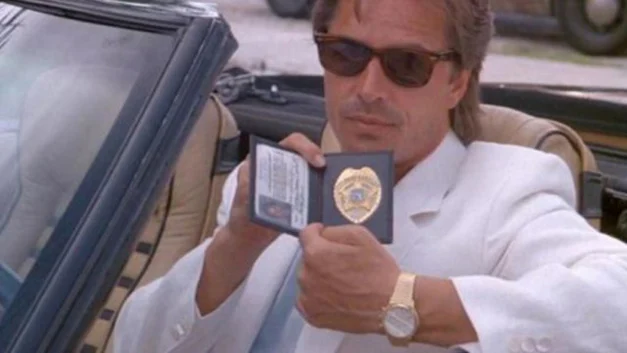
The brand also produced watches and components for Cartier, collaborated with renowned movement suppliers, and its chronographs appeared on the wrists of famous athletes and actors. One of the most recognizable was, of course, Don Johnson in the series Miami Vice.
However, the most significant decision was made in the early 1980s, when the Swiss industry was still grappling with the consequences of the quartz crisis, and Ebel opted for a mechanical chronograph.
In 1982, it presented the Sport Classic Chronograph, utilizing the Zenith El Primero movement, designated as caliber 134. These purchases helped Zenith restore production of a construction whose future had been uncertain just a few years earlier, and which, had it not been for Vermont's heroic decision, would have been completely erased from existence.
Rolex only began using a modified El Primero in the automatic Daytona in 1988, six years after the debut of Ebel's chronograph.
In the mid-1990s, Ebel went further. Caliber 137 was created, developed using Nouvelle Lémania architecture, and applied in the Le Modulor collection. The offering also included complicated chronographs with perpetual calendars.
Not everything was created from scratch in Ebel's workshops, but the company possessed authentic technical competencies and was able to develop mechanical constructions with great ambition.
Importantly, it did not reject quartz watches at the same time. The original Sport Classic was, after all, a quartz construction.
The secret to success lay in the ability to combine excellent design, quality craftsmanship, modern technologies, and genuine watchmaking ambitions.
It was a company capable of achieving commercial success without sacrificing technical prestige.
Movado did not acquire the Ebel brand at its peak
However, blaming Movado for all the brand's problems would be a historical oversimplification, as the troubles began earlier.
Pierre-Alain Blum expanded his interests far beyond watchmaking. Excessive diversification, growing financial needs, and management problems led to the sale of the family business.
In 1994, Ebel went to Investcorp, five years later to LVMH, and in March 2004 to Movado Group.
The Americans were therefore not buying a company at its peak, but a weakened brand with an exceptional history, recognizable design, and significant potential for rebuilding.
And initially, it seemed they had a plan, as even in the acquisition announcement, it was emphasized that Ebel would strengthen the group's position in the higher segment of luxury watchmaking.
The first years indeed brought some attempts at restructuring, increased marketing spending, and new product development.
However, financial documents show that the acquisition was not easy from the start.
In the fiscal year ended January 31, 2005, covering Ebel's operations since the acquisition in March 2004, the brand accounted for approximately 44.2 million dollars in wholesale sales reported by Movado, while its operations resulted in a 3.8 million dollar operating loss.
The following year was better. Ebel's sales increased by 6 million dollars in the American market and 9.1 million dollars in other markets. New collections and advertising campaigns began to yield results.
This is important because it cannot be said that Movado did not try to rebuild the company, but this initial improvement did not lead to a lasting revival.
Did Movado profit from these transactions?
In 2004, Movado ultimately reported an accounting acquisition price for Ebel of approximately 45 million dollars. This included 40.6 million dollars in cash payments and 4.4 million in transaction costs and other liabilities recognized in the settlement.
Today, the group intends to receive 66.5 million dollars for 95 percent of the shares, retaining the remaining five.
Nominally, the value is therefore about 56 percent higher than the historical accounting purchase price, but it must be remembered that over 22 years have passed between the transactions.
Adjusted for inflation, 45 million dollars from March 2004 is equivalent to approximately 80.4 million dollars today, while the new valuation is around 70 million dollars.
This means a difference of approximately 10.4 million dollars, or nearly a 13 percent loss of real value in such a simple price comparison.
This is not yet the actual investment loss. To calculate it, we would need to know Ebel's cumulative cash flows, subsequent investment costs, distributions made, tax benefits, and the value of all assets.
Movado does not publish a full EBITDA statement for Ebel for the entire 22 years. In recent years, the brand has been part of the group's larger proprietary brands category.
Therefore, we are unable to fairly calculate how much Movado earned or lost on the entire investment.
But after 22 years of owning one of the historical brands of Swiss watchmaking, Movado is selling most of its shares at a valuation that is realistically lower than the accounting price of their original acquisition.
In the world of luxury, where the brand itself is an extremely important source of value, this does not look like a spectacular result.
Especially since during this period, many competing companies were able to transform their historical heritage into powerful business capital.
Let's not forget other aspects.
Movado bought not only the brand, products, and history, but also significant tax losses generated before the acquisition.
As of the end of January 2005, the group reported approximately 132.1 million dollars in accumulated Swiss tax losses from pre-acquisition activities.
Thanks to a ruling obtained from the Swiss tax authorities, it became possible to use these losses to reduce the tax liabilities of the relevant entity within the group.
Already in fiscal year 2005, Movado reported 2.8 million dollars in cash tax savings related to this mechanism.
In fiscal year 2007, the analogous saving amounted to 6.9 million dollars, and simultaneously, a reduction in income tax expense of 6.6 million was reported. In the following year, the group also benefited from further recognition of tax assets related to losses in Switzerland, Germany, and the United Kingdom.
Movado also utilized tangible assets acquired with the business. In fiscal years 2006 and 2007, pre-tax gains were recorded from the sale of two properties acquired as part of the acquisition.
All of this changes the picture of the purely financial side of the transaction, but we do not know the full investment outcome, so it cannot be definitively concluded either way.
But this is where an interesting contradiction arises.
Movado was able to effectively utilize Ebel's assets financially, while simultaneously failing to restore the brand itself to the significance it once held in global watchmaking.
And yet, the latter was one of the main goals of the acquisition.
2011 and a business decision that speaks louder than advertising campaigns
Movado's report for the fiscal year ended January 31, 2011, contains information of particular importance for assessing the owner's strategy, as the group's management decided that the brand's further development would not include the production of its own, in-house movements.
Consequently, some of the inventory of these components was deemed redundant and obsolete, and in the same year, Movado booked an inventory write-down of approximately 24.1 million dollars. This included, among other things, parts of in-house movements and watches and components made of gold. In the following year, the group reported a pre-tax profit of 2.3 million dollars from the sale of parts of previously written-down movements.
From a purely economic perspective, abandoning these constructions might have had some justification. The production of specialized calibers is costly, requires scale, service infrastructure, and appropriate sales volumes.
However, looking at it from the perspective of today's market, it is hard not to see the paradox: while the most important watchmaking companies increasingly emphasized their design capabilities, manufacture competencies, and technological independence, Ebel, under Movado's management, began to limit precisely this area of activity.
The brand, which once helped revive the El Primero and developed advanced mechanical chronographs, ceased to be associated with technical achievements. And yet, in the case of a historical watchmaking brand, not everything that improves the short-term efficiency of the enterprise increases its value over subsequent decades.
From ambitious chronographs to the 80-80-80 formula
In September 2026, just a month before the sale announcement, "Europa Star" published an interview with the then CEO Flavio Pellegrini.
The manager described the brand's business structure using an extremely characteristic formula.
80 percent of customers are women. 80 percent of watches are two-tone. 80 percent use quartz movements.
Pellegrini himself noted that this was an oversimplification, but it is hard to find a better summary showing how far the company's positioning had changed, or rather its dramatic descent from being one of the more significant companies in the industry to almost the fashion segment.
The company, which once could create trends, largely became a producer of elegant watches with a relatively predictable offering.
What is particularly interesting is that in the same September interview, Pellegrini announced the gradual development of mechanical models and the use of the Sport Classic's fiftieth anniversary in 2027 to rebuild the company's position.
He also argued that Movado provided the brand with financial stability and the time needed to implement a long-term strategy, which unfortunately reinforces my conviction that it often makes no sense to talk to corporate CEOs, as instead of specifics, one receives PR babble.
A month later, the sale of the majority stake was announced.
We do not know how long the transaction was prepared or what information Ebel's management had at the time. However, the contrast between public declarations and the owner's decision is extremely telling.
Journe, Chanel, and Jacques. Why might it succeed this time?
The new owners look like a group of people chosen to change the way Ebel operates.
François-Paul Journe is one of the most acclaimed contemporary creators of independent watchmaking. His manufacture has achieved a level of prestige that cannot be built by advertising spending alone.
Chanel has capital, global experience in luxury management, and an increasingly strong position in the world of high watchmaking.
Since 2018, the French fashion house has held a 20 percent stake in Montres Journe SA. It has also invested in Romain Gauthier and MB&F.
This transaction is therefore not a random attempt to diversify the portfolio, but another step towards building competence and position in the segment of independent and prestigious watchmaking.
However, the most interesting is the name of the man who is to lead the company. Pierre Jacques managed De Bethune for years, participating in building the brand's position with an exceptionally distinctive technical and artistic identity.
Admittedly, precisely for this reason, Jacques's task may prove more difficult than his previous activities, as it will not be enough to create a few outstanding, extremely expensive mechanical constructions.
Ebel must regain recognition, rebuild credibility among collectors, retain existing customers, and at the same time find its place between serial production and the highest segments of watchmaking.
It is necessary to combine product ambitions with the economic discipline of the enterprise.
Sport Classic. Fifty years later
The year 2027 will mark the fiftieth anniversary of the Sport Classic's debut.
It is hard to imagine a better starting point for rebuilding the brand.
The market for luxury sports watches with integrated bracelets is one of the segments where design history can be a huge asset.
Ebel has an authentic design from 1977. It does not need to reinvent the characteristic bracelet or construct a marketing narrative about its heritage.
However, it would be a mistake to immediately shift the entire assortment to a very high price segment, as simply raising the price does not automatically restore prestige, especially to a brand whose collector position has been so severely weakened.
It would be equally unwise to abandon current customers, especially women, who today constitute the vast majority of Ebel buyers.
The greatest art will be to rebuild the mechanical offering without destroying the existing business.
If Jacques can combine historical design with new watchmaking competencies and sensible pricing, Ebel can reclaim its own place in the market, not as another producer of sports watches with an integrated bracelet, but as a company that helped define this segment.
For approximately 70 million dollars, the new investors are not buying past power but the opportunity to rebuild it.
Movado had over twenty years for this. Now, François-Paul Journe, Chanel, and Pierre Jacques will present their answer.
I therefore hope that the brand, which the American group first depreciated and decided to sell, may yet prove to be worth much more in the hands of people who better understand its watchmaking potential.