WoW Investigations
Born to Kill and Rolex
Blood, Tattoos, and Coffins on Canal Street: How a Gang of Ruthless Murderers Built a $13 Million-a-Year Fake Rolex Factory.
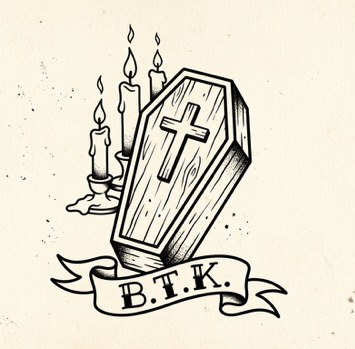
The history of the Born to Kill gang is one of the most brutal chapters in the annals of watch counterfeiting, written in blood on the streets of New York's Chinatown.
The Boys Nobody Wanted
New York, late 1980s. Chinatown is ruled by Chinese-American tongs and their subordinate gangs, the Flying Dragons and Ghost Shadows. At the very bottom of this hierarchy, treated as cannon fodder for the dirtiest street work, are teenage Vietnamese. These are true children of war, refugees and wards of a foster care system that had no real plan for them, and as one might expect, life wrote them the worst possible script.
From this exclusion and humiliation, something far more dangerous than another backyard gang is born. David Thai, known as "Anh Hai" - Elder Brother, born in Saigon in 1956, in his youth dabbled in drug trafficking between American soldiers and the paramilitary group Bình Xuyên. After the fall of Saigon, he fled to the USA, where he tried to live honestly, working as a dishwasher, even studying at NYU for a while. Financial pressure, however, won out, and in 1983 he joined the Flying Dragons, but discriminated against by the Chinese leaders, he decided to build his own army. He named it Born to Kill - directly from the slogan American soldiers wrote on their helmets in Vietnam.
The fate of one of the recruits, Tinh Ngo - alias Timmy, speaks for itself: 22 months in a Thai refugee camp, years of being shuffled between dysfunctional foster families, and finally zero prospects beyond the street. Thai gathered dozens of such boys.
A Philanthropist in a Silk Shirt, an Executioner in His Own Organization
Outwardly, David Thai played the role of an elegant businessman and benefactor. Tailored suits, silk shirts, dark glasses, a helping hand extended to newly arrived compatriots. This was a facade, as inside, iron discipline and an almost military machine of terror operated.
BTK soldiers lived in safe houses, in groups of 5-10 people, at the expense of a common fund. Lan Tran oversaw logistics and the execution of orders, LV Hong was responsible for discipline and the extortion network on Canal Street. Initiation was sealed with a tattoo that spoke volumes about the gang's mentality: a coffin, three candles, and the letters B.T.K. Hiding loot, the slightest suspicion of contact with the police, simple insubordination – any of these transgressions could cost a life.
In 1991, Thai himself personally beat two subordinates for hiding part of the valuables from a robbery. When Vietnamese merchant Sen Van Ta refused to pay ransom and notified authorities, Thai ordered him shot in his own store, in front of his twelve-year-old nephew standing just a meter away.
A Watch Worth More Than a Kilogram of Heroin
The real breakthrough in BTK's history had nothing to do with weapons or drugs. It involved tinkering. As a teenager, Thai disassembled and assembled watch movements in his own apartment, and after leaving the Flying Dragons in late 1986 and early 1987, he turned this hobby into what we would paradoxically call a manufacture-factory today: an organized, industrial line for counterfeiting the world's most coveted brand.
The calculation was ruthlessly simple: a fake Rolex offered a margin comparable to drugs, but without the risk of drug trafficking sentences.
The machine operated like a well-oiled movement:
Import of components - cheap quartz movements, unmarked cases, fake dials, and bracelets flowed in containers from mainland China and Taiwan.
Assembly in safe houses - gang members manually assembled fake Submariners, Daytonas, and Datejusts, models that almost every Canal Street customer dreamed of.
Distribution at gunpoint - finished watches did not enter the market according to supply and demand. Thai used the gang's armed force to compel Asian shopkeepers and street vendors to purchase his production wholesale, at prices he dictated.
Monopoly of fear - those who refused to cooperate were beaten, their stalls demolished, and in extreme cases, threatened with death.
The cost of producing one piece was 10-15 dollars. The selling price was 50 to 200 dollars. After his arrest in 1991, Thai himself, with disarming confidence, boasted on the TV program 48 Hours that in 1988 alone, his network generated over 13 million dollars in pure profit from fake Rolexes, which today would be about 37 million dollars. This money financed the gang's expansion into Georgia, Connecticut, and California, the purchase of weapons, recruitment and "training" of new gang members, and new safe houses. Thus, what began as a street operation transformed into a nationwide organization.
Blood on Canal Street
The scale of BTK's ruthlessness is best illustrated by the robbery of W.C. Produce in August 1990. Employees were tied with telephone cables, beaten with gun stocks, and one was shot in the head on the spot. When the terrified owner claimed he had no more cash, gang enforcer Jimmy Nguyen fired a rather chaotic and inaccurate shot, which, instead of hitting the victim, killed another BTK member.
The body was left at the scene, and the loot from the robbery went straight into Thai's hands. This was not an exception but the daily reality of an organization for which the loss of an "employee" was simply another cost of doing business.
Fall of an Empire
The trial in 1992 brought an end to the bloody reign of Born to Kill. David Thai received two life sentences plus 43 years in prison, Lan Tran, two life sentences plus 30 years. Jimmy Nguyen, life plus 20 years. Tinh "Timmy" Ngo, the boy from the Thai refugee camp who, as an adult, infiltrated the gang for the ATF and NYPD, entered the federal witness protection program.
Why is this story more intriguing than all the others?
Born to Kill is not just a criminal curiosity to read over coffee. It is proof that for years, the luxury goods industry remained almost defenseless against organized crime, which treated watch counterfeiting not as a marginal activity, but as the main financial engine of an organization capable of contract killings and nationwide expansion.
A fake Rolex from Canal Street was not a cheap gadget from a bazaar. It was currency of blood.
Let's remember that counterfeits are not always harmless trade on a beach in a holiday destination.